· 26 min read
A Complete Golf Tournament Planning Guide for a Perfect Event
Our complete golf tournament planning guide covers everything from pre-event logistics to post-event awards. Learn how to run a flawless, memorable event.

A successful golf tournament doesn't just happen. The real work is done months before the first tee shot is ever struck, breaking down the entire process into manageable phases: building the blueprint, driving registrations, handling on-course logistics, and finally, executing a flawless event day.
Building the Blueprint for Your Golf Tournament
Long before anyone steps onto the first tee, the groundwork you lay will ultimately determine your event's success. This is where you build the strategic blueprint. A solid foundation here prevents those last-minute scrambles and ensures every decision—from the food you serve to the prizes you award—lines up with your vision.
Setting Clear Goals and Objectives
First things first: what does a "win" look like for your event? Before you even think about booking a course or designing a logo, you have to define success. Are you trying to raise $50,000 for a local charity? Or is the main goal to host a high-end networking event for your top clients?
The answer to that question changes everything.
A fundraiser, for example, will focus heavily on sponsorship packages and on-course donation opportunities. A competitive club championship, on the other hand, is all about precise handicapping, strict rules, and a prize purse that gets people talking.
Pro Tip: Keep it simple. Write down one primary goal and two secondary goals for your event. This becomes your North Star. If a new idea or expense doesn't directly support one of those three goals, it's probably a distraction.
Assembling Your Planning Committee
Trying to run a tournament by yourself is a quick way to burn out. A small committee with clear roles keeps things from falling through the cracks. Consider a lead for each of these areas:
- Tournament Chair: The project manager. Keeps the plan on schedule and makes the final calls.
- Sponsorship Coordinator: Builds the sponsorship packages and goes out to secure partners.
- Logistics & Venue Manager: Handles everything with the golf course, from catering to on-site setup.
- Marketing & Registration Lead: Gets the word out, manages sign-ups, and handles player communication.
- Volunteer Coordinator: Finds and organizes volunteers for day-of jobs like check-in and contest holes.
A focused team of three to five committed people usually gets more done than a dozen people who are only halfway in. One person can cover two roles on a smaller event.
Crafting a Realistic Tournament Budget
Your budget is your financial roadmap. It’s absolutely critical to account for every potential expense, from the obvious stuff to the small details that are easy to forget. Using a solid event budget planning template is a lifesaver here.
Start by listing out your big-ticket items:
- Venue Fees: Greens fees, cart rentals, range balls.
- Food & Beverage: On-course snacks and drinks, a post-round lunch, or a full awards dinner.
- Prizes & Awards: Trophies, pro shop gift certificates, and prizes for contests like Longest Drive.
- Marketing & Signage: Welcome banners, sponsor tee signs, and any printed materials.
Once you have a handle on expenses, you can figure out the revenue side. Will player registration fees cover all the costs, or are you counting on sponsorships to get you into the black? Getting this right from day one is the best way to avoid nasty financial surprises later on.
Working Out Cost Per Player and Your Entry Fee
Add up your estimated expenses and divide by your target number of players. That gives you your cost per player, which is your break-even point: the least you can charge each player and still cover costs. For example, $15,000 in costs for 100 players is $150 per player.
From there, the entry fee formula is simple:
Cost Per Player + Fundraising or Profit Goal Per Player = Entry Fee
If your cost is $150 per player and you want to raise another $100 per player, your entry fee is $250. Every registration then contributes directly to your goal.
Setting Sponsorship Tiers
Sponsorships are how most events move from breaking even to raising real money. Tiered packages give businesses of every size a way in. Here is a sample structure you can adapt to your market:
- Title Sponsor ($10,000+): Name in the event title (for example, "The Acme Corp Charity Classic"), top logo placement on everything, a speaking spot at the dinner, and multiple foursomes.
- Dinner or Lunch Sponsor ($5,000): Owns the post-round meal, with branding on banners and table tents and a thank-you from the podium.
- Beverage Cart Sponsor ($2,500): Logo on the cart that meets every player on the course.
- Hole Sponsor ($500 to $1,000): Signage at a tee box. A good entry point for smaller local businesses.
Bundling player spots into the higher tiers makes them easier to sell, because the sponsor gets a foursome on the course as well as the exposure.
This timeline gives you a great visual of how the core pieces of your blueprint come together.
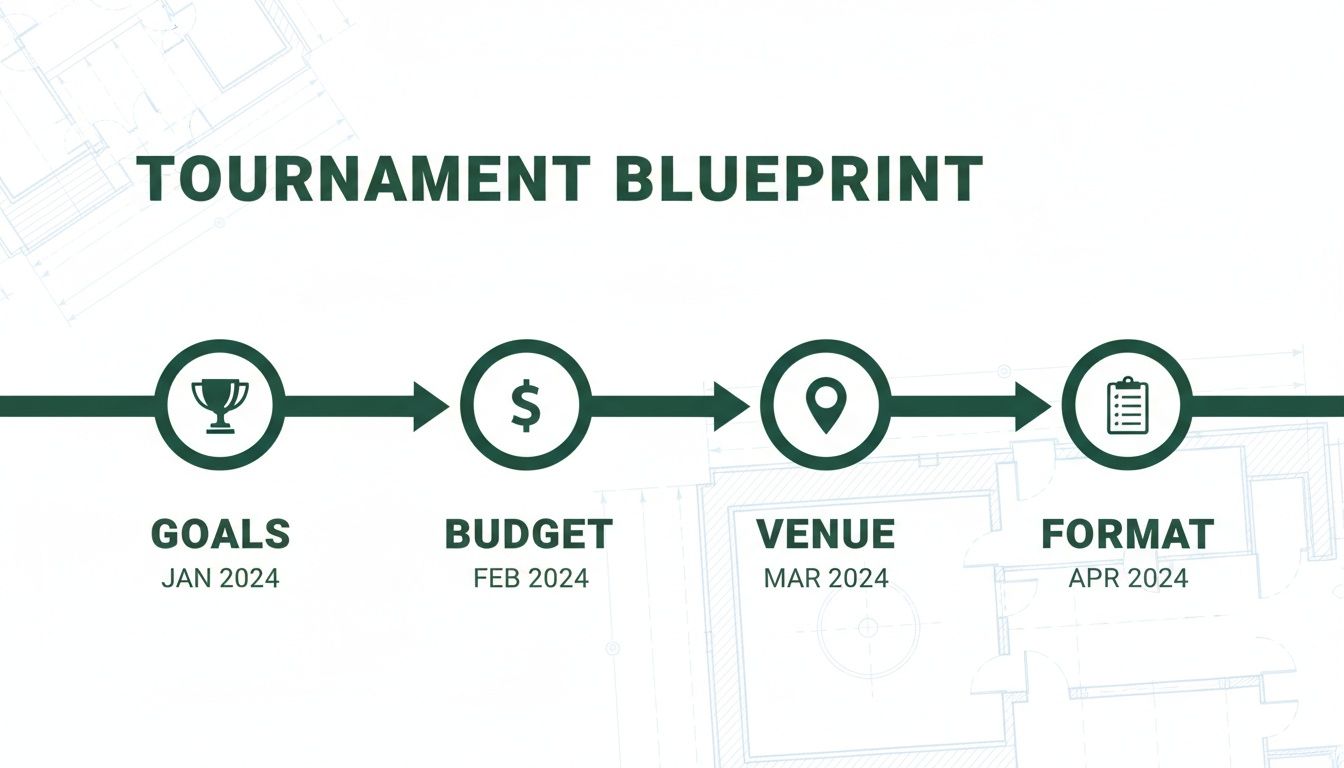 You can see how each stage, from setting goals to picking a format, logically builds on the last one.
To get started, here's a quick rundown of the foundational elements you'll need to lock in.
Essential Tournament Planning Checklist
| Planning Area | Key Decisions & Actions | Pro Tip for Success |
|---|---|---|
| Goals & Vision | Define the primary purpose (fundraiser, corporate, competitive). Set measurable targets (e.g., raise $25k). | Keep your primary goal visible during all planning meetings to stay on track. |
| Budget | List all potential expenses and revenue sources. Set realistic registration fees and sponsorship levels. | Always add a 10% contingency line item for unexpected costs. It’s a lifesaver. |
| Venue & Date | Research courses, check availability, and compare packages. Avoid major holidays or conflicting local events. | Mondays are often the best value, as many private courses are available for outside events. |
| Format | Choose a format that matches your event's goal and player skill level (e.g., Scramble for fun, Stroke Play for serious). | For charity events, a Scramble is almost always the right call. It’s inclusive and keeps the pace of play moving. |
Getting these four pillars right makes every other decision down the line infinitely easier.
Choosing the Right Date and Venue
Picking the right course and date is more art than science, but it’s critical for getting people to show up. Always check local community calendars to make sure you’re not competing with a major holiday, a big festival, or another major golf event in your area.
When you're looking at venues, think beyond just the price tag. What’s the course’s reputation? Is it too difficult for your average player? How are the clubhouse and dining facilities? Finding a course that matches the vibe of your event makes for a much better all-around experience.
Questions to Ask the Course
Have a list ready before you start calling around. It helps you compare options fairly and avoid surprise costs later:
- What’s included in the per-player fee? Green fee, cart, range balls, and all taxes and service charges?
- Do you require a deposit, and what is the payment schedule?
- What is your cancellation and weather policy?
- Can we place sponsor signs on the course? Some clubs have strict rules about this.
- What are the food and beverage minimums? This is a classic hidden cost.
If you can, visit in person and meet the event coordinator before you book. You will learn a lot about the service you can expect on the day.
Selecting a Compelling Tournament Format
The format you choose has a massive impact on the day's atmosphere. For a fun, low-pressure event—perfect for corporate outings or charity fundraisers—the Scramble is king. It keeps things moving and allows golfers of all skill levels to contribute and have a good time.
If your crowd is a bit more competitive, you have options:
- Best Ball (or Four-Ball): Each golfer plays their own ball, but the team takes the best score on each hole. It’s a great blend of individual play and team strategy.
- Stroke Play: The classic format where every shot counts. This is the go-to for serious competitions like a club championship where you need a true individual winner.
Shotgun Start or Tee Times?
How the field starts matters as much as the format. In a shotgun start, every group begins at the same time on a different hole. Everyone finishes together, which makes it easy to move straight into lunch, dinner, or the awards. Tee times, with groups going off one after another, give the course more scheduling flexibility, but the last group can finish long after the first, which makes a post-round gathering harder to plan. For most outings with a meal or awards afterward, the shotgun is the simpler choice.
Ultimately, locking in the right format, backed by clear goals and a solid budget, sets the stage for everything else. And thankfully, you don't have to manage it all with spreadsheets anymore. Modern tools can take a lot of the headache out of this process—our guide to golf tournament software shows you how much easier planning can be.
Driving Registrations and Building Pre-Event Buzz
You’ve got the blueprint for your tournament locked in. Now comes the real challenge: filling the field and getting people excited to play. This is where a modern approach to registration and marketing separates the good events from the truly great ones.
Frankly, the days of paper forms and chasing down checks are over. A slick online experience is the new standard, and your event website or registration page is your digital storefront. It needs to look professional, be dead simple to use, and make signing up and paying a painless, one-step process. The goal is to remove every single bit of friction for a potential player.
Creating a Seamless Online Registration Experience
A clunky registration process is a surefire way to lose people before they even commit. A smooth online form, on the other hand, builds confidence right from the start and signals that you've got your act together.
Here’s what your online registration portal should nail:
- Effortless Sign-Up: Let individuals, pairs, or full foursomes register without any headaches.
- Secure Payment Processing: Integrating secure credit card payments is non-negotiable. It gets you paid faster and makes life easier for your players.
- Essential Data Capture: You need to collect names, emails, and handicaps in one clean, organized place.
- Package Options: Clearly display your different options, like a single-player entry, a discounted foursome, or sponsorship bundles that include a team.
Tools like Live Tourney offer customizable registration pages that handle all of this for you, saving you from hours of tedious admin work.
This is a great example of a clean, modern event page that makes it easy for players to get info and sign up.
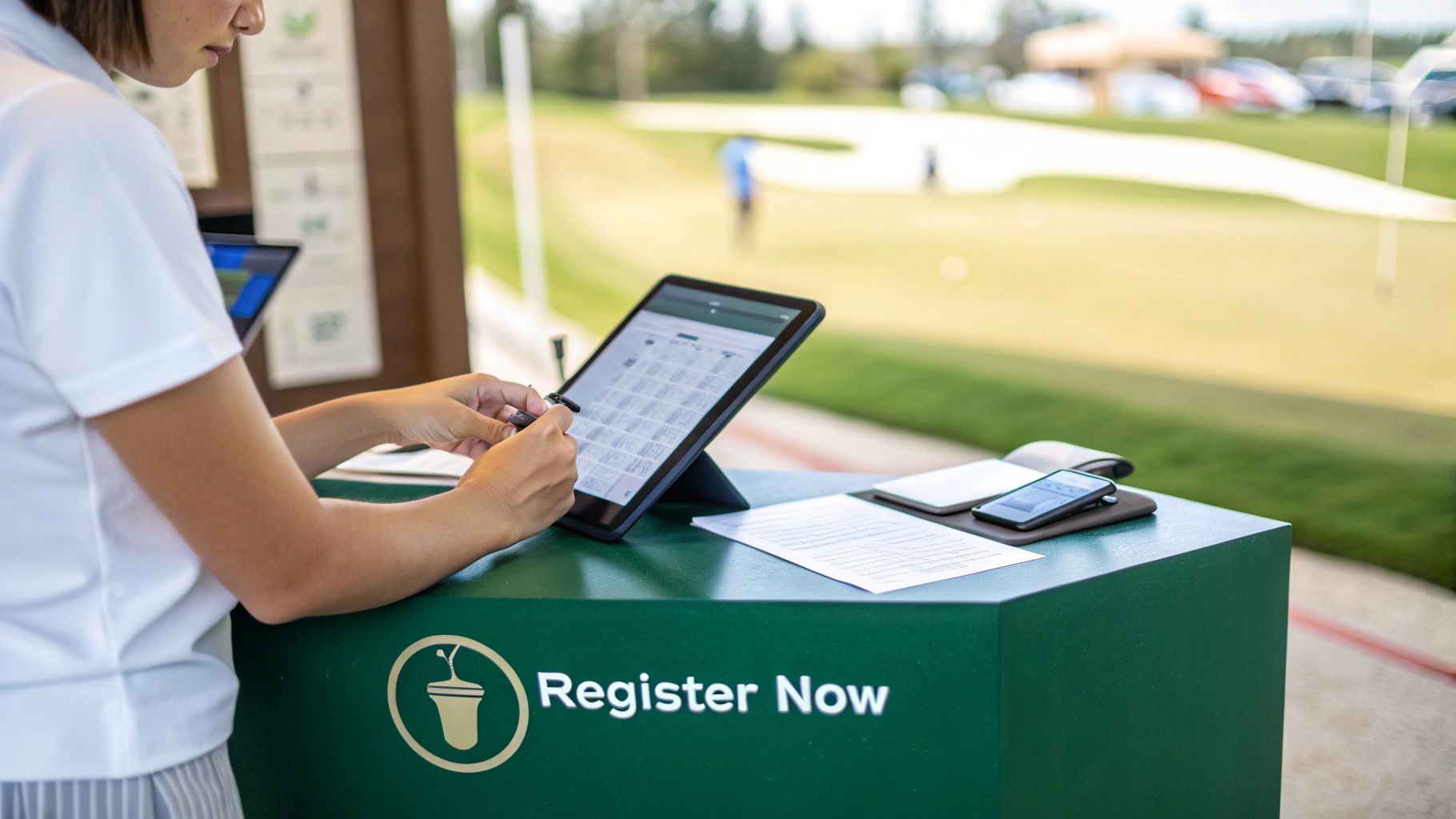 The clear call-to-action and professional look immediately tell a player this is a well-run event.
Crafting a Winning Communication Strategy
Once your registration page is live, it’s time to get the word out. A well-timed communication plan keeps your event top-of-mind and builds a genuine sense of anticipation. Don't just blast out one email and cross your fingers; create a sequence of messages designed to inform, excite, and drive action.
You’ll want to hit this from a few different angles, using email for direct, important updates and social media to create a broader buzz. Kick things off with a "Save the Date" announcement to your core list of potential players and sponsors. Follow that up with a formal invitation that really sells the event—talk up the course, the format, the prizes, and include a direct link to register.
Key Takeaway: Your event communication isn't just about logistics. It's your chance to sell the experience. Use exciting language, share photos of the course, and remind people exactly why your tournament is the one they can't afford to miss this year.
A Practical Pre-Event Communication Timeline
Sticking to a schedule ensures players get timely updates without feeling like you're spamming their inbox. Having a proven timeline makes all the difference in keeping everyone engaged and informed right up until the first tee shot.
Pre-Event Communication Timeline
| Timeline | Action | Purpose |
|---|---|---|
| 8-12 Weeks Out | Send "Save the Date" emails and make initial social media posts. | Get on people's calendars early and create initial awareness. |
| 6-8 Weeks Out | Official registration opens. Send the first formal email invitation. | Drive those crucial early sign-ups and build momentum. This is the time to highlight any early-bird pricing. |
| 4 Weeks Out | Share a "first look" at sponsors or a sneak peek of prizes. | Keep the interest high and show the value of playing. This can push fence-sitters to finally register. |
| 2 Weeks Out | Send a registration reminder email to those who haven't signed up yet. | Create a little friendly urgency as the deadline gets closer. |
| 1 Week Out | Email all registered players with key day-of details: arrival time, dress code, and preliminary schedule. | Make sure everyone feels prepared and knows what to expect when they show up. |
| 2-3 Days Out | Final confirmation email with tee sheets, pairings, and rules of play. | This is the last critical piece of info. Players can arrive knowing exactly where to go and who they're playing with. |
This kind of structured approach makes every participant feel informed and valued, setting the stage for a fantastic experience from the moment they sign up.
Managing Tournament Operations and Scoring
With your event blueprint set and registrations flowing in, it’s time to shift gears. Now we get into the technical heart of the competition—the on-course operations that make or break the player experience.
Getting these details right is what separates a chaotic outing from a professional-grade tournament. The key pieces are choosing the right format, setting fair handicaps, creating smart pairings, and, most importantly, using modern scoring. Each part builds on the last to create a smooth day on the course for everyone.
Choosing the Right Format and Handicap System
The format you choose dictates the entire vibe of the day. A casual charity event, for instance, thrives on a fun, fast-paced Scramble. It’s all about teamwork, which helps mask individual weaknesses and keeps everyone smiling. But for a more serious club championship, you might lean toward a traditional Stroke Play or a strategic Best Ball to add a competitive edge.
Once the format is locked in, handicapping is the next big step to level the playing field. A well-handicapped event gives every team a legitimate shot at winning, which is absolutely essential for keeping players engaged and morale high.
- Scramble Handicapping: Typically, you’ll combine a percentage of each player's handicap to create a team total (e.g., 25% of the A-player's handicap, 20% of the B, etc.).
- Best Ball Handicapping: Players usually get 85% of their course handicap in four-ball stroke play, or 90% in four-ball match play.
- Individual Stroke Play and Stableford: The World Handicap System recommends 95% of each player's course handicap, not the full 100%.
Trying to run these complex calculations manually in a spreadsheet is a recipe for a headache. Using software like Live Tourney automates it all, saving you from the guesswork and ensuring accuracy.
To help you decide, here’s a quick breakdown of the most common formats:
Comparing Popular Tournament Formats
| Format | Best For | Key Advantage |
|---|---|---|
| Scramble | Charity events, corporate outings, casual play | Fast-paced and fun for all skill levels. |
| Best Ball | Member-guests, competitive team events | Allows for individual play within a team structure. |
| Stroke Play | Club championships, individual competitions | The purest form of golf; rewards consistent play. |
| Stableford | Fun leagues, events with varied skill levels | Rewards aggressive play and big numbers don't ruin a round. |
| Match Play | Ryder Cup style events, head-to-head competitions | Each hole is its own contest, so one bad hole costs only that hole. |
Ultimately, the best format is the one that aligns with your event's goals and makes sense for the players you've invited.
The Art of Pairings and Tee Sheets
Believe it or not, creating pairings and tee sheets can be one of the most time-consuming parts of the whole process. You aren't just putting names on a list; you're engineering the social and competitive flow for the entire day. The goal is to balance player requests, group similar skill levels for a better pace of play, and strategically place any sponsors or VIPs.
A manual approach with a spreadsheet is just asking for errors and last-minute chaos. Modern tournament software lets you drag and drop players into groups, automatically assign starting holes for a shotgun start, and generate professional tee sheets in seconds. That kind of agility is a game-changer, especially when you get that inevitable "I have to cancel" call the morning of the event.
Pro Tip: Print and post tee sheets in a few high-traffic spots on tournament day—near registration, in the locker room, and by the range. It’s also a great idea to email the final pairings to all players the day before to manage expectations and ensure a smooth start.
The Power of Live Scoring
If there's one thing that will elevate your tournament from average to unforgettable, it's this. The days of players turning in crumpled, hard-to-read scorecards after a five-hour round are over. Live scoring brings a dynamic, pro-tour feel to any event, big or small.
The excitement of watching a real-time leaderboard update on your phone is a huge draw for players. This isn’t just a gimmick; it directly improves the on-course experience.
- Boosts Engagement: Players are way more invested when they know exactly where they stand against the field.
- Increases Competition: Seeing a rival team post a birdie on the live leaderboard adds a little extra motivation to drain that next putt.
- Speeds Up Play: It gets rid of the need for teams to stop, find a flat spot on the cart, and mark a paper scorecard after every single hole.
Platforms like Live Tourney deliver this entire experience through a simple link—no app download required. This app-free approach is critical because it removes the number one barrier to getting players to participate. They just click a link, enter their scores, and the leaderboard updates instantly for everyone. To see how it all works under the hood, check out our detailed guide on golf tournament scoring.
Running a Flawless Tournament Day
All your planning comes down to this. The day of the tournament is where a good event becomes a great one, creating the kind of memories that have players asking about next year's date before they even leave. This is your game plan for handling the morning rush, keeping things moving on the course, and making sure every little detail adds up to a professional, fun atmosphere.

The experience starts the second a player drives up. A smooth, well-run morning sets a positive tone that lasts all day long. Your goal here is to make every interaction, from the bag drop to the first tee, feel effortless and welcoming.
Setting Up for Success: The Morning Of
Your team needs to be on-site well before the first golfer even thinks about arriving. A detailed morning checklist is your best friend here—it’s what prevents those small, forgotten details from turning into big problems. Think proactive, not reactive.
This early setup time is non-negotiable. You want everything dialed in so you can focus on your players, not on scrambling to fix something last-minute. When your staff is calm and organized, it sends a message of confidence and professionalism.
Here’s a quick rundown of what to focus on first thing:
- Get the Signage Right: Place your welcome banners, registration signs, and sponsor shout-outs where people will actually see them. Clear signs for the bag drop, check-in, and driving range stop people from getting lost and asking the same questions over and over.
- Prep the Registration Table: Get the welcome gifts, rule sheets, and drink tickets organized. Have all your pre-printed materials like cart signs and scorecards ready to go. A well-designed scorecard makes a surprisingly big impression—check out our guide on creating a custom golf scorecard.
- Brief Your Volunteers: Get all your staff and volunteers together for a quick huddle. Make sure everyone knows their role, walks through the schedule, and feels ready to answer common questions. An informed volunteer is a massive asset.
- Check the On-Course Setup: Do a final run-through to confirm sponsor signs are on the right tees. Make sure contest markers for things like "Closest to the Pin" or "Longest Drive" are in place and ready for action.
The Player Check-In and Welcome
A clunky, slow check-in is a killer first impression. Long lines and a disorganized table are hard to recover from. If you’ve handled registration online, this part should be a breeze—just confirm a player’s name and hand them their welcome packet.
This is also your first real chance to make people feel welcome. Have some music playing, offer coffee and pastries, and make sure your staff is greeting players as they arrive. It’s a small touch, but it shifts check-in from a transaction to a genuine welcome.
Key Takeaway: The goal of check-in isn't just to mark someone as "here." It's to make them feel good about their decision to come. Treat them like a valued guest from the moment they arrive, and you’ve already won half the battle.
When it's time for pre-round announcements, keep them short and energetic. Hit the key points—format rules, pace of play reminders, and a big thank you to your sponsors—then get people to their carts. Starting on time is huge.
Managing On-Course Flow and Contests
Once the balls are in the air, your job shifts to managing the experience on the course. This is where a tool like live scoring really changes the game. Instead of players waiting hours to find out where they stand, they can follow the action in real time. It keeps the energy up and adds a competitive buzz that you just don't get with paper scorecards.
On-course contests are another fantastic way to keep everyone engaged. They break up the round and give players of all skill levels a shot at winning something.
Popular On-Course Contests:
- Closest to the Pin: A classic for a reason. Set it up on a scenic par-3, and provide a tape measure and marker for players to write their name.
- Longest Drive: Pick a wide-open par-4 or par-5 for this one. It's a crowd-pleaser that lets the big hitters have some fun.
- Putting Contest: This is a great pre- or post-round activity to set up near the clubhouse. You can even sell tickets to enter as a simple way to raise extra money for a charity event.
Nailing these day-of logistics—with a sharp focus on the player experience—is what ensures your tournament is remembered for all the right reasons.
Awards, Payouts, and Post-Event Follow-Up
The final putt has dropped, but your job isn't quite done. Honestly, how you finish the day is just as important as how you start it. A strong finish is what turns a one-time outing into an annual tradition, leaving players and sponsors eager to come back next year.
The first priority is getting the results finalized. If you’ve ever had to manually collect, verify, and calculate scores from a pile of messy paper scorecards, you know the pain. It’s an awkward, lengthy delay that can completely kill the event’s momentum.
Finalizing Scores and Calculating Payouts
Accuracy is everything. Before you announce a single winner, you need to be 100% confident in the standings. This is where a digital scoring platform like Live Tourney really shines—it automatically handles all the handicap and format calculations, so the results are fair, defensible, and ready the moment the last group finishes.
Once the scores are locked in, it's time to figure out payouts. This can get surprisingly complicated, especially if you have multiple flights, on-course contests, and skins games running.
Here’s a quick breakdown of what needs to happen:
- Verify the Leaderboard: Give the final scores a quick once-over to make sure everything looks right for your format.
- Calculate Main Purse: Distribute the prize money for the main tournament finishers based on the structure you decided on earlier (e.g., Top 3 teams in each flight).
- Settle Side Games: Tally up the winners for Closest to the Pin, Longest Drive, and any skins.
- Prep the Payouts: Get everything organized and clearly labeled for the awards ceremony, whether it's cash, pro shop credit, or prizes.
Automated payout calculators are a game-changer here. They do all the math for you, so you can focus on what’s next: celebrating the winners.
Hosting an Engaging Awards Ceremony
The awards ceremony is your final chance to make a great impression. Keep it energetic and concise. Nobody wants to sit through a long, drawn-out speech when they could be celebrating at the 19th hole.
Start by genuinely thanking everyone—your players, sponsors, volunteers, and the course staff. A little appreciation goes a long way. Then, jump into the awards. Announce the on-course contest winners first to build a little excitement before revealing the main tournament champions.
Key Insight: The awards ceremony isn't just about handing out trophies. It's a critical moment to reinforce your event's brand and show sponsors you value their support. Make sure their logos are visible and give them a proper public thank-you.
Crafting Your Post-Event Follow-Up
Don't let the post-tournament glow fade. Your follow-up is what builds a loyal community around your event. Within 24-48 hours, send a thank-you email to every participant.
This email should include a few key things:
- A sincere thank you for coming out.
- A link to the final leaderboards.
- A gallery of photos or videos from the day.
- A special shout-out to your key sponsors, with links to their websites.
- A link to a brief survey asking for feedback.
Asking for feedback is one of the most valuable things you can do. A simple three-question survey can tell you exactly what players loved and what you can improve for next year. It’s the final step that shows you care about their experience and are committed to making the next event even better.
Printable Golf Tournament Planning Checklist
Use this as a working checklist. Print it, share it with your committee, and tick items off as you go. Adjust the timing to the size of your event.
9 to 12 months out (6 months for smaller events)
- Write down one primary goal and two secondary goals
- Form the committee and assign roles
- Draft the budget, including a 10% contingency
- Work out cost per player and set the entry fee
- Shortlist courses, ask the venue questions, and book the date
- Choose the format, handicap allowances, and shotgun or tee-time start
4 to 6 months out
- Build sponsorship tiers and start sponsor outreach
- Set up the online registration page with payment
- Send the save-the-date
6 to 8 weeks out
- Open registration and send the formal invitation
- Order trophies, prizes, player gifts, and sponsor signs
- Recruit volunteers for check-in, contest holes, and scoring
1 to 2 weeks out
- Send the registration reminder and close registration
- Build pairings, starting holes, and the tee sheet
- Print scorecards, cart signs, and rule sheets
- Email players arrival time, dress code, and the schedule
Tournament day
- Signage, sponsor signs, and contest markers in place
- Volunteer huddle and check-in table ready
- Short pre-round announcement, then start on time
- Live leaderboard running so players can follow along
After the round
- Lock final scores and resolve any discrepancies
- Finalize flights, then calculate payouts and side games
- Publish results and hold the awards
- Send thank-you messages to players, sponsors, volunteers, and the course within 24 to 48 hours
- Send a feedback survey and reconcile the budget
Underneath all of this, a well-run event comes down to five things: one registration path, one player roster, one source of truth for pairings, one scoring workflow, and one clean closeout process. If your plan has more than one of any of these, that is where mistakes creep in.
Running a Golf Tournament in Live Tourney
Live Tourney is web-based software that covers the registration and scoring steps on this checklist. Players sign up and pay online through a registration page you set up with Stripe, with custom questions, capacity limits, waitlists, and automatic email confirmations. On the day, players open their scorecard from the tournament link or a QR code on any phone, with no app to download, and the live leaderboard updates as scores come in. You can also print scorecards and cart signs and send email and text messages to the field. See the features, the online registration guide, or pricing, which starts at $199 for a single event with a 10-day free trial.
Common Golf Tournament Planning Questions
Even with the best checklist in hand, you’re bound to have questions. Every tournament is a little different, and let’s be honest, unexpected things always pop up. We’ve heard just about every question in the book from organizers, so we put together this section to tackle the big ones.
Think of it as your go-to guide for those moments when you need a quick, clear answer. Getting these key decisions right from the start can make all the difference.
How Far in Advance Should I Start Planning?
This really comes down to the size and scale of your event. If you're running a big charity or corporate tournament—something with major sponsors and a lot of moving parts—you need to give yourself 9 to 12 months. That might sound like a lot, but it’s crucial for locking in the best courses and getting on sponsors' radars before their budgets are gone.
For something smaller, like a club championship or a casual member-guest outing, a 4 to 6-month timeline usually works just fine.
The Single Most Important First Step: No matter your timeline, book the golf course first. Seriously. The best dates—especially weekends and those coveted Mondays at private clubs—get snapped up fast. Once you have the course and date locked in, everything else can fall into place around it.
What Is the Best Format for Casual Players?
Got a mix of serious golfers and people who only swing a club once a year? The format you choose is everything. And for this scenario, the Scramble is, without a doubt, the best way to go. It's the standard for almost every charity and corporate outing for a reason.
Here’s the rundown: everyone on the team tees off, the team picks the best shot, and everyone plays their next shot from that spot.
Why does it work so well for casual events?
- It takes the pressure off. A terrible shot doesn't ruin the hole. This is a huge relief for newer golfers who are just there to have a good time.
- It keeps things moving. You're always playing from the best position, which naturally speeds up the pace of play.
- It's great for networking. The format forces everyone to talk and strategize on every shot, which is perfect for building camaraderie.
How Can I Make My Tournament Feel More Professional?
Moving your event from a casual round to something that feels truly special is all about the details. And today, technology is the easiest way to make a big impact. A modern online registration system is a great place to start—it makes signing up and paying easy, which sets a great first impression.
But the single biggest upgrade you can make is app-free live scoring. Putting a real-time leaderboard on every player's phone instantly gives the day a "pro tour" vibe. It's amazing how much more engaged and competitive players get when they can see exactly where they stand.
Beyond the tech, a few other touches go a long way:
- Custom Printed Materials: Well-designed, branded cart signs, bag tags, and rule sheets show you’ve thought through every detail.
- A Smooth Check-In: A chaotic registration table is a terrible way to start the day. Keep it simple, organized, and welcoming.
- An On-Time Start: Nothing says "amateur hour" like a delayed shotgun. Starting on time shows you respect everyone’s time.
When you nail these elements, players notice. It signals a level of care and planning that makes your event memorable for all the right reasons.
Ready to run a better tournament with effortless registration, app-free live scoring, and pro-level management tools? See how Live Tourney helps you get it all done in minutes. Start your free 10-day trial today!