
Jun 12, 2026
nine and dine, golf event management, golf course marketing, live scoring, golf tournament software
A step-by-step guide for course operators on planning a profitable Nine and Dine. Covers format, pricing, scheduling, promotion, and using Live Tourney.
You can usually spot a shaky Nine and Dine before the first group tees off. The poster looks great. The signup list is half manual, half verbal. The restaurant has only a rough headcount. Players aren't sure if they're playing a scramble, a two-person game, or just getting paired up and sent out. Then 5:00 PM hits, the tee sheet backs up, dinner service gets staggered, and staff spend the evening fixing preventable problems.
A good Nine and Dine doesn't fail because the idea is weak. It fails because the operation underneath it is loose.
When a club runs it well, this format is one of the cleanest ways to blend late-day tee inventory, food and beverage revenue, and member engagement into one repeatable event. The golf is short enough to feel accessible. The social side is built in. The logistics are manageable if you decide the format early, communicate it clearly, and use tools that remove manual handoffs.
Why Nine and Dine Is a Must-Have Event
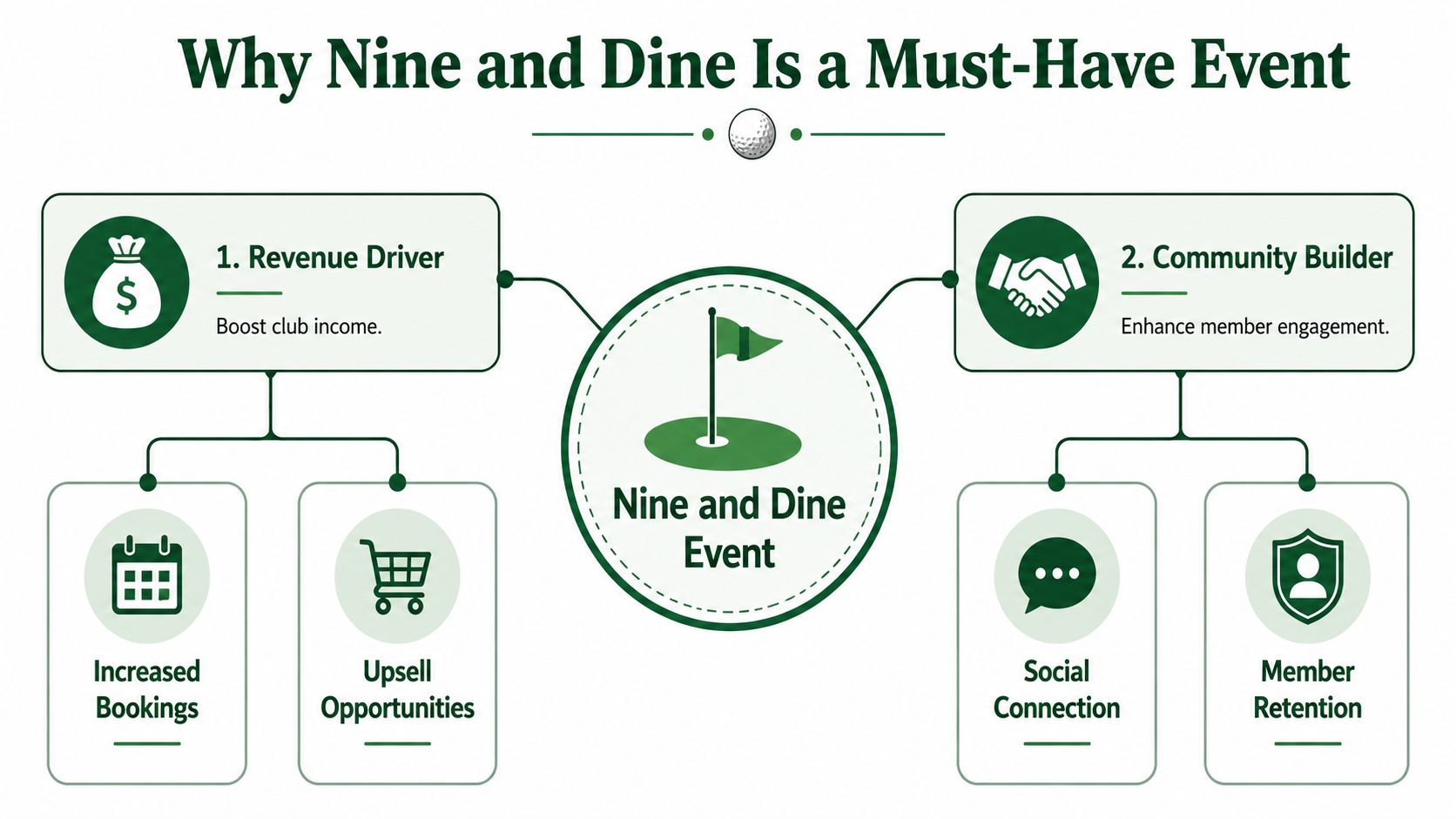
At 4:30 on a Thursday, the range is busy, a few members can squeeze in nine, and the dining room still has open capacity. A well-run Nine and Dine turns that window into booked tee times, planned dinner covers, and an event people can commit to without giving up the whole night.
The format works because it matches how golfers already behave. The National Golf Foundation reported that core golfers played 33% of their rounds as nine-hole rounds, and occasional golfers played more than 40% as nine-hole rounds, in its analysis of nine-hole golf demand. The USGA also noted that about 13% of all scores posted to the World Handicap System in 2020 were nine-hole scores, with roughly 10 million 9-hole scores versus about 66 million 18-hole scores in the U.S., in its update on the first year of the World Handicap System.
For operators, that matters because Nine and Dine is not a novelty. It is a packaged version of a habit that already exists, with food and beverage attached on purpose instead of as an afterthought.
That is the business case.
Nine holes lowers the time barrier. Dinner gives the night a built-in finish. Together, they bring in players who want a social event, regulars who do not want a five-hour block on the calendar, and mixed-skill groups that would skip a formal 18-hole event. If the event is structured cleanly, it also gives the shop, outside service team, and restaurant a schedule they can run well.
Clear positioning drives turnout and margin
The operational mistake I see most often is not poor demand. It is a blurry offer.
Players need to know, fast, whether they are buying a casual social round, a light competition, or an organized couples night with dinner included. If that answer is unclear, the shop gets extra calls, registration slows down, and the restaurant ends up planning against a guess. The clubs that run this format well make the event easy to understand before anyone signs up. A simple event page, a defined format, and one registration flow usually do more for conversion than extra promotional copy. If your staff needs a repeatable framework, this guide on how to run a golf tournament is a useful reference for building the operating side correctly.
The upside goes beyond attendance. Nine and Dine gives you a product to sell during late-day inventory that can be harder to move on standard public tee sheets. It gives the kitchen a known service wave instead of uncertain walk-in traffic. It also gives members and guests a reason to stay on property after the last putt, which is where many clubs either make the margin or lose it.
There are trade-offs. The event only works if golf pace, scoring method, and dinner timing are aligned. Add too many moving parts and the format loses its appeal. Keep it simple, price it for both departments to win, and use the right support pieces, including event rental equipment when your patio, banquet room, or staging area needs extra capacity.
The best Nine and Dine events feel easy to the player because the operation underneath them is tight. That is why they stay on the calendar.
Designing Your Nine and Dine Package
A good Nine and Dine package sells the evening before the first group ever tees off. Players should understand the offer in one read. Staff should be able to explain it in one sentence. If either side struggles, the package is carrying too much clutter.
Start with the positioning. Some facilities are selling a casual social night with golf built in. Others are selling a golf event that ends with dinner. That choice affects everything that follows, including price tolerance, menu structure, prize spend, pace expectations, and how much hand-holding your staff will need on event night.
Build the offer around one clear promise
The strongest packages are simple enough to buy quickly and specific enough to run cleanly. For a social audience, that usually means nine holes, cart, dinner, and a light competition piece. Add too many extras and you create work for every department. The shop has to explain options, the restaurant has to sort inclusions, and players show up with different expectations.
Every package description should answer four questions right away:
Who the event is for
What format they are playing
What the ticket includes
What time golf and dinner happen
That clarity protects margin. It also cuts down on the back-and-forth that slows registration and creates day-of disputes over what was promised.
Choose a format your audience can finish comfortably
The golf format should match the room, not just the preferences of your strongest players. Nine and Dine works best when newer golfers, social players, and regulars can all get around the course without turning the evening into a rules clinic.
Format | Best use | What to watch |
|---|---|---|
Two-person scramble | Social events, beginners, mixed-ability groups | Strong players may want a little more competition |
Better ball | Member events with regular golfers | Scorekeeping gets messy if players are not familiar with the format |
Casual individual play | Networking nights, community events | Pace expectations need to be stated clearly |
For many public courses, the two-person scramble is still the safest choice. It keeps groups moving, reduces scoring errors, and gives weaker players a better experience. Better ball can work well, but only if the field understands it and the shop is ready for more rules questions.
Price from the cost sheet up
Operators get in trouble when they set the price from a gut feel and fill in the costs later. Build the package from actual operating numbers instead. Start with your hard costs per player or per couple, then add the margin each department needs.
Look at the pieces that change profitability fast:
Dinner style: Buffet is easier to staff and easier to time. Plated service can support a higher price, but only if the kitchen and front-of-house team can hit a narrow service window.
Inclusions: One drink ticket, prize entry, or dessert can be useful. Three or four extras usually create more confusion than value.
Prize budget: Keep it in proportion to the audience. Social players care more about the night running well than a large prize table.
Setup costs: If you need an outdoor welcome area, extra banquet tables, or patio coverage, secure event rental equipment early so your golf and food teams are not improvising a floor plan on event day.
One package usually outperforms three. A single standard offer is easier to market, easier to book, and much easier for the shop and restaurant to execute without mistakes.
Package design should reduce admin, not add to it
I always look at one test. Can the staff collect entries, assign players, communicate inclusions, and close out the event without using side spreadsheets and paper notes? If the answer is no, the package is not fully built yet.
That is where the operating side matters as much as the marketing copy. A practical reference is this guide on how to run a golf tournament, which covers the admin pieces operators should lock down before event day.
The best package is not the one with the longest inclusion list. It is the one players understand immediately and your team can deliver profitably every time.
Mastering Scheduling and On-Course Logistics
The failure point usually shows up at 6:30 p.m. The first groups are finishing, the kitchen wants a reliable count, a few players are asking where dinner is served, and the starter is still sorting out a late foursome. Nine and Dine succeeds or fails in that handoff between the golf operation and food service. The operators who run it well build the night backward from the dining window, then set the golf side to feed that plan without confusion.
Tee times or shotgun start
Choose the start format based on what the restaurant can handle and how much pressure your tee sheet is already under.
A shotgun start works best when the event is built around one shared dinner service, one awards moment, and a social finish where everyone arrives together. It creates energy, but it also creates operational load. Cart staging has to be clean. Starting assignments have to be final before players arrive. Pace issues are harder to absorb because one slow group affects the whole room.
Rolling tee times are usually the better fit for facilities that still need to protect regular afternoon play. They spread out check-in, reduce pressure on the starter, and give the kitchen a staggered flow instead of one surge. The trade-off is that the social side feels less synchronized unless you set clear expectations for when dinner service begins and how long it runs.
Neither format is automatically better. The right choice depends on whether your priority is tee-sheet efficiency or a single shared finish.
Build the event around the dining cutoff
The cleanest Nine and Dine schedule starts with one question. When does the kitchen need the field to start arriving?
Once that answer is locked, work backward through the golf operation. Set the first start time, the final acceptable start, cart staging, and the point when the golf shop sends the updated player count to the restaurant. That approach avoids the common mistake of treating dinner as the add-on after the round. Dinner is the second half of the event, and it needs the same level of planning as the first tee.
I also recommend setting one internal cutoff for late arrivals. If players can drift in whenever they want, staff end up rewriting pairings, reassigning carts, and sending bad information to the restaurant.
The event-day sequence that holds up under pressure
Good Nine and Dine operations rely on one shared event sheet, not three separate lists.
Use a sequence like this:
Lock the player list before event day. Last-minute changes happen, but the staff should work from a controlled roster, not a running collection of texts and phone notes.
Assign carts and starting positions before check-in opens. Mixed-skill social events move faster when the staging is already visible and labeled.
Check players in through one station. The shop should confirm the booking, note any inclusions tied to the event, and give each group the same post-round instructions.
Give the starter one final version of the pairings. If the starter, shop, and restaurant are each using different information, mistakes are almost guaranteed.
Update the restaurant from the course, not from guesswork. As groups make the turn or finish, send a live count so front-of-house can pace seating and ticket flow.
That last step matters more than many operators expect. A dining room can recover from staggered arrivals. It struggles when the count is wrong.
Staff the handoffs, not just the departments
Nine and Dine often falls into the shift change gap. The golf shop is transitioning out of the day crew, the restaurant is ramping up for dinner, and nobody owns the overlap unless you assign it clearly.
Put one person in charge of the event timeline. That person does not need to run every task, but they should own the live decisions. Who is checking players in? Who is watching the first tee? Who tells the restaurant the last groups are off the course? If those responsibilities are vague, the event will feel disorganized even when the turnout is good.
If you need a better way to manage staff availability, use a scheduling system that shows coverage gaps before event week instead of relying on same-day texts to fill holes.
Modern tournament tools help here too. A platform that keeps registration, pairings, and scoring in one place gives the golf shop and restaurant a cleaner operating picture. If you're comparing systems, this guide to tournament hosting software for golf events shows what to look for in a setup that reduces manual coordination errors.
Streamlining Registration and Live Scoring
Paper signups still hang around because they're familiar, not because they work. For Nine and Dine, manual registration creates problems at the exact points where you want speed. Pairings get revised late. Payment records live in more than one place. Staff answer the same questions repeatedly because the original signup didn't capture enough detail.
Digital registration fixes the front end first. Players choose the event, enter their information, and complete payment in one path. Staff get a cleaner roster, cleaner pairings, and fewer last-minute shop calls asking who's in, what's included, and when the round starts.
Registration should remove phone traffic, not create it
A useful registration page does more than take names. It should also carry the event rules players usually call about:
Format and eligibility
Start procedure
What's included in the price
Where dinner happens after the round
What players need to bring or know at check-in
That information belongs on the event page, in the confirmation email, and in the pre-event reminder. When it doesn't, the golf shop becomes a help desk.
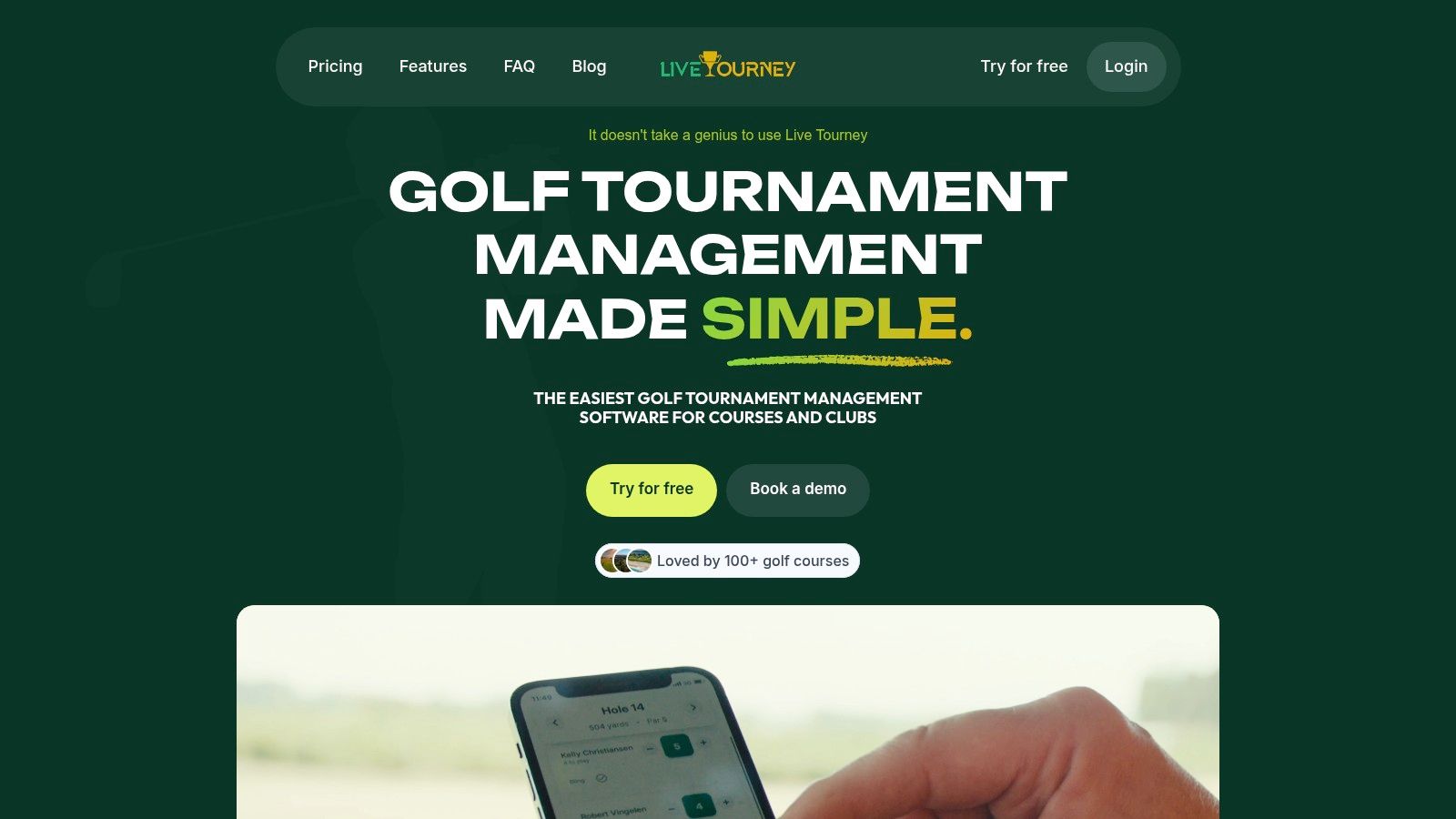
This is the kind of workflow modern tournament tools are built for. For example, Live Tourney is a web-based option that handles registration, payments, pairings, and live leaderboards in one system. If you're comparing platforms or planning a cleaner admin process, this overview of tournament hosting workflows is a useful reference.
Live scoring changes the feel of the event
Nine and Dine is usually light, social, and fast-moving. That's exactly why live scoring helps. It adds a bit of energy without turning the evening into a hard-core tournament.
With paper cards, players finish, hand things in, and wait. Someone in the shop enters scores, checks math, and tries to sort out ties while dinner is already underway. With live scoring, players can enter scores as they play, and the leaderboard stays visible in real time.
That creates three practical wins:
Old method | What happens | Better method |
|---|---|---|
Paper scorecards | Staff chase totals after the round | Mobile score entry |
Spreadsheet pairings | Updates require manual edits | Centralized event roster |
Verbal results announcements | Delays and correction risk | Live leaderboard display |
A Nine and Dine doesn't need heavy competition. It does need clean score handling if you're giving out prizes.
Keep the technology invisible to players
The best event tech doesn't ask players to learn much. If scoring works through a phone link and the registration flow is simple, adoption is easier across mixed-age groups and casual players.
The standard to aim for is simple. Staff should spend less time entering data. Players should know where to sign up, how to check in, and how to follow results without hunting for instructions. If the platform adds steps, it's solving the wrong problem.
Coordinating a Seamless Dining Experience
The round ends on the ninth green, but the event doesn't. In many ways, the dining transition is where players decide whether the evening felt polished or patched together.
A smooth handoff starts before the first group goes out. The kitchen needs an accurate count, a service model, and a realistic arrival pattern. The golf shop needs to know exactly what the restaurant will honor. If either side is working from assumptions, the first thing players feel is confusion at the host stand or bar.
Follow the player from the ninth green to the table
A clean dining flow feels simple from the guest side.
Players finish nine, return carts, and move inside with one obvious next step. If the event includes a set dinner, staff direct them to the dining room or patio. If it uses a dining credit, players should know where it's valid, when it must be used, and what they need to present.
That sounds basic, but here many events leak value. The common problem isn't the menu. It's validation. If the golf operation issues a voucher, receipt, or package marker and the restaurant doesn't verify it consistently, billing gets messy and players get mixed messages.
Choose the service model your staff can actually deliver
There isn't one right dining structure. There is only the one your building and team can execute cleanly.
Consider the main options:
Buffet or stations: Good for faster service and mingling. Easier when arrivals are staggered.
Set menu: Better if you want a more formal evening. Less flexible if groups finish at different times.
Dining credit: Gives guests choice and works well in grill-room settings, but only if redemption is tightly tracked.
The dining room shouldn't be figuring out event rules on the fly. Every server lead and host needs the same one-page event brief the golf shop is using.
Small coordination choices shape the whole night
A few details decide whether dinner feels relaxed or choppy:
Table strategy: Seat by foursome if the golf is social. Mix groups only if networking is part of the event promise.
Awards timing: Don't force speeches before people have food. Let the room settle first.
Menu scope: Fewer solid choices beat a broad menu that slows the line and burdens the kitchen.
If the event has prizes, keep them near the dining area, not buried in the golf shop. If players need to validate anything, put that checkpoint where traffic naturally flows. Every extra stop creates a stall.
The best test is simple. Walk the route yourself before the event starts. Finish the ninth hole in your head. Return the cart. Enter the clubhouse. Ask what the player sees next. If the answer isn't obvious, fix the handoff before your guests have to figure it out for you.
Promoting Your Event and Communicating with Players
At 3:30 on event day, the avoidable problems show up fast. A couple arrives expecting a casual date-night round, another group asks where the shotgun assignments are, and the restaurant is still answering questions the golf shop should have settled a week earlier. Promotion decides whether your field arrives ready or confused.
Nine and Dine marketing works best when it sells both the experience and the operating details. The photos and social energy get attention. The specifics get registrations over the line and cut down on staff interruptions before check-in, on the first tee, and at dinner.
What every promo needs to answer
If a flyer, event page, or social post leaves players guessing, expect slower signups and more pre-event calls. Every promotion should clearly answer:
How play starts: Tee times or shotgun
How golf is scored: Scramble, better ball, individual play, or purely social golf
What's included: Golf, cart, dinner, prizes, drink ticket, or dining credit
Who the event is built for: Couples, members, public players, women, beginners, mixed field
What happens after the ninth hole: Where dinner is, when food starts, and whether awards come after the meal
Those details do more than reduce confusion. They qualify the field for you. The right players sign up faster when they can tell whether the night fits their expectations and pace.
Communicate in stages, not blasts
Good event communication follows the player's timeline.
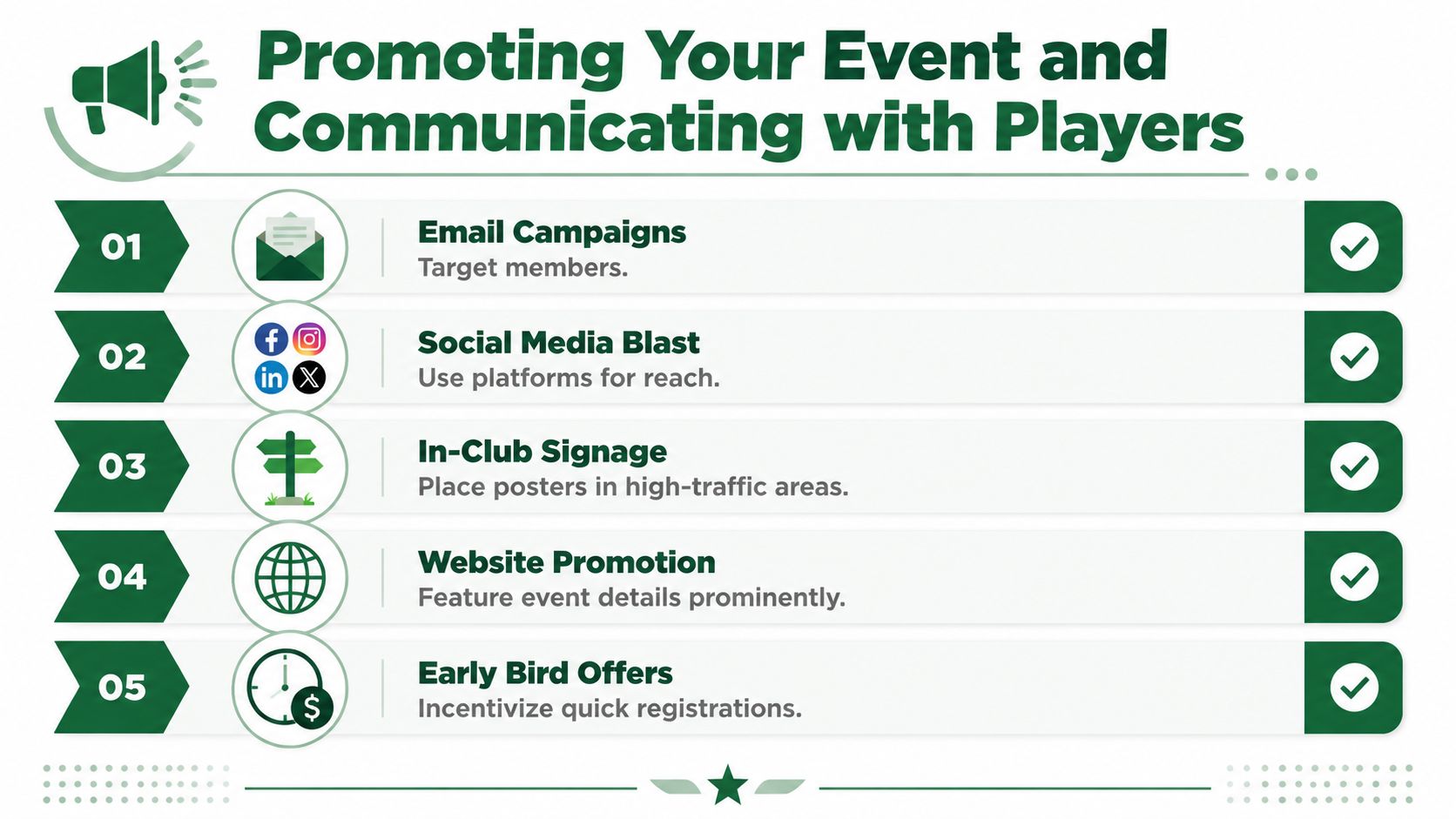
Before registration closes, lead with the offer and the format. Put the price, audience, inclusions, and start structure in every channel you control: email, website, social, and in-club signage. If sponsors are part of the package, the packaging ideas in these charity golf tournament sponsorship packages can help you present sponsor value without cluttering the player message.
Right after registration, send a short confirmation that removes uncertainty. Include arrival window, check-in location, start format, dinner plan, and any pairing policy. One clear confirmation email prevents a lot of one-off calls.
During event week, send the practical reminder. Keep it tight. Players need the time to arrive, what to bring, where to report, and how scoring or prize results will be handled.
Promotion channels that usually pull their weight
Some channels produce attention. Others produce actual registrations. For most operators, these are the ones worth maintaining:
Email your warm audience first: Members, league players, and recent public guests are your fastest conversions.
Use one event page as the source of truth: Staff should not be pulling details from old graphics or social captions.
Post visuals with real information attached: A polished graphic helps, but the caption needs the format and inclusions.
Place signage where golfers pause: Golf shop counter, starter area, practice tee, grill room, and locker hallway.
Follow up after the event: Share photos, winners, and the next date while interest is still high.
One more rule matters here. Write for the questions your staff hears every week, not for the marketing meeting. If players usually ask whether dinner is included, whether they can sign up solo, or whether beginners are welcome, answer those questions in the first screen of the event page.
Clear communication makes the night easier to run. It also protects margin. Fewer confused calls, fewer no-shows, and fewer registration errors give the staff more time to manage check-in, pace, scoring, and the handoff to food and beverage.
If you're running Nine and Dine events regularly, Live Tourney can help centralize registration, payments, pairings, and live scoring so your golf shop and event staff spend less time chasing details and more time running the evening.





