May 31, 2026
tournament near me, golf tournaments, local golf events, golf leagues, golf competition
Looking for a golf tournament near me? Discover the top 8 places to find local events in 2026, from official GHIN listings to social media groups.

Saturday morning, a player is trying to find a tournament for next weekend. An organizer at another course is trying to fill the last 18 spots in a charity scramble. Both are usually dealing with the same problem. The event exists, but the right people cannot find it quickly.
That is the issue behind a search for "tournament near me." Golf events are scattered across club systems, association sites, social posts, pro shop flyers, email lists, and listing platforms that are updated with varying levels of care. Players waste time chasing dead links or incomplete details. Organizers lose entries because the event is posted in one place while golfers are looking in five others.
The fix is not complicated, but it does require using the right channel for the right event. A state association site attracts a different player than a Facebook group. GHIN matters when handicap verification is part of the format. A public-course scramble may fill faster through direct course marketing and local community groups than through an official tournament calendar. Players who do not yet have an official index can start by learning how to obtain a USGA handicap before they target handicap-based events.
For players, the job is to search smarter based on the kind of competition you want. For organizers, the job is to publish wider and remove friction from signup, payment, and scoring. Modern tournament software helps connect both sides because it turns a listing into a working registration path instead of another dead-end event page.
The sources below are the channels that produce results in practice. Some are formal. Some still depend on local relationships. All of them can help you find a golf tournament nearby, or make sure your own event gets found.
1. GHIN (Golf Handicap Information Network)
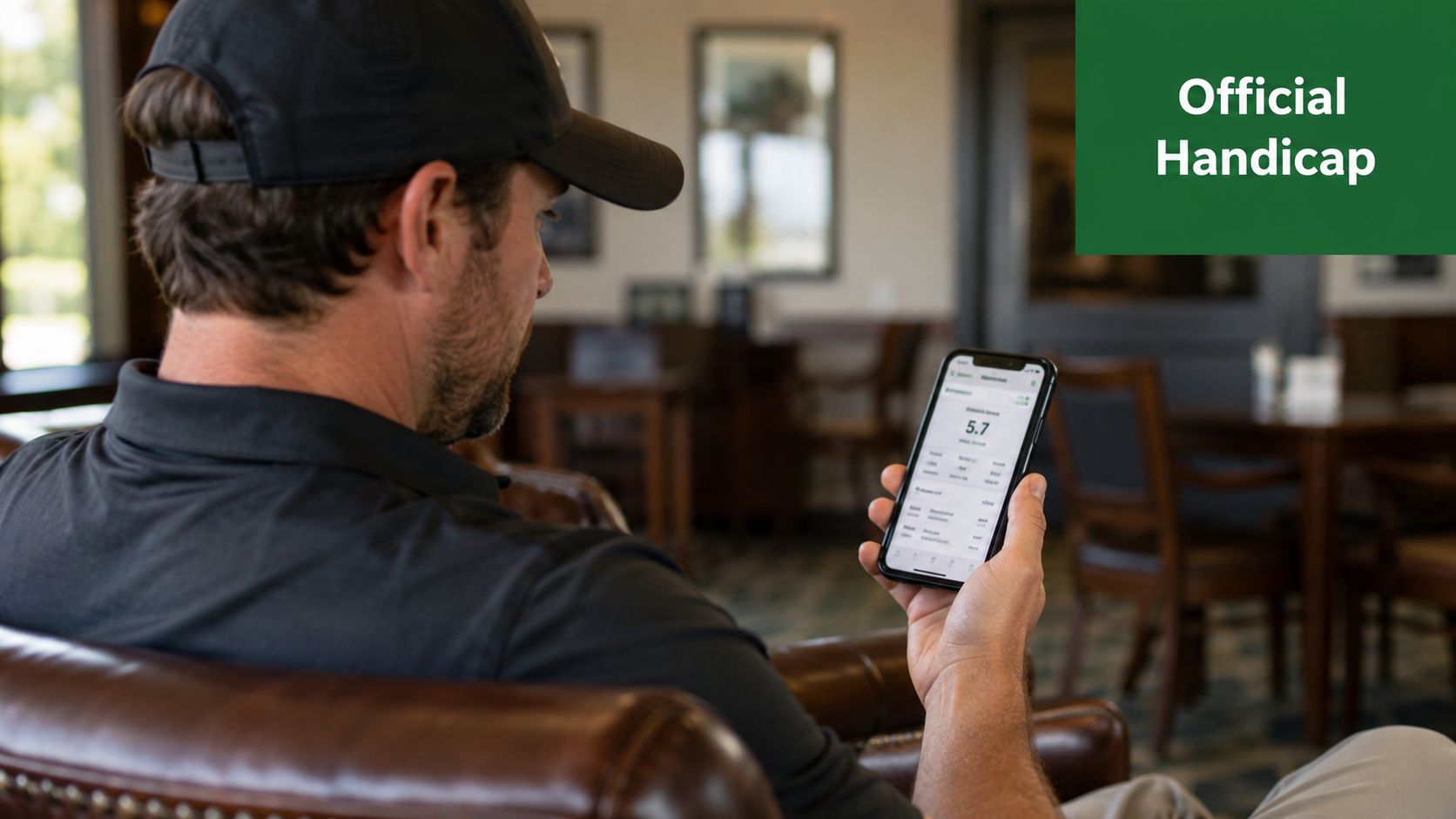
If you care about a legit competition, GHIN is one of the first places to think about. It's where handicap credibility enters the picture. A lot of golfers search for a tournament near me when what they really mean is, “I want an event where flights, net prizes, and eligibility rules are handled correctly.”
For players, GHIN helps separate serious events from casual ones. If a tournament requires an active handicap, you already know the organizer is paying attention to fairness. That doesn't guarantee a great event, but it usually improves the quality of pairings, scoring, and prize structure.
Why it matters for organizers
Courses and clubs that run handicap-based events need a clean way to verify players. Manual handicap entry creates mistakes, arguments, and extra work in the shop. If your event uses flights, net competitions, or member-guest formats, handicap integration saves time and reduces friction.
A player also trusts a registration page more when handicap handling is clear. If the event says who's eligible, what index is required, and how verification works, entries come in faster.
Practical rule: If your format depends on fairness, handicap verification shouldn't happen in a spreadsheet.
A few ways to use GHIN well:
Require current handicap status: Make it obvious whether the event is gross-only, net-only, or mixed.
Match format to field quality: A member event can support tighter eligibility rules than an open scramble.
Reduce back-office cleanup: Sync handicap data into your tournament workflow instead of retyping it.
Help newer players get ready: Point golfers who don't yet have an index to a guide on how to obtain a USGA handicap.
The trade-off is reach. GHIN is strong for sanctioned and club-connected golf, but it won't catch every charity outing or public-course scramble. It's best when the event's identity depends on official scoring standards.
2. Golf Event Aggregator Websites (GolfLink, GolfNow, TheGrint)
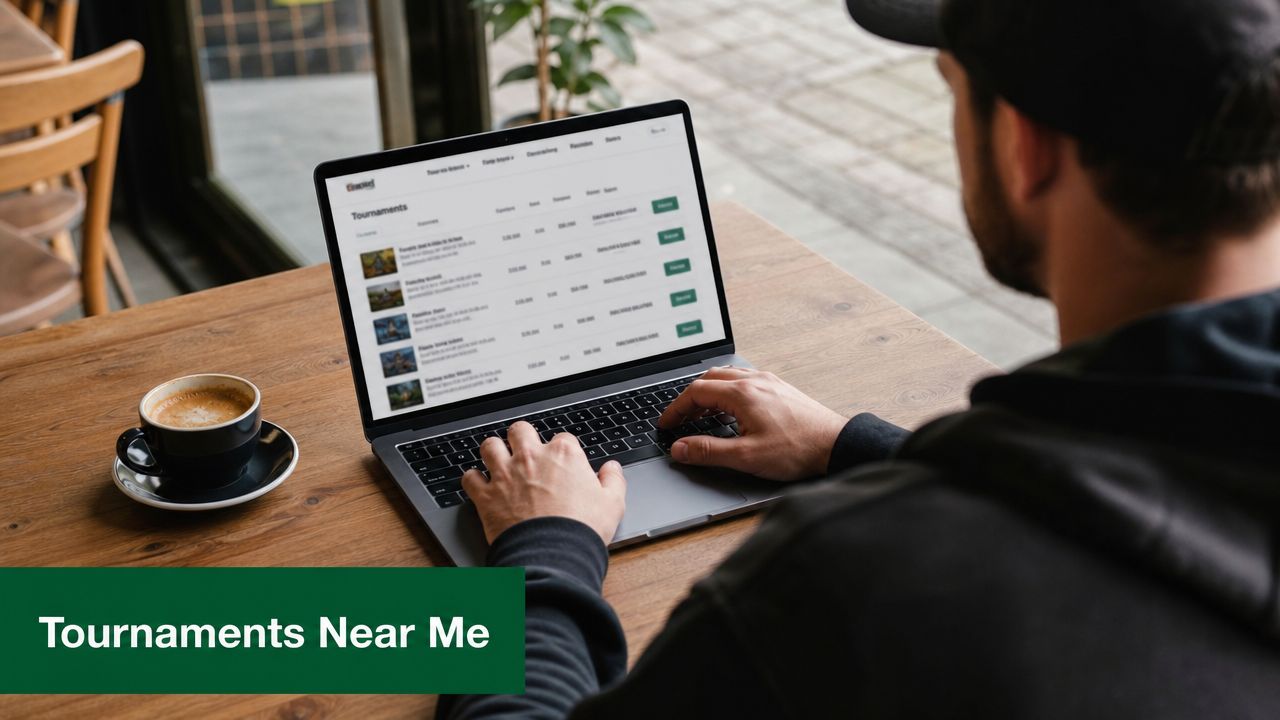
If GHIN is the credibility channel, aggregator sites are the visibility channel. These are the places golfers often hit first because they feel familiar. Someone already checking tee times or course info will often discover an event if it's listed clearly.
For players, this is one of the fastest ways to browse options across multiple facilities without opening ten different course websites. For organizers, these sites can surface your event to golfers who were never on your email list to begin with.
What works on aggregator listings
Good listings are specific. Bad listings sound like placeholders. If your event page only says “scramble tournament” with a date and phone number, most golfers will keep scrolling.
The best listings answer the questions people have:
Who can play: Public, members, juniors, women, seniors, corporate teams, charity foursomes
What format it is: Scramble, best ball, individual stroke play, match play, mixed event
How registration works: Online form, call-in, contact person, payment timing
What happens on-site: Check-in window, shotgun or tee times, food, prizes, side games
One common problem with tournament near me results is that availability isn't obvious. Event pages across sports often bury whether an event is still open, age-appropriate, or even relevant. One tournament page reviewed in the provided research explicitly notes that team check-in is completed online and lists contacts for questions, which shows how operational details can matter more than proximity.
A local result isn't useful if the event is full, private, or built for a different player segment.
Organizers should also keep their listing language consistent across platforms. If GolfNow says “2-person best ball” and your own page says “member-guest style scramble,” players lose confidence. If you need format inspiration for clearer event descriptions, this roundup of tournament golf games is useful.
The downside is control. Aggregators help discovery, but they rarely present your event exactly the way your own site can.
3. Local Golf Association Websites and Email Newsletters
State and regional golf associations are where serious local calendars often live. These sites aren't always flashy, but golfers trust them. If you want qualifiers, amateur series events, junior competitions, women's events, or established local championships, much of the primary schedule resides there.
For players, association calendars tend to filter out the noise. You're less likely to waste time on vague listings. For organizers, association distribution gives your event legitimacy, especially if the field includes competitive amateurs or handicap-sensitive formats.
Why these channels stay valuable
Association emails still work because they go to golfers who already care enough to open them. That's a very different audience from a general social media follower. These players often know registration windows, handicap requirements, and pace expectations before they click.
They're also looking for complete information, not hype. If your event gets listed through an association, include the details that matter up front:
Eligibility details: Residency rules, age brackets, handicap limits, membership requirements
Format details: Individual or team play, number of rounds, cut policy if relevant
Operational details: Practice round access, host course, registration deadline, refund terms
A lot of organizers miss the timing piece. Association-driven players plan earlier than casual outing players do. If your notice goes out too late, many of the golfers you want have already booked their month.
Best fit for this channel
Association websites and newsletters are strongest for events that need structure and trust. Think state amateur events, local qualifiers, junior series stops, club-team competitions, or invitationals with formal rules.
This channel is weaker for a last-minute scramble or a casual fundraiser. Those events can still benefit from association relationships, but they usually fill through a broader mix of direct outreach and community promotion.
If you're a player searching tournament near me and you want something more serious than a weekend open scramble, your local association should be near the top of the list.
4. Social Media Groups and Communities (Facebook, LinkedIn, WhatsApp)
Social channels are messy, but they're where a surprising amount of local golf traffic moves. Not because the information is perfect. Because people ask questions there in real time, and somebody answers.
A Facebook group for golfers in your city may surface a member-guest opening, a charity scramble, a skins game, or a public-course event that never made it onto a polished website. WhatsApp groups are even more direct. They're often where regulars hear about open spots before the public does.
Where players get an edge
Players who rely only on official listings miss a lot of golf. The informal network matters, especially for local events that fill through existing communities. If you're trying to find a tournament near me on short notice, a local group often gives you the fastest answer.
LinkedIn is a different animal. It's less about finding your Saturday game and more about corporate outings, charity committees, and networking groups that organize annual events.
Social media is strongest when someone wants a current answer, not just a listing.
A practical approach for players:
Join city or regional golf groups: Look for active discussion, not just abandoned pages.
Watch comments, not just posts: Openings and waitlist movement often show up there first.
Ask direct questions: “Public or member-only?” and “Still taking singles?” get better answers than “Any tournaments around?”
Where organizers go wrong
The biggest mistake is dropping a flyer into a group and disappearing. That reads like spam, and group admins notice. The better approach is to participate like a local operator who knows the golf scene.
For organizers, social works best when you post details people can act on immediately. Include the format, who it's for, whether singles can join, and where to register. Then answer comments fast. If someone asks whether the event is open to the public and you reply a day later, you probably lost the entry.
This channel doesn't replace a real registration page. It feeds one.
5. PGA Tour Events and Official Tournament Series Websites
A player pulls out a phone on the back nine and asks a simple question: Where do I stand? Official tour sites have trained golfers to expect an answer right away. Even if they are not searching the PGA TOUR schedule for a local event, they bring those expectations with them to every member-guest, charity outing, and club championship.
That makes this channel useful for both sides of the market. Players can use official series sites to track larger events, understand how tournament information is presented, and spot qualifiers or regional series that may be open to them. Organizers should study these sites as a model for discoverability. Clean schedules, clear eligibility, fast scoring updates, and reliable event pages are what players now read as professional.
What Local Organizers Can Learn from Pro Tour Infrastructure
The strongest official tournament sites do a few basic things well, every time. The PGA TOUR tournament schedule and event pages show dates, host venue, status, and event-specific details in a format players can scan quickly. Major amateur events do the same with pairings, starting times, and live leaderboards posted where people expect to find them.
For a local organizer, the lesson is practical. Do not make golfers hunt through a flyer, a Facebook comment thread, and a PDF just to confirm the format and tee time policy. Put the core details on one page and keep that page current.
Players notice the difference immediately.
Official tournament infrastructure also reinforces a higher standard for scoring. The PGA TOUR app and event pages have made live position changes feel normal. A local event does not need tour-level production, but it does need visible results if the format is competitive. That can be as simple as mobile scoring with a public leaderboard. If players have to wait until the banquet to learn who is leading, the event feels older than it needs to.
How to use this channel well
For players, official series sites are less about finding next weekend's local scramble and more about finding structured competition with a clear operating standard. Check for:
Qualifier pathways: Regional or sectional events tied to a larger series
Eligibility details: Age, handicap, amateur status, membership requirements
Event cadence: Schedules that help you plan a season instead of a single weekend
Scoring visibility: Proof that the event is run with real tournament discipline
For organizers, the takeaway is operational:
Build one dependable event page: Date, format, eligibility, fees, registration deadline, contact, and status
Publish pairings and updates on time: Late information creates support calls and lost trust
Use mobile-friendly scoring: Phones are the first screen during an event
Keep the event discoverable after launch: A page that goes stale halfway through registration stops working as a channel
The trade-off is reach. Official tour and series websites set the standard, but they do not usually surface smaller local events unless those events belong to that system. That is why smart operators borrow the structure, then distribute their event through other channels with a registration page that works the same way every time.
6. Course Pro Shop Bulletin Boards and In-Person Networking
This is still one of the most underrated channels in golf. A physical board in the shop, a starter mentioning an upcoming event, or a head pro talking to regulars at the counter can fill a field faster than people expect.
Why? Because context matters. A golfer standing in your shop already knows the course, the staff, and the vibe. They don't need a long marketing pitch. They need a reason to say yes.
What old-school promotion still does better than digital
In-person promotion works especially well for repeat participation. A player who enjoyed one event is much more likely to sign up for the next one when a staff member asks directly. That personal invitation carries more weight than a generic email blast.
Bulletin boards also help with the casual browser. Someone may not be actively searching tournament near me online, but while checking in for a weekend round they see a flyer for a two-person event next month and ask about it.
Good shop promotion usually includes:
Clear printed details: Date, format, eligibility, sign-up method, contact person
Visible placement: Near check-in, exits, and any waiting area
Staff alignment: Everyone in the shop can explain the basics in the same way
“We've got a spot for you if you want in” is often more effective than a polished digital ad.
The trade-off
This channel is local by design. It won't reach golfers who've never visited your facility. It also depends heavily on staff consistency. If one employee mentions events and another doesn't, results become random.
Still, for member-heavy clubs, busy public facilities, and courses with strong regular play, this channel is too important to ignore. The best operators don't choose between shop promotion and digital promotion. They use the shop to reinforce what golfers already saw online, or to convert players who never saw it at all.
7. Corporate Golf Outing Planners and Event Management Platforms
Corporate and charity golf lives in a different lane from individual tournament discovery. The buyer usually isn't the player. It's an office administrator, nonprofit staffer, sponsor contact, or committee chair trying to book an event that won't fall apart.
That changes what makes your course discoverable. These planners don't care only about “tournament near me.” They care about whether your venue can host a polished day with registration, sponsor visibility, check-in flow, scoring, food timing, and awards.
What this audience is really looking for
A corporate planner wants clarity. If your site or profile doesn't show what's included, they'll move on. If they have to call to learn whether you host shotgun starts, sponsor holes, or boxed lunches, you've added friction where they expected certainty.
Specialist directories, venue marketplaces, and agency relationships matter. They connect planners with facilities that look organized enough to trust.
For organizers and courses, a few pieces make a difference:
Package structure: Explain what a standard outing includes
Single point of contact: One person owns the event from inquiry to scoring
Registration workflow: Team entry, sponsorships, donations, and payment should feel coordinated
Post-round presentation: Results, contests, and sponsor recognition need to move smoothly
If you market to this segment, this corporate golf day marketing guide is a useful outside reference.
Where software matters most
Corporate golf is where clunky operations become visible fast. A planner may forgive weather. They won't forgive confusion at check-in or a scoring delay that drags the dinner schedule.
This audience also responds well to browser-based tools. In tournament-style products outside golf, NinjaTrader Arena describes a setup using simulated accounts with live CME market data in a risk-free environment. The golf parallel is straightforward: lightweight, live, low-friction participation beats heavy setup. For outings, that usually means mobile registration, simple links, and app-free scoring.
8. Golf Course Websites and Direct Marketing Channels
Your own website is the only channel you fully control. That matters more than most courses realize. If every other source sends traffic out into the world, your site is where the decision should get made.
A strong course site can rank for local intent, answer key questions, and convert interest into a registration without forcing golfers to hunt around. A weak one does the opposite. It sends people back to search results.

What a tournament page needs
Most event pages fail because they're built like announcements instead of registration pages. They mention the event, but they don't remove uncertainty.
A good tournament page should make these points obvious:
Who it's for: Public golfers, members, juniors, couples, corporate teams, charity field
What the day looks like: Check-in, warm-up, starting format, contests, meal, awards
How to enter: Registration button, payment method, team options, deadline, waitlist
How results will appear: Live scoring, leaderboard link, post-event recap
Analytics matter here too. Battlefy emphasizes the ability to find, create, and manage tournaments, while adjacent analytics platforms such as Esports Charts position data as a way to understand the popularity level of a live event. Golf operators should think the same way. If your tournament pages, leaderboards, and post-event reports don't produce usable insight, you're leaving value on the table.
Direct channels beat rented channels
Email lists, text updates, and your own event pages usually convert better than broad awareness channels because the audience already knows your facility. Use outside platforms to attract attention. Use your own pages to close the registration.
The page itself should also support the event after sign-up. A practical model is a single mobile-friendly page that handles registration, player info, and live scoring in one place. If you're building that workflow, this guide on how to run a golf tournament covers the operational side well.
Tournament Near Me: 8-Source Comparison
Channel | Implementation Complexity 🔄 | Resource Requirements ⚡ | Expected Outcomes 📊 | Ideal Use Cases 💡 | Key Advantages ⭐ |
|---|---|---|---|---|---|
GHIN (Golf Handicap Information Network) | Moderate–High (USGA membership, integration steps) | Moderate (annual fees for clubs, API/integration effort) | Reliable handicap verification; access to competitive players | Official club tournaments, handicap‑verified events | USGA‑sanctioned credibility; standardized scoring; large user base |
Golf Event Aggregators (GolfLink, GolfNow, TheGrint) | Low–Moderate (listings + optional integration) | Moderate (commission fees, content management) | Increased registrations and visibility; faster field fill | Public tournaments, daily‑fee course events, discoverability drives | Wide audience reach; built‑in registration & payments; SEO benefits |
Local Golf Association Sites & Newsletters | Low (submission/listing process) | Low (usually free listing; coordination time) | High credibility within members; targeted quality turnout | Qualifying events, competitive local series, junior programs | Trusted endorsement; engaged subscriber base; no listing fee |
Social Media Groups & Communities | Low (easy to post) but ongoing management required | Low cost, high time investment (moderation, posting) | Fast, localized engagement; variable conversion and reach | Casual events, community building, last‑minute promos | Direct, real‑time communication; peer recommendations; low cost |
PGA Tour & Official Tournament Series Sites | High (compliance, qualifying pathways) | Very high (hosting costs, standards, logistics) | Prestige and media attention; aspirational player interest | Courses pursuing prestige events or qualifiers | High prestige; sponsorship and media opportunities |
Course Pro Shop Bulletin Boards & In‑Person Networking | Very Low (simple physical promotion) | Minimal (print materials, staff time) | High conversion among on‑site players; limited scale | Member clubs, repeat players, walk‑in registrations | Personal trust; strong relationship building; cost‑effective |
Corporate Outing Planners & Event Platforms | Moderate–High (detailed coordination) | High (staff coordination, potential platform commissions) | Large‑revenue events; steady group bookings; sponsorships | Corporate/charity outings, large group events | High per‑event revenue; repeat clients; full logistics support |
Golf Course Websites & Direct Marketing Channels | Moderate (web maintenance, SEO, integrations) | Moderate (site upkeep, email marketing, CMS/ticketing) | Full control of branding, data ownership, sustainable direct bookings | Courses prioritizing direct bookings and long‑term customer relationships | No commissions; data capture; branding and SEO control |
For Organizers: Make Your Tournament Easy to Find
Most golfers don't have a discovery problem. They have a clarity problem. They can often find something nearby. What they can't tell quickly is whether the event is open, relevant, well run, and worth committing to.
That's the core job for organizers. Not just posting a date, but reducing uncertainty at every step. If you want to fill the field, don't rely on one channel and hope players do the rest. Put your event where different golfers look. Use GHIN for handicap-driven credibility. Use aggregators for broad discovery. Use association calendars for serious local players. Use social groups for immediacy. Use your pro shop for trusted word of mouth. Use corporate planning channels when the buyer is an event organizer instead of a player.
Then make all of those channels lead back to one clean place to register.
That central destination should answer basic questions without forcing a phone call. Is the event public or private? Individual or team? Competitive or social? Are there open spots? What format are you using? Can players follow scoring live? Those details matter more than marketing copy, and they matter even more in crowded local markets where golfers have options.
The modern expectation is also much higher than it used to be. Across tournament environments, people now expect real-time information. They're used to live scoring, standings, and updates that don't wait until the end of the day. In golf, that means event pages shouldn't stop being useful once registration closes. They should continue serving players and spectators during the event itself.
That's where a centralized platform can help. Live Tourney is one web-based option for organizers who want a single place for registration, communications, and live scoring without sending players through a clunky setup. For a course, club, or outing organizer, that kind of workflow can simplify multi-channel promotion because every listing, email, post, and flyer can point to the same page.
If you're a player, the practical move is to stop relying on one search result and start checking the channels that match the kind of event you want. If you're an organizer, the practical move is to stop thinking only about promotion and start thinking about discoverability plus conversion. That's what fills fields consistently. Not more noise. Better access, clearer details, and a tournament experience that feels current from signup to final score.
If you want one place to publish registration, manage players, and share live scoring for your next event, Live Tourney is worth a look. It's built for golf tournaments, leagues, and outings, and its web-based setup makes it easy to share a single event page across all the channels above.