
Jul 10, 2026
leaderboard golf app, golf tournament software, live golf scoring, golf event management
Looking for a leaderboard golf app? This guide explains key features, selection criteria, and the benefits of app-free live scoring for modern golf tournaments.

You're probably in the same spot a lot of tournament directors hit sooner or later. The round is over. Players are walking in. A few scorecards are damp, one is missing a hole, someone swears the side game total is wrong, and a crowd is forming near the golf shop waiting to see who won.
That's the moment when old processes show their age. Paper scorecards and spreadsheets can still get the job done, but they slow down the finish, create avoidable errors, and make the event feel less polished than it should. A good leaderboard golf app changes that. The best ones don't just digitize scoring. They make the entire event easier to run and easier to enjoy.
Moving Beyond Paper Scorecards and Spreadsheets
The biggest problem with manual scoring isn't just the paperwork. It's the bottleneck at the end of the round.
Staff collects cards. Someone starts entering scores into a spreadsheet. Another person checks totals. Players wait around asking for updates. If one score is unclear, everything stops while the group gets tracked down for a correction. That delay drains energy from the finish, especially in corporate outings, member events, and charity tournaments where the leaderboard reveal should feel like part of the experience.
Where the old system breaks down
Manual systems usually fail in the same places:
Score collection gets messy when cards come in out of order or with handwriting that's hard to read.
Data entry creates delays because one person often becomes the gatekeeper for every score.
Corrections stack up when gross, net, skins, or side games all depend on the same final card.
Players lose visibility because nobody knows where they stand until the staff finishes the back-office work.
That's why more operators have moved away from end-of-round scoring and toward live scoring during play.
A leaderboard golf app shifts the work forward. Instead of entering everything after the round, players or designated scorers enter hole-by-hole results as they go. The leaderboard updates while the event is still happening. Staff spends less time rebuilding the tournament from scratch after the last putt drops.
Practical rule: If your scoring process depends on one employee typing in every score after the round, the process is the problem, not the employee.
What a better finish looks like
When scoring happens live, the tournament ends differently. Players come off the course already knowing the general shape of the competition. Staff can focus on disputes, payouts, and hospitality instead of rushing through score entry. The awards portion starts faster and feels more professional.
For organizers that are still half-paper, half-digital, it's worth looking at how digital golf scorecards change the flow of an event from the first tee to the final leaderboard.
The main gain isn't that technology looks modern. It's that the operation gets calmer.
What Is a Leaderboard Golf App
A leaderboard golf app is the scoring system behind a live tournament board on a phone, tablet, or display screen. Think of it as the club-level version of what fans see during professional events. Scores come in during play, standings adjust automatically, and everyone can follow the tournament without waiting for a manual recap.
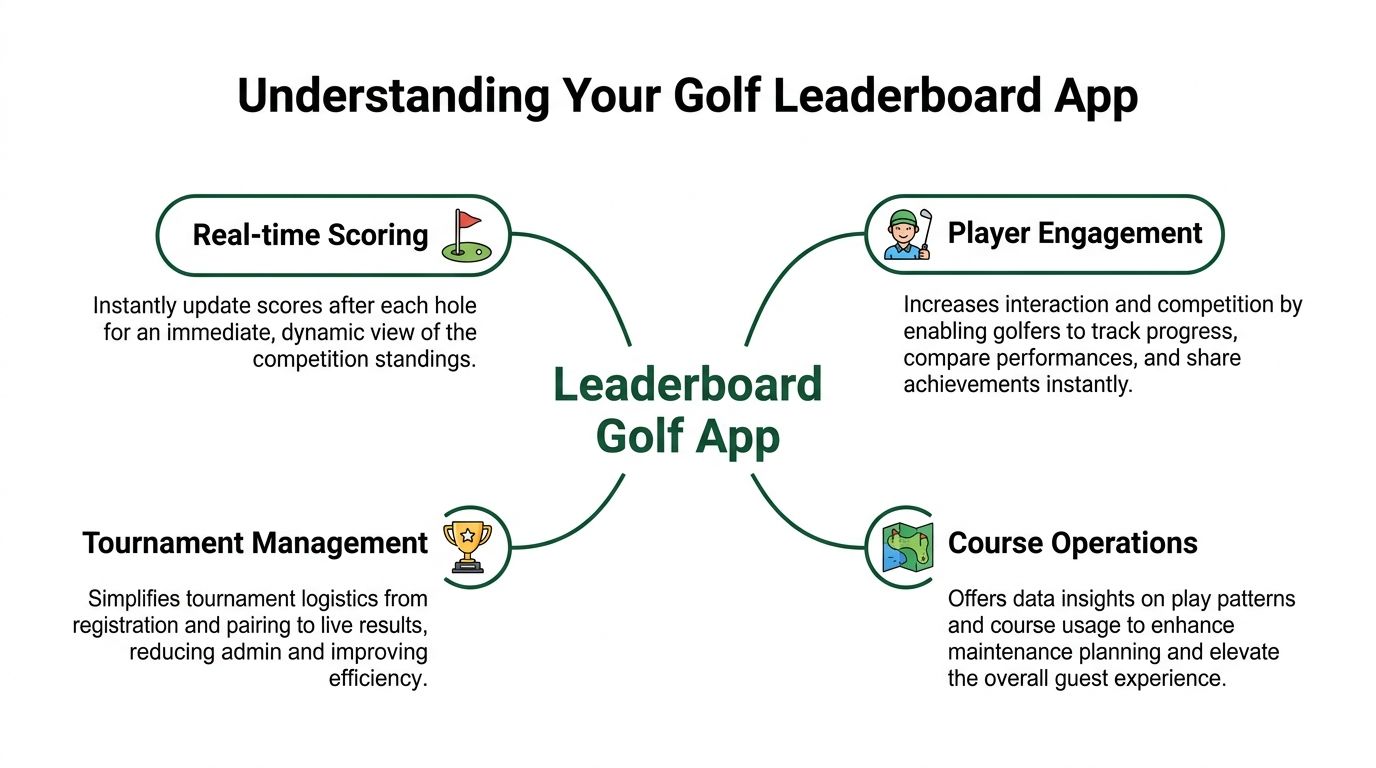
At a basic level, every leaderboard golf app does three jobs. It captures scores, applies tournament rules, and publishes standings. The difference between platforms is how smoothly those jobs happen for staff and players.
Two very different ways these systems work
This is the decision point many organizers miss. Not every leaderboard golf app works the same way on the player side.
Some platforms use a native mobile app. Players have to visit an app store, download the app, create or confirm access, then go to the event. That can work well for clubs with highly engaged, tech-comfortable players who don't mind the extra step.
Other platforms are app-free and web-based. Players open a link or scan a QR code and start scoring in their browser. No download. No app-store detour. No extra friction at check-in.
That difference matters more than feature lists often suggest. A platform can have excellent reporting and format support, but if players struggle to get into scoring quickly, staff ends up doing more hand-holding than expected.
For a deeper breakdown of the moving parts, this guide on how golf scoreboards work is a useful reference.
What else a strong platform may include
Beyond live scoring, many systems add tournament tools around the core leaderboard. That can include pairings, score verification, side games, cart signs, and handicap handling.
One example on the native app side is Leaderboard Golf, Inc., which offers a mobile app that integrates directly with the USGA® system to automatically post scores to a golfer's official Handicap Index® without requiring users to open a separate application, while also including GPS features for on-course navigation, as described on its App Store listing.
That's a useful reminder that “leaderboard golf app” can mean more than one thing. Some products are built around handicap and on-course utility. Others are built around tournament operations. The right choice depends on what problem you're trying to solve.
A tournament director usually doesn't need the platform with the longest feature menu. They need the one players will actually use without slowing down the event.
Key Features That Drive a Better Tournament Experience
A strong leaderboard golf app earns its place by removing friction from the event, not by piling on features nobody uses. The best platforms improve the round for players and cut admin work for staff at the same time.

Real-time scoring changes the feel of the event
Live scoring creates momentum. Players pay attention when standings move during the round. Organizers get fewer “where do we stand?” questions because the answer is already visible. Sponsors also benefit because a live board keeps people engaged around the event longer.
The operational benefit is just as important. When hole-by-hole scores come in during play, the scoring table no longer has to rebuild the whole event after everyone finishes. Staff verifies, resolves exceptions, and moves into results mode much faster.
App-free access solves a problem many events ignore
The biggest practical difference I've observed involves the barrier to entry. Download-required systems ask players to clear one more hurdle before they can participate. That hurdle seems small in a product demo and much larger on a busy tournament morning.
App-free systems remove that obstacle. Players scan a QR code or tap a link and go straight into scoring. According to this Live Tourney review, Live Tourney enables app-free live scoring through a simple web link or QR code without any application download, and it reports a 40% increase in live scoring participation across its 10,000+ events.
That matters because participation drives the quality of the leaderboard. If only part of the field is scoring live, the board feels incomplete. If most of the field is in, the event feels alive.
The supporting tools matter too
Organizers often focus so hard on the leaderboard that they overlook the surrounding workflow. In practice, the scoring screen is only one part of the day. A useful platform should also help with the prep work and the finish.
Look for things like:
Clean event setup so pairings, flights, and divisions don't take excessive manual work.
Player communication tools for reminders, access instructions, and day-of updates.
Printable tournament materials such as scorecards, cart signs, and roster outputs.
Side game and payout support so results don't have to be recalculated elsewhere.
Those details shape how professional the event feels. They also determine whether your staff spends the day running golf or patching process gaps.
Better engagement carries into prizes and presentations
A live leaderboard keeps players invested right through the final holes. That makes the awards segment smoother because people already understand the story of the day. You can then focus the post-round program on winners, sponsors, and hospitality instead of score verification drama.
If you're refreshing the player experience, it also helps to revisit your prize strategy. A practical guide to best golf tournament prizes can help align awards with the level of event you're trying to deliver.
For organizers evaluating full systems rather than isolated scoring tools, it's worth reviewing what modern golf tournament management software should handle before, during, and after the round.
How to Choose the Right Platform for Your Course
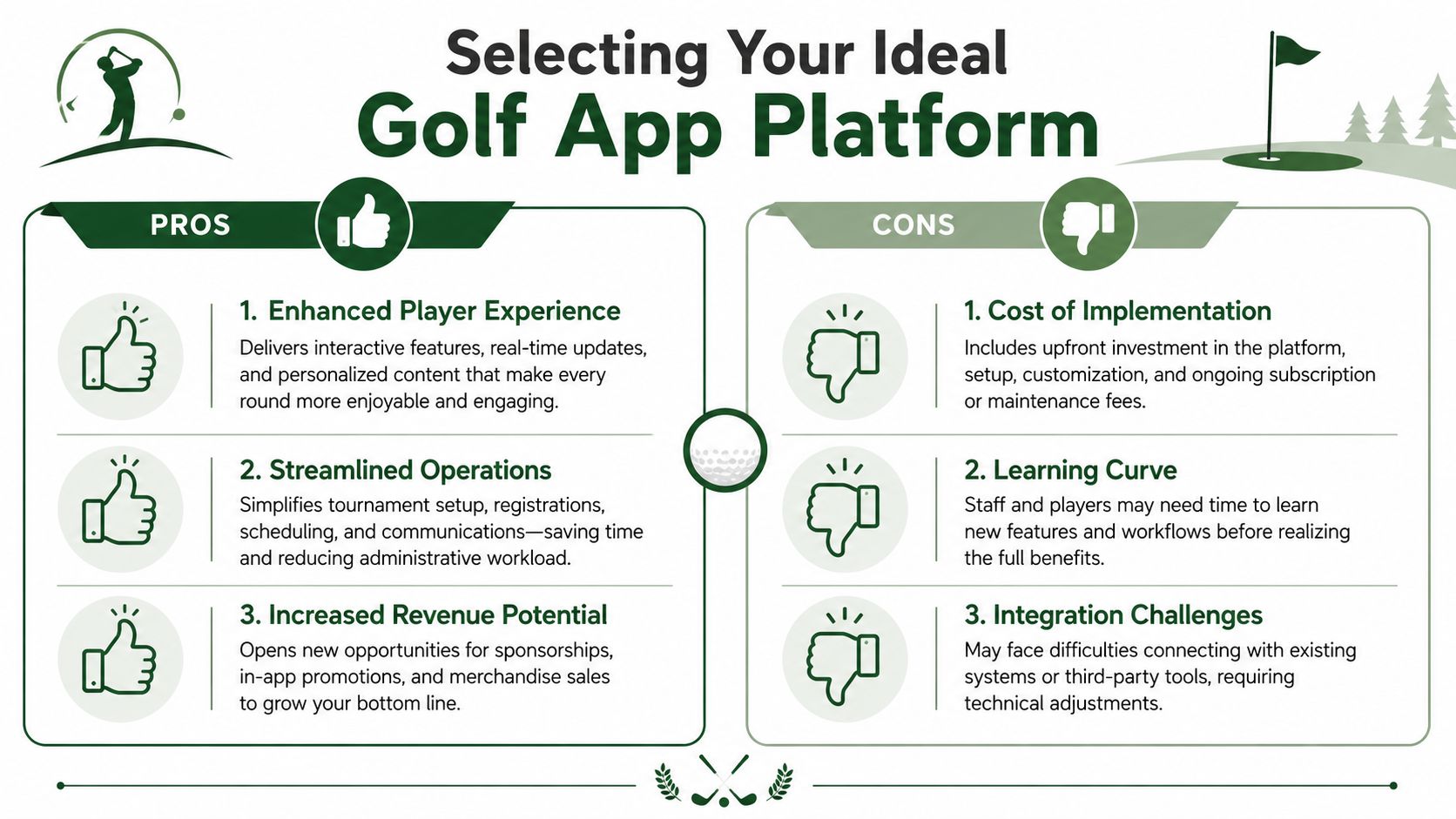
Choosing a leaderboard golf app gets easier when you stop asking which platform has the most features and start asking which one creates the least friction. Courses don't need complexity for its own sake. They need a system that staff can set up quickly and players can use without confusion.
Start with the player experience
The first question is simple. How does a player get into scoring?
If the answer involves app-store downloads, account setup, forgotten passwords, or extra instructions, expect more support requests on tournament day. That may be acceptable for some private club environments, but it becomes a real issue in mixed-skill fields, public events, charity outings, and corporate groups.
That's one reason the app-free angle deserves more attention. The analysis summarized at Squabbit Golf notes that this issue remains under-addressed, while citing 68% of golfers aged 55+ avoiding app downloads due to complexity and a 40% increase in web-based scoring adoption among golf facilities in 2025.
If your event includes occasional golfers, guests, or sponsors, convenience usually matters more than deep app familiarity.
Use an operations-first checklist
A platform should save time at the desk, not just look good on a sales call. When I evaluate tournament software, I'd rather test a real setup workflow than watch a polished demo.
Here's the checklist that matters most:
Evaluation area | What to ask |
|---|---|
Setup speed | Can staff build a standard event quickly without vendor intervention? |
Scoring access | Do players score through a link, QR code, or app download? |
Format flexibility | Can the system handle the formats your members and outings actually play? |
Staff training | Can the golf shop team run it confidently after a short handoff? |
Support quality | Will you get real help when pairings, flights, or scoring rules need attention? |
Don't ignore the cost structure behind the product
Even if you're buying software rather than building it, the platform's design choices affect long-term cost and maintenance. Native apps can create additional complexity because they depend on app-store distribution, updates, and device-specific behavior. If you want a broader sense of what goes into that side of the market, this breakdown of mobile app development costs gives helpful context.
That doesn't mean every native app is a bad fit. It means you should be clear about what you're paying for and what operational burden comes with it.
Prioritize the demo questions that reveal the truth
When you speak with vendors, ask them to show:
A full event setup from roster to live leaderboard
A mixed field check-in process for players with different comfort levels
A score correction workflow after a disputed hole
A post-round results process including payouts or winner summaries
Those moments reveal more than a feature sheet ever will.
Supporting Popular Golf Tournament Formats
A leaderboard golf app isn't very useful if it only works cleanly for a basic individual stroke play event. Real golf operations run a mix of formats. Member-guest events, leagues, charity outings, junior programs, and corporate days all ask the software to do different things.
Build the process in this order
The easiest way to introduce a new platform is to think in sequence, not in features.
Start with one dependable event type
Use a format your staff already understands well. That lets the team learn the scoring workflow without also learning a new competition model at the same time.Add your common side games next
Once live scoring is comfortable, layer in the side contests and payout structures that matter to your players.Move into more complex formats For complex formats, the right platform proves its value. It should simplify the setup rather than force workarounds.
The formats a good platform should handle
A modern system should support more than one style of competition because that's how real calendars work.
Multi-round tournaments where standings carry cleanly from one round to the next.
Match play with head-to-head tracking that doesn't require manual updates after every hole.
Ryder Cup-style events where team points need to be visible as the day unfolds.
Round robin leagues that involve repeated matchups and changing standings over time.
Mixed-format outings where one event may combine several scoring views or competition layers.
This is a common pain point. A summary published with a video resource on mixed-format tournament management notes that 52% of corporate outing coordinators struggle with match play, Ryder Cup, and round robin formats because scoring tools are fragmented.
That finding lines up with what many organizers already know from experience. The issue usually isn't that the event format is too complicated. The issue is that the scoring tools don't fit the event.
The right platform lets you keep the formats players enjoy. It doesn't force you back to the simplest version of golf just because the software can't cope.
Measuring Your Return on Investment and Engagement
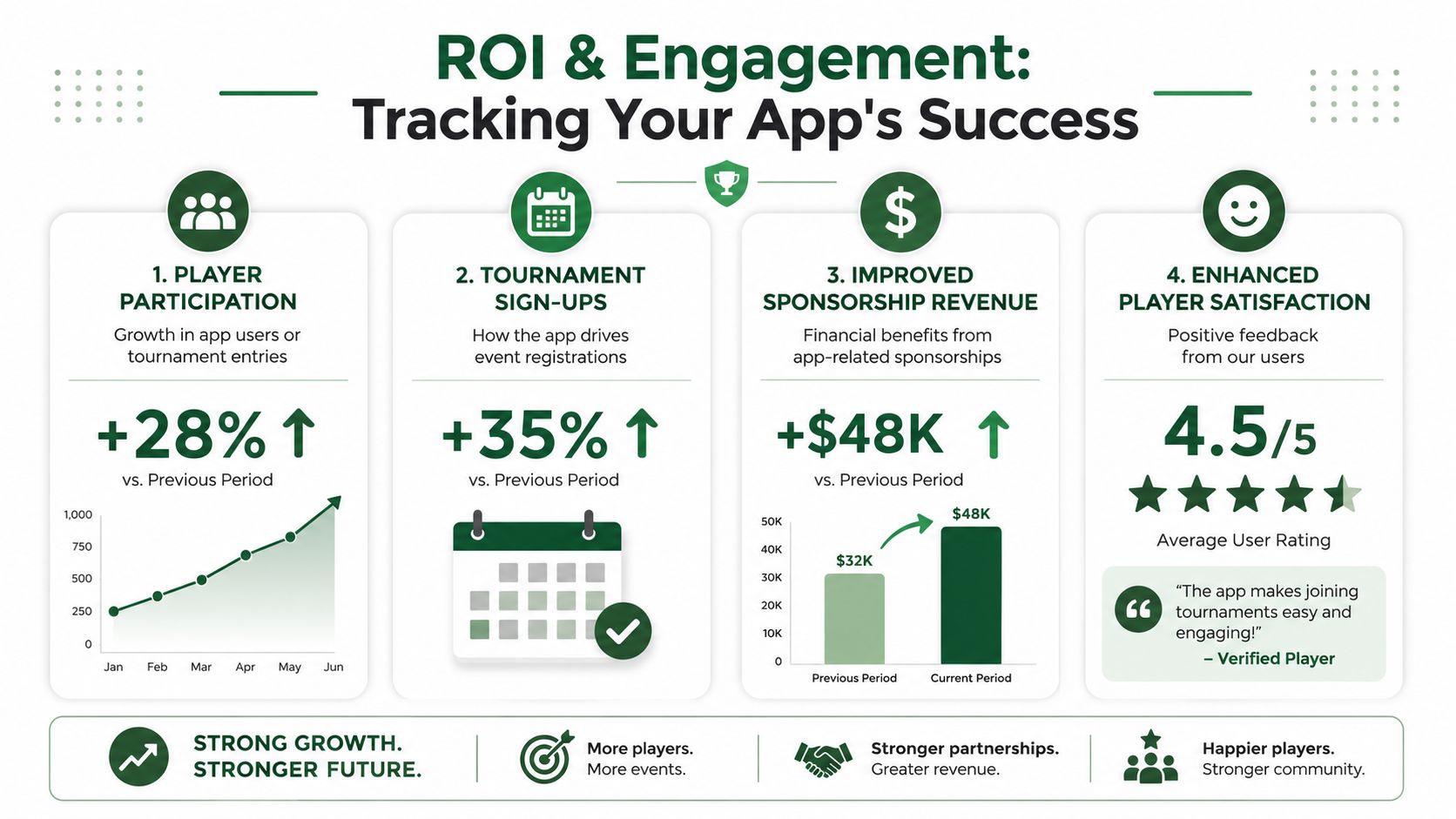
Once the event runs better, the next question is whether the software is paying for itself. The cleanest way to answer that is to measure both operational return and player engagement.
Look at labor savings first
Tournament software often justifies itself through saved staff time before anything else. If your team no longer spends the end of every event collecting, deciphering, and entering paper cards, that's a direct operational gain.
Track questions like these after each event:
How much time did staff spend on setup?
How long did final scoring take after the last group finished?
How many score disputes required manual reconstruction?
How quickly could you begin awards or payout review?
Even without attaching a dollar figure, those answers tell you whether the process is getting leaner.
Measure engagement where it happens
A leaderboard golf app should also create a more connected event. That means players are scoring, following standings, and staying tuned into the competition during and after the round.
One useful benchmark comes from the Leaderboard Golf App, which, according to its App Store listing, provides real-time, multi-round scoring with automatic leaderboards that update instantly as users enter scores during play, so tournament statistics, player positions, and rankings reflect new data without delay.
That kind of immediacy matters because engagement drops when the leaderboard feels stale. Players don't need every bell and whistle. They need confidence that the board reflects what's happening now.
Track the right indicators over time
A practical review cadence might include these measures:
Participation in live scoring Are more groups using the system round after round?
Speed of event closeout
Is the gap between the final putt and the final results getting shorter?Player feedback
Do guests and members say the event felt easier to follow and more polished?Operational confidence
Can more than one staff member run the tournament without stress?
Those are the metrics that tell you whether the tool is helping the business, not just adding technology.
A good tournament platform doesn't only save minutes. It protects the part of the day players remember most, which is how smoothly the event was run.
When the leaderboard updates live, the golf shop isn't buried in paperwork, and the awards presentation starts on time, the value is hard to miss. The event feels organized. Players stay engaged. Staff gets time back. That's the core return.
If you want an app-free option, Live Tourney is a web-based platform for golf tournaments, leagues, and outings that lets players score through a link instead of downloading an app. For courses and event organizers trying to reduce setup friction and run cleaner live leaderboards, it's worth a look.





