
Jul 22, 2026
highland woods golf, highland woods florida, highland woods illinois, golf course guide, golf tournament planning
Explore Highland Woods Golf courses in Florida & Illinois. Find details on tee times, course features, and membership options for 2026. Plan your perfect round!

Have you been looking up Highland Woods golf and wondering which course is intended, the one in Florida or the one in Illinois? That confusion matters, because these are not variations of the same property, they're two separate 18-hole courses in different states, with different playing styles, different audiences, and very different event-planning realities.
If you're a player, the wrong assumption can send you to the wrong tee sheet. If you're organizing a group, a league, or a tournament, it can create problems before the first tee time is even booked. The practical answer is simple, but it's easy to miss. Confirm the state first, then judge the course by who it serves, how it plays, and whether it fits the kind of round or event you're trying to run.
Your Guide to Highland Woods Golf
Searching Highland Woods golf starts with one practical question, which course do you need to book? The Bonita Springs, Florida club and the Hoffman Estates, Illinois course share a name, but they serve different golfers and different planning needs. One is a private country club setup in Southwest Florida, the other is a public course in a Chicago-area golf market.
The Florida property is Highland Woods Golf & Country Club, an 18-hole course on Highland Woods Blvd in Bonita Springs that plays to 6,971 yards from the longest tees with a par of 72, a course rating of 74.2, and a slope rating of 139. GolfLink also lists it as designed by Gordon G. Lewis and opened in 2015 Bonita Springs course profile. The Illinois course is a separate Highland Woods Golf Course in Hoffman Estates, listed at 2775 N. Ela Rd, Hoffman Estates, Illinois 60192, with tee-time inquiries handled at (847) 359-5850 Hoffman Estates course profile.
That distinction matters because players and organizers search by name, then need to sort by state, access model, and event fit. Florida points toward a private club experience, while Illinois is the more practical public option for daily-fee golfers and local outings. If you are planning a tournament or league, verify the location before you quote yardage, scheduling, or scoring assumptions. For Florida event context, use this Florida golf tournament guide to check the planning details that matter before you commit to a format.
Practical rule: never build your event notes from the name alone. Build them from the address, access type, and tee sheet structure.
The Florida Experience at Highland Woods Golf & Country Club
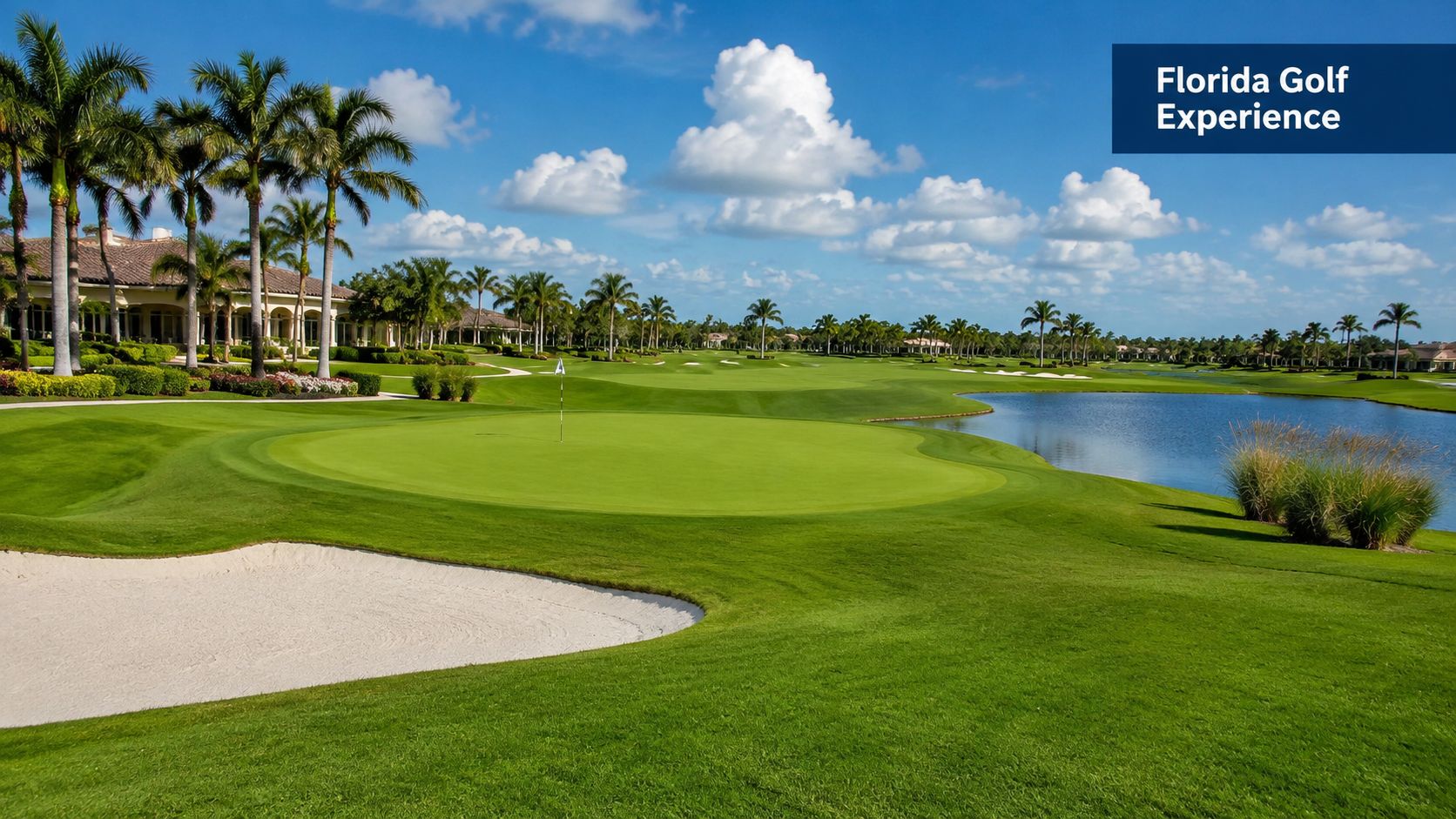
Highland Woods in Bonita Springs plays like a private-club round with tournament-minded expectations. The course is 18 holes, measures 6,971 yards from the longest tees, plays as a par 72, and carries a 74.2 course rating with a 139 slope course data. Those figures set the tone before the first tee shot. The yardage is long enough to reward players who strike it cleanly, and the slope points to a layout that punishes loose wedges, poor lag putting, and careless misses.
What the routing suggests
The Florida routing asks for balance, not just speed. GolfPass describes the course as a private par-72 layout where approach proximity, short-game conversion, and penalty avoidance carry more weight than raw distance alone GolfPass course analysis. That profile keeps strong players engaged without turning the round into a simple driving contest. A golfer can leave the driver in the bag on some holes, stay in position, and still post a good number by controlling wedges and limiting damage.
For organizers, that changes how you build the field. A member guest, charity outing, or skins game here rewards players who can flight the ball, recover from awkward spots, and stay disciplined around the greens. It is a better fit for score-based formats than for a long-drive showcase, because the scoring pressure comes from execution on and around the greens, not only from tee-shot length.
Why the private-club setting matters
The Bonita Springs setting also gives the day a different feel from the Illinois course. A private club changes the pace, the arrival sequence, and the expectation that the round will run with a polished rhythm. That matters to golfers who want a controlled environment, and it matters to organizers who need dependable start times, clean player communication, and a reliable post-round flow.
For event planning, use the Florida golf tournament planning guide at Live Tourney's Florida tournament operations reference when you need a practical check on how private-club logistics affect formats, pairings, and scoring setup.
If you are comparing it to public golf, focus on experience management instead of yardage alone. The course gives you a full championship-style test, but the club context shapes how the day feels from check-in to scoring. That is why it fits groups that care about presentation, scoring integrity, and a smoother event atmosphere.
The Illinois Option at Highland Woods Golf Course
What matters more for your group, private-club polish or public-course convenience? The Hoffman Estates version is the one most public golfers should look at first. It is an 18-hole course with a par of 72, and it stretches to 6,995 yards from the longest tees. That puts it in the same general championship conversation as the Florida club, while the access model is completely different. This is the course that fits daily-fee planning, local repeat play, and outings where convenience matters as much as pedigree.
The value question
The public discussion around the Hoffman Estates property points to a forest preserve setting, 7.5-minute tee-time intervals, and separate rate structures for weekdays, weekends, seniors, and juniors, but it does not spell out which player gets the strongest value public course discussion. That gap is the part golfers and organizers need to fill. A foursome that wants a paced round may judge the course differently from seniors, juniors, or league players who care more about schedule reliability.
That is the practical lens to use. Public golf lives or dies on access, timing, and repeatability. If you are organizing a league, the tee spacing and public rate structure shape the rhythm across the season. If you are planning a casual outing, you need to know whether the course feels like fair value for a normal four-hour day instead of a rushed or overbooked grind.
A side-by-side look
Feature | Highland Woods (Bonita Springs, FL) | Highland Woods (Hoffman Estates, IL) |
|---|---|---|
Access model | Private club | Public course |
Holes | 18 | 18 |
Yardage | 6,971 yards | 6,995 yards |
Par | 72 | 72 |
Best fit | Member play, private events, score-conscious outings | Daily-fee golfers, leagues, local outings |
Booking focus | Club context and event coordination | Tee-time availability and rate structure |
The Illinois course also deserves attention from organizers because it sits in a busy golf market where speed and predictability matter. If a group wants a straightforward venue without the private-club layer, this is the more natural fit. For a practical planning reference on Chicagoland outings, see this Chicagoland golf tournament resource.
How to Play and Score Well at Highland Woods
A course in the 6,900-yard range rewards disciplined decisions more than big swings. That applies to both Highland Woods locations, even though the settings and access models are different. The scoring pattern at the Florida club makes the point clearly, because play there turns on approach proximity, short-game conversion, and penalty avoidance. Use that same framework at either site, and the round becomes much more manageable.
Play the middle of the hole
The first mistake many golfers make on full-length par-72 layouts is trying to overpower them. That usually costs more than it gains. The smarter plan is to choose a tee club that keeps the ball in play, then leave a reliable angle into the green. Second-shot position matters more than squeezing out extra distance.
For organizers, that same reality affects format design. A course like this rewards solid ball-striking, but it does not sort a field by length alone. Net events, team formats, and quota games can still produce tight finishes because scoring separation often comes from wedge control and scrambling, not raw power.
Practical rule: if the tee shot brings trouble into play, take the club that leaves a clean second shot. A controlled approach is worth more than a few extra yards from the tee.
Keep penalty shots off the card
Penalty avoidance deserves its own emphasis because it is the fastest way to turn a playable round into a stressful one. On a course profile like Highland Woods Florida, the scoring margin sits in the space between the tee and the green. A miss that leaves a simple recovery is manageable. A miss that finds trouble changes the hole quickly.
Course management matters here. Aim for the safer side of the fairway when the hazard pattern tightens, and do not chase pins that require a perfect strike. If you are running a tournament, set expectations early. The best score usually comes from steady discipline, not from forcing recovery shots or hunting a highlight.
The practical difference shows up in group play. A player who avoids one big number often beats a longer hitter who takes on too much risk, even if the longer player makes more birdies. That trade-off matters on both Highland Woods courses, especially for organizers trying to forecast pace and scoring spread.
Short game beats style points
The final edge comes around the greens. A player who gets up and down a few more times than the field often gains more than the longest hitter in the group. That matters especially at the Florida club, where the course profile points toward precision and conversion. In both Bonita Springs and Hoffman Estates, a disciplined short game is the quickest route to a score you can trust.
Amenities and the Full Club Experience
Amenities decide whether Highland Woods feels like a golf stop or a full-day outing. In Florida, the club setting shapes the experience from arrival to finish. In Illinois, the public-course setup puts the focus on efficiency, access, and a round that fits local golfers who care about pace and convenience.
Florida feels like a club day
At the Bonita Springs location, the private-club identity carries real weight. A player who chooses this course usually wants more than a tee time. They want a polished setting and the sense that the round is part of a broader club environment. That starts with the feel of entering a managed property where golf sits inside a larger social setting.
That matters for member golf, guest play, and hosted events. Organizers can set a more refined tone when the venue already signals private-club expectations. The course itself, combined with the country club context, gives an event a different character from a standard public outing.
Illinois is about practical access
The Hoffman Estates course works in the opposite way, and that is the point. Public golf should be easy to use, and this course fits that standard. The local course information points to clear booking basics, a defined address, and phone-based tee-time inquiries, which is exactly what many daily-fee players want course contact data.
That simplicity matters for casual groups. You are not trying to sort through membership pathways or club rules before reserving a tee time. You are trying to get a group on the calendar, keep the day moving, and avoid avoidable confusion. That makes the Illinois version a cleaner fit for leagues, informal outings, and golfers who want a round that works without extra steps.
For event planning, the difference is practical. Florida gives you a stronger private-club atmosphere, which helps when the event needs a more polished feel. Illinois gives you easier public access, which helps when the priority is scheduling, clarity, and a lower-friction check-in process. If you are comparing the two, the right choice depends on whether the day needs a club experience or a straightforward golf outing.
A tournament organizer also has to think about how the venue supports planning tools, score handling, and communication. If you need a practical framework for that side of the job, how to run a golf tournament is a useful reference point.
Running a Flawless Golf Tournament at Highland Woods
A Highland Woods tournament rises or falls on logistics long before the first score is posted. Registration has to stay clean, communication has to stay clear, and scoring has to move without a scramble at the scorer's table. That applies whether you are hosting at the Florida club or handling a public outing in Illinois. A strong venue still needs a system that keeps the event organized.
What event staff actually need
Tournament directors do not need extra complexity. They need fewer moving parts. The workflow usually comes down to collecting entries, confirming payment, building reports, sending updates, and getting scores entered fast enough that the leaderboard still feels current. When those jobs live in separate tools or on paper, staff spend too much time reconciling details.
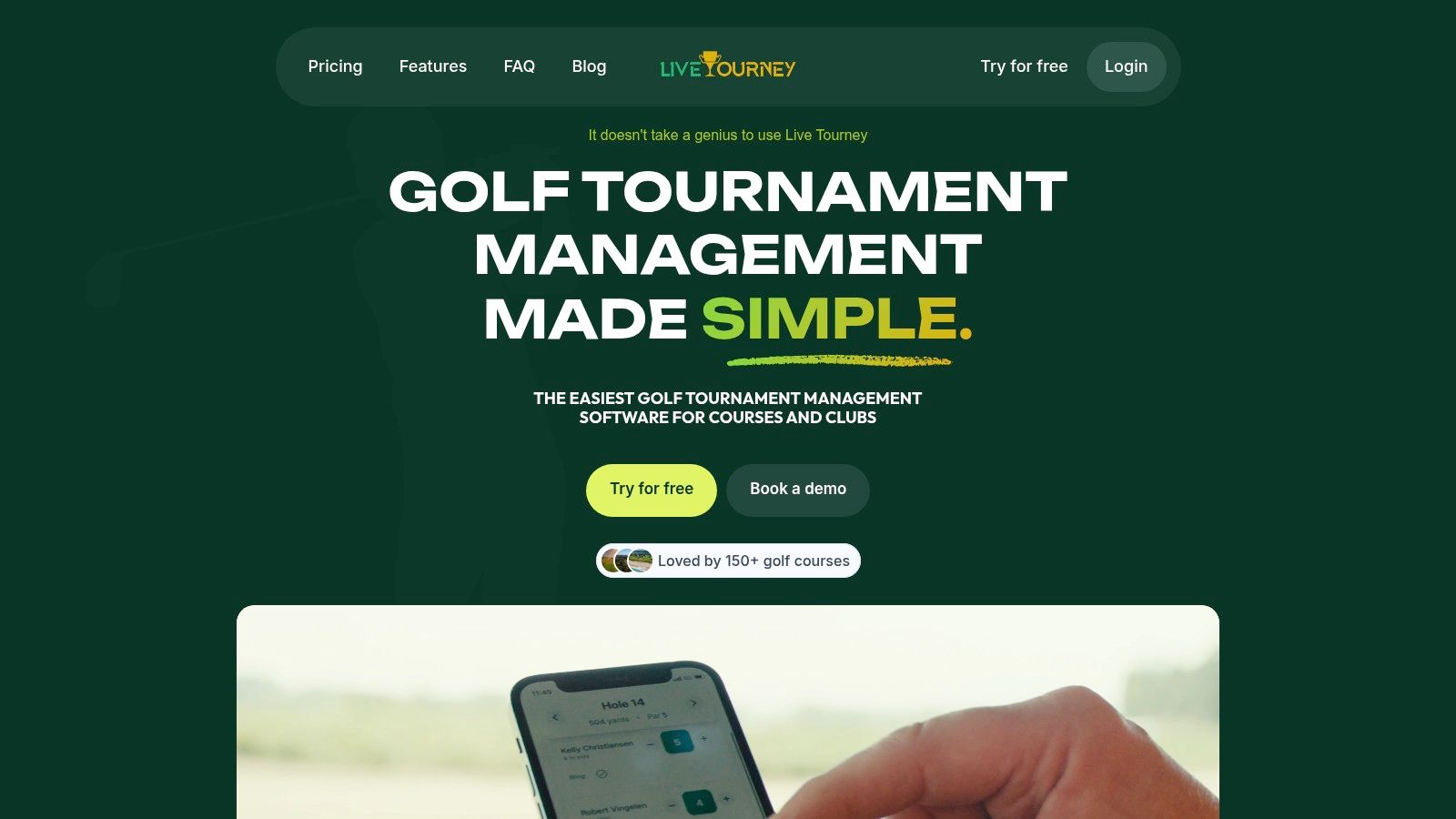
Live Tourney says it supports online registration and payments, customizable reports for scorecards and cart signs, dynamic emails, and app-free live scoring, and it says customers report a 3x faster setup process for events feature overview. For an organizer, that mix matters because each piece maps to a real task. Registration cuts manual entry. Reports cut printing chaos. Live scoring cuts the delay between play and results.
Why app-free scoring helps on tournament day
Players rarely want another download before a round. They want to open a link, enter scores, and move on. Browser-based scoring is useful for that reason. It reduces friction for guests, league players, and one-time participants who do not want to learn a new app just to complete a round.
Live Tourney's feature page says the platform can automate repeating events, registrations, and emails, and helps users organize leagues, track standings, and manage schedules in one place feature details. That fit matters for Highland Woods events that repeat across a season. A league director does not need a different workflow every week. The same process has to work each time with minimal staff intervention.
Operational rule: if your staff has to retype player data after registration closes, the system is not helping enough.
Event formats and the practical fit
Different events need different structures, and the software should match the format instead of forcing a workaround. Live Tourney says it supports single- and multi-round stroke play, match play, Ryder Cup-style events, and round-robin leagues feature overview. That matters because Highland Woods can host very different event types, from a competitive club championship setting in Florida to a relaxed league outing in Illinois.
The strongest use case is straightforward. If you are running a one-day outing, you want registration, communications, and scoring in one place. If you are managing a league, you want standings and schedules without rebuilding the structure every week. If you are hosting a more polished event at the Florida club, you want the operation to match the setting.
A third-party review says Live Tourney was launched in 2022 by a Seattle-based golf enthusiast and software engineer, and that it had already handled over 10,000 events and more than 1 million holes scored at the time of publication review coverage. That does not tell you how your specific outing will feel, but it does show the platform has been used at scale. For organizers, scale matters because it usually reflects whether a system can survive repeated use without turning into manual work.
If you want a practical framework for the setup itself, how to run a golf tournament is the right place to start.
What does not work well
Manual spreadsheets, scattered email threads, and printed scorecards can still get an event across the finish line, but they slow staff down and make corrections painful. That becomes more obvious at Highland Woods, where the venue quality raises expectations. Players notice when the golf feels organized and when the event feels patched together.
If you want the round to feel professional, the back office has to keep up. That is the reason to use a modern tournament platform. It is not about novelty. It is about keeping the golf day moving without making staff chase every missing detail.
Frequently Asked Questions About Highland Woods
Are the Florida and Illinois courses the same property
They are separate properties in separate markets. Highland Woods Golf & Country Club in Bonita Springs, Florida, and Highland Woods Golf Course in Hoffman Estates, Illinois, should be treated as different venues for every planning step, from directions to tee-sheet setup. Always confirm the state before you book, publish, or share tournament details.
Which Highland Woods is better for a private event
The Florida club is the better choice for a private event when your group wants a more polished host setting and the feel of a private club. The Illinois course fits better when access and a simple outing format matter more than exclusivity. The better venue depends on whether your group values a controlled club environment or easier public access.
Is Highland Woods a good fit for stronger players
Yes, especially the Florida course, which gives solid players enough length to reward good ball striking while still putting pressure on approach shots and short-game control GolfPass analysis. The Illinois course also plays as a full-length test, so stronger players can be challenged without making a public round feel out of reach.
What should league and outing organizers pay attention to first
Start with access model, tee-time spacing, and scoring workflow. The Illinois course follows the kind of public-course setup that usually supports straightforward booking, while the Florida club brings a private-club environment that can require tighter coordination and cleaner communication. For either venue, the event runs better when the scoring plan is set before the first group arrives.
Manual handling slows things down. Spreadsheets, scattered email threads, and printed scorecards can still work, but they make corrections harder and staff more reactive, especially when the field grows or tee times shift.
Does Live Tourney have enough real-world use to consider for events
A third-party review says Live Tourney was launched in 2022 by a Seattle-based golf enthusiast and software engineer, and that it had already handled over 10,000 events and more than 1 million holes scored review source. That kind of use suggests the platform has seen real event conditions, not just demo rounds.
What's the simplest way to avoid confusion when sharing Highland Woods details
Use the full course name plus city and state every time. If you send an invite, add the address or club identifier too. That one habit helps prevent the wrong tee time, the wrong roster notes, and the wrong event plan.





