
Jul 20, 2026
railside golf course, byron center golf, michigan golf courses, golf tournament guide, golf club amenities
Planning a visit to Railside Golf Course? Get a complete guide to the Byron Center, MI club, including hole highlights, fees, amenities, and event hosting tips.

You're probably here because you searched for Railside Golf Course, found multiple listings, and still weren't sure which one people were talking about. That happens a lot with this name. A player looking for a private club round in West Michigan can easily land on a page for Illinois or New Jersey instead, and that confusion wastes time fast when you're trying to book a round, plan a visit, or evaluate a venue for an outing.
The practical fix is simple. Confirm the city first, then the format of the course, then whether it's public or private. If your target is the best-known Railside most golfers mean in West Michigan conversations, you're looking for Railside Golf Club in Byron Center, Michigan.
Which Railside Golf Course Are You Looking For
The biggest mistake golfers make with the Railside name is assuming there's one nationally recognized railside golf course. There isn't. The name points to multiple local facilities, not a single course brand or a distinct course type. One of the clearest summaries of that ambiguity notes that search results point to Railside Golf Club in Gibson City, IL, Railside Golf Club in Byron Center, MI, and the 9-hole “Railside” course at Great Gorge in Vernon, NJ in this Railside course listing overview.

Quick way to identify the right one
Use this three-part check before you click, call, or plug an address into GPS:
Start with the city: If you want West Michigan, the correct location is Byron Center.
Check the hole count: The Byron Center club is an 18-hole facility. Other similarly named properties differ.
Verify access model: Byron Center operates as a private course, which matters if you're planning casual public play.
That last point matters more than people think. A lot of searchers assume every Railside listing is interchangeable. It isn't. If you show up expecting a public daily-fee setup and the course runs as a private club, your planning falls apart before you've even reached the first tee.
Practical rule: When a course name is shared by multiple properties, always confirm location first and access policy second. Those two details solve most booking mistakes.
Why Byron Center gets the focus
Among the different Railside listings, Byron Center is the one most often associated with the fuller club experience, local event interest, and a complete 18-hole round. That's the location this guide focuses on.
For a golfer, that means less confusion and better preparation. For an event planner, it means you can stop comparing the wrong properties and focus on whether the Byron Center club fits your group, your expectations, and your style of play.
An Overview of Railside Golf Club in Byron Center
If you're talking about the Michigan club, the core facts are straightforward. Railside Golf Club in Byron Center, Michigan, was established in 1991 and measures 6,429 yards from the longest tees with a par of 72, operating as a private course, as listed on GolfLink's Railside Golf Club profile.
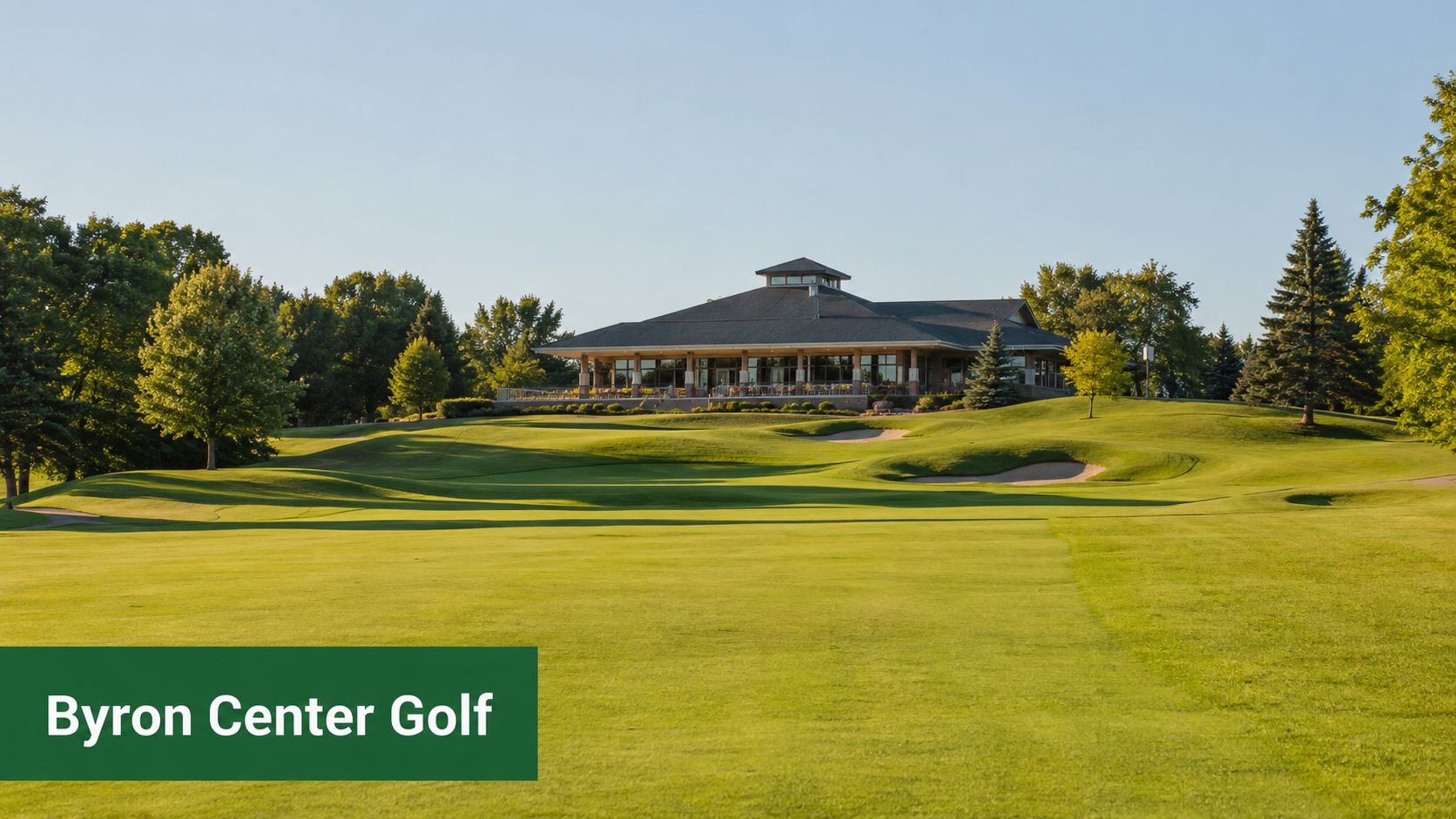
Those numbers tell you a lot before you ever hit a shot. At 6,429 yards and par 72, this isn't a brute-force setup that asks every player to overpower it. It's the kind of course where club selection, angle into greens, and keeping your ball in the correct part of the hole matter more than trying to win every tee shot.
What the setup means for a first visit
A private railside golf course like this usually rewards discipline more than hero golf. Players who score best on this kind of layout tend to do a few things well:
They choose position over ego: Hitting the fairway with the right club often matters more than grabbing driver by default.
They respect approach angles: Even a short iron can become awkward if you attack from the wrong side of the hole.
They play the whole round patiently: Private club courses often reveal their challenge slowly, not all at once.
That's the right mindset for a first round at Byron Center. Don't show up thinking only about total yardage. Show up prepared to manage the course.
The character of the round
The Byron Center club has the feel many golfers want from a long-standing private facility. It isn't about gimmicks. It's about a complete round, steady rhythm, and a setting that feels built for repeat play rather than one-time novelty.
A good private club course doesn't need to shout. It keeps asking for one more precise shot.
Because the club has been operating since 1991, it also carries the benefit of maturity. The routing feels settled. The experience tends to feel more cohesive than newer layouts that are still trying to define themselves.
If you're visiting for the first time, think of the course as a place that asks for thoughtful golf. If you're evaluating it for member play or a hosted round, that's usually a positive sign. Courses with this profile age well because they stay interesting after the first impression wears off.
Club Amenities and Member Experience
A private club round is never just about the card in your back pocket. It's about pace before the round, the comfort level after the round, and whether the facility handles members and guests smoothly. That's where clubs separate themselves from a simple tee-time operation.
At Byron Center, the experience most players care about starts with whether the club feels organized and welcoming. A strong private club usually gets the basics right. Check-in is efficient, the golf shop staff know the day's traffic, practice areas flow naturally into the first tee, and food service doesn't feel like an afterthought once the round ends.
What matters most off the course
When I evaluate a club environment for member play or a guest event, I pay attention to a few practical details:
Practice flow: You want a warm-up routine that feels connected, not scattered. Putting, short shots, and full swings should fit into a short pre-round window.
Clubhouse usability: A beautiful room doesn't help much if traffic bottlenecks around the golf shop, dining space, or event entrance.
Post-round atmosphere: Some clubs are strongest after the 18th green. That matters for member retention and for outing guests who remember the finish as much as the golf.
The best clubs understand that amenities are part of scoring conditions. If players arrive rushed, can't loosen up properly, or wait around for carts and staging, the round starts on the wrong foot.
Details operators notice
Guests rarely think about the maintenance side of the cart fleet, but operators do. Reliable carts make the day smoother for everyone, especially in member events and private outings where delays stand out. If you manage a fleet or just want a practical refresher on upkeep, this guide on how to maintain golf cart batteries is worth a look because battery care affects readiness, range, and day-to-day dependability.
Good club operations feel invisible to the guest. That usually means the staff handled a lot of small details before anyone arrived.
For prospective members, that's the proper lens to use. Don't just ask whether the club has amenities. Ask whether the amenities support the golf day well. Those are two different things.
Key Holes and On-Course Strategy
The smartest way to prepare for a new course isn't memorizing all 18 holes. It's understanding the kinds of decisions the course will ask you to make. At Byron Center, I'd approach the round by identifying a few moments where discipline, not raw talent, usually determines the score.

If you like studying how individual holes shape strategy before you play, this breakdown of golf course hole-by-hole thinking is a useful framework. It helps you prepare for patterns instead of chasing perfect predictions.
The demanding par 4
Every solid private club has a par 4 that punishes impatience. The common error is trying to bite off too much from the tee because the green looks reachable with one aggressive swing and a short iron. In practice, the better play is usually to place the ball where your preferred yardage opens the green.
Here's how I'd think about that kind of hole:
From the tee: Choose the club that keeps the ball in play and opens your preferred angle.
On the approach: Favor the side of the green that leaves an uphill putt or a simple chip.
For higher handicaps: Treat bogey as a managed result, not a failure.
A lot of doubles start with a tee shot hit for pride instead of position.
The risk-reward par 5
A well-designed par 5 invites the question every golfer loves. Go for it or lay up. On a course like this, the right answer changes by player and by day. If the lie is average, the wind is uncertain, or the second shot brings trouble into play, laying up to a full wedge number is often the better scoring move.
That doesn't mean playing scared. It means choosing the miss you can survive.
Decision point | Safer play | Aggressive play |
|---|---|---|
Tee shot slightly out of position | Set up a clean layup | Force a long second from a poor angle |
Uneven lie on second shot | Advance to favorite wedge yardage | Chase the green and risk a short-sided miss |
Match or event pressure | Keep the card moving | Try to steal a stroke with higher volatility |
The par 3 that tests distance control
Most players stand on a par 3 and think line first. I think distance first. On a polished private course, the challenge often isn't left or right. It's finishing pin-high and staying on the correct tier or section of the putting surface.
If the green asks a distance-control question, answer that first. Direction comes second.
On this style of hole, commit to one club and one shape. The indecisive half-swing is what brings front bunkers, weak misses, and three-putts into play.
The closing stretch mindset
Late in the round, players tend to get more emotional with club selection. Don't. The final holes usually reward the same habits that worked on the opening ones:
Stick to your stock shape
Play to the widest part of the fairway
Accept the center of the green when the hole location looks tempting
Make your opponent or playing partners beat you with execution, not gifts
That's how you travel around a private club course without giving away shots.
Elevating Tournaments and Events at Railside
A course can be enjoyable for member play and still be awkward for events. Tournament golf puts pressure on everything at once. Registration, pairings, scorekeeping, cart staging, guest communication, pace control, leaderboard visibility, and post-round wrap-up all become part of the product. That's why event planning at a club like Railside needs a different standard than a normal day of play.
When organizers evaluate a venue, they usually start with the visible pieces. Is the golf course appealing? Does arrival feel organized? Can the facility support guests who aren't regular members? Those questions matter. But the events that players remember most aren't just run on a nice course. They're run cleanly.
What separates a polished outing from a stressful one
The avoidable problems are almost always operational:
Registration friction: Players don't know where to go, when to arrive, or how teams are set.
Scoring confusion: Groups keep different methods, staff chase paper cards, and standings stall.
Communication gaps: Contest details, rules, and side games get explained too late or inconsistently.
Awards delays: Everyone finishes, then waits while someone rebuilds the leaderboard manually.
That's the old way. It still happens all the time, and it drags down otherwise good venues.
This is where modern event tech matters. A strong platform can handle online registration, automate pairings, keep scoring simple for players, and give organizers live visibility during the round. That changes the event from a staff-heavy scramble into a controlled operation.

What works in practice
At a private-club venue, players expect the event experience to feel current. They don't want to download extra software, decipher complicated score entry, or stand around waiting for updates. They want quick check-in, clear pairings, and a leaderboard they can follow during the round.
If you're building an outing, member-member, charity day, or league event, the fundamentals are simple:
Keep registration digital: Fewer manual errors. Easier updates.
Publish pairings clearly: Players should know where they stand before they leave the clubhouse.
Use live scoring: Engagement goes up when people can follow the competition.
Shorten the scoring closeout: The last group shouldn't hold the whole event hostage.
For organizers looking at process from start to finish, this guide on how to run a golf tournament is a practical planning reference.
The event doesn't feel professional because of the welcome sign. It feels professional because nobody has to ask what happens next.
Why the venue and the system have to fit together
A club like Railside gives you the physical setting. The technology gives you control. You need both. A strong course without modern event operations creates friction. A strong system without a good venue feels flat. Put the two together and players notice the difference immediately.
That's especially true for corporate and charity groups. Many guests in those events aren't regular tournament golfers. If the process is clunky, they feel lost. If the process is simple, they relax and enjoy the day.
For club staff, the payoff is even clearer. Less time is spent patching holes in registration and scoring. More time goes to guest service, sponsor visibility, pace management, and the kind of details that improve the day.
Booking and Contact Information
If you're ready to act on this railside golf course search, the first thing to lock in is the location. The Michigan club is located at 2500 76th St SW, Byron Center, MI, according to this Railside Golf Club location listing.
That address matters because name confusion is still the biggest obstacle for first-time visitors. Enter the full Byron Center address, not just “Railside Golf Club,” especially if you're traveling in from elsewhere in West Michigan or coordinating guests from out of town.
Best next step before you contact the club
Know what kind of inquiry you're making. The conversation goes better when you're clear about your purpose.
Member or guest play inquiry: Ask about access, guest policy, and the best contact route through the golf operation.
Private event or outing inquiry: Ask about event space, golf availability, and who handles tournament planning.
Site visit request: If you're comparing venues, ask to see arrival flow, staging areas, and post-round gathering spaces.
If your group also wants to compare how different facilities handle golfer logistics and booking flow, looking at examples from other courses can help. This post on Dad Miller Golf Course tee times is useful as a reference point for what clear tee-time information should look like online.
A practical checklist to use before booking
Bring these questions with you when you call or email:
Topic | What to ask |
|---|---|
Access | Is the round member-hosted, guest-based, or event-specific? |
Timing | Which dates and time windows best fit the club calendar? |
Golf format | Can the club support your preferred format for a group day or competition? |
Facilities | Where do players warm up, gather, dine, and finish? |
Day-of flow | Who is the on-site point person for golf operations or event coordination? |
That short list keeps the conversation focused. It also helps you compare the club fairly against other options without getting distracted by vague sales language.
If you're booking for a group, confirm every operational detail in writing. Arrival instructions, player count process, scoring method, and awards timing should all be clear before the date is locked. That's the difference between a smooth day and a long one.
If you run outings, leagues, or private club events and want the golf day to feel as polished as the venue, take a look at Live Tourney. It gives organizers a simpler way to manage registration, pairings, live scoring, and leaderboards without adding friction for players.





