Jun 20, 2026
philadelphia pga section, pga of america, golf tournament management, junior golf philadelphia, golf professionals
Your complete guide to the Philadelphia PGA Section. Explore its mission, structure, tournament calendar, and membership benefits for golf professionals.

You've just stepped into a Head Pro role at a club in eastern Pennsylvania, South Jersey, or Delaware. The first few weeks usually look the same. You're sorting member expectations, checking the event calendar, figuring out which tournaments matter to your staff, and trying to understand where your club fits in the regional golf picture.
That's when the Philadelphia PGA Section stops being a logo on a website and starts becoming part of your operating reality. It affects who your assistants meet, which events your players follow, what junior opportunities exist nearby, and how your facility can plug into the broader professional golf community. If you understand how the Section works, you make better decisions faster. If you don't, even simple tasks like finding the right chapter contact or evaluating whether your course should host an event can get murky.
Your Guide to the Philadelphia PGA Section
At most clubs, the Philadelphia PGA Section enters the conversation before anyone says it out loud. An assistant asks about eligibility. A member wants to know whether the club will host a junior event. A GM asks if participation in Section activity helps the facility. The short answer is yes, but only if you know how to use it well.
The Philadelphia PGA Section is one of the PGA of America's 41 geographical managing entities and covers eastern Pennsylvania, southern New Jersey, and the entire state of Delaware. Its membership includes nearly 900 PGA Professionals working at over 300 golf facilities, which makes it one of the larger regional PGA sections in the United States, according to the Philadelphia PGA Section overview.
That scale matters in day-to-day club life. You're not operating inside a small local association where everyone knows everyone and most decisions funnel through a single pocket of clubs. You're working inside a broad Mid-Atlantic network with private clubs, public courses, teaching facilities, assistant professionals, tournament staff, and junior golf activity spread across multiple markets.
Why operators should care
For a new Head Pro, the Section usually delivers value in three practical ways:
Professional access: Your staff gains a regional network for education, relationships, and tournament involvement.
Club visibility: A facility that engages with Section activity tends to stay more connected to the local golf conversation.
Program benefits: Junior golf, member events, and staff development all benefit when you know where the Section can help and where your club needs its own systems.
Practical rule: Treat the Philadelphia PGA Section as both a professional network and an operating framework. If you only look at the schedule, you'll miss most of its value.
The operators who get the most from the Section don't just read event listings. They understand the structure behind them.
Understanding the Sections Mission and Structure
The easiest way to understand the Philadelphia PGA Section is to place it in the chain of responsibility. Nationally, the PGA of America sets the broader professional framework. Regionally, Sections manage the work that touches clubs and professionals on the ground. Locally, chapters and staff make that structure usable.
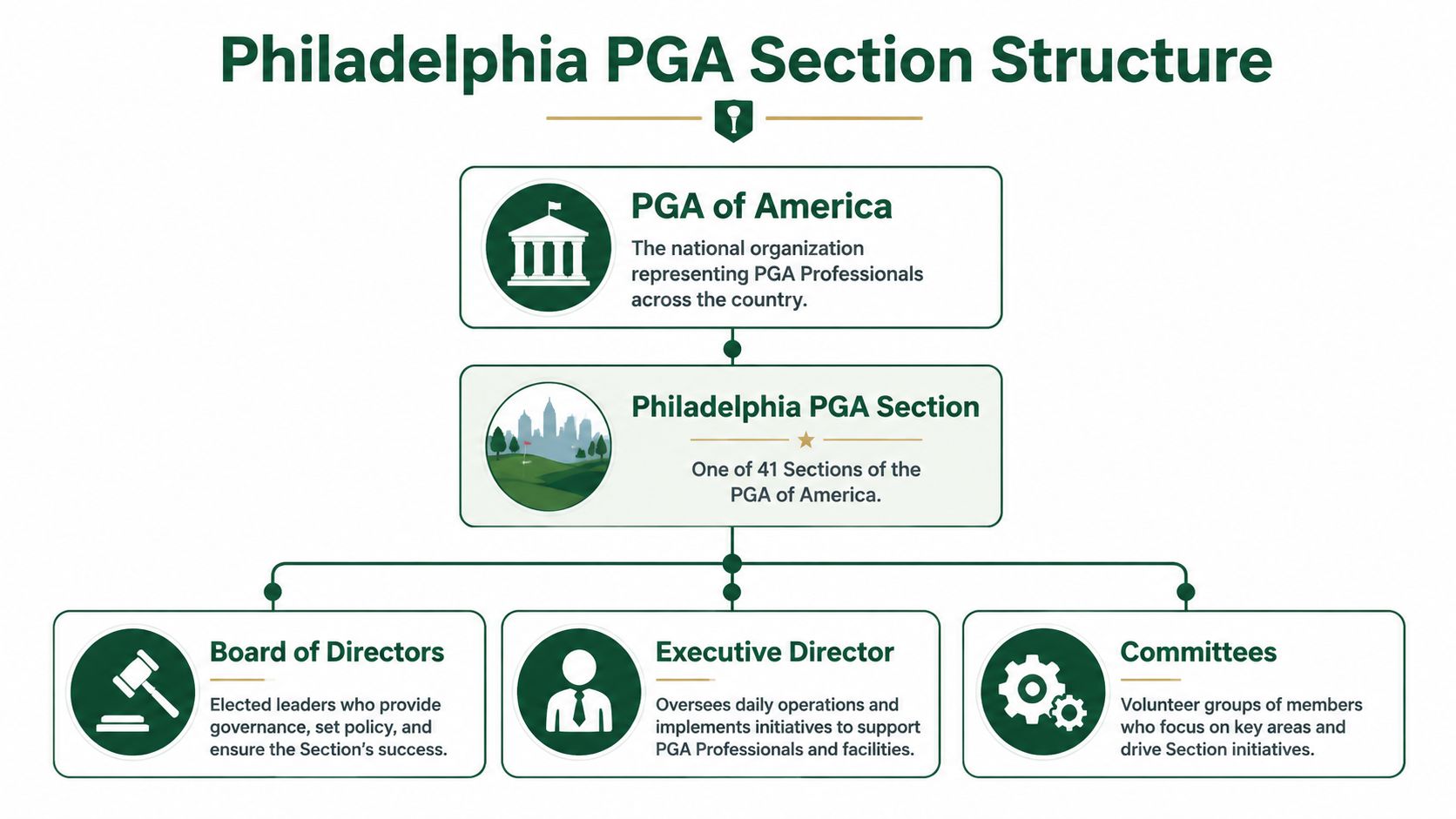
The Section is one of 41 geographic managing entities of the PGA of America, and it runs an ongoing tournament program through a dedicated Section tournament schedule, including chapter and specialty events, as shown on the Philadelphia PGA chapter and member clubhouse pages. In real terms, that means administration is distributed across a multi-chapter territory rather than handled like a one-club or one-county operation.
How the structure works in practice
For a Head Pro, the structure usually breaks down into three layers:
Section-wide leadership and administration
At this level, bigger decisions, schedules, standards, and communication are coordinated. If your question involves official programming, broad policy, or regional event administration, this is often the level that shapes the answer.Chapter-level activity At the chapter level, many professionals feel the Section in daily life. Chapter events, relationships, and local engagement are often the most accessible entry point for assistants and facility teams.
Facility-level execution
Your club handles the actual work. Registration reminders, staffing, host readiness, player communication, practice-round logistics, scoring procedures, and hospitality don't happen at the abstract Section level. They happen in your golf shop and on your first tee.
Where new pros usually get confused
Most confusion comes from assuming the Section operates like a single market. It doesn't. A Delaware facility and a suburban Philadelphia club may both sit inside the same Section umbrella, but the practical rhythms can differ. Local contacts differ. Player expectations differ. Event traffic differs.
If you're trying to solve an operational problem, start by asking whether it belongs to your chapter, the Section office, or your own club team. That one distinction clears up a lot of wasted time.
A useful mental model is this:
Level | What it usually handles | What you should handle at the club |
|---|---|---|
PGA of America | National framework and professional standards | Aligning your staff with that framework |
Philadelphia PGA Section | Regional schedules, programming, communication | Knowing deadlines and opportunities |
Chapter | Local connection points and event engagement | Building participation and relationships |
Club | On-site execution | Player experience, operations, follow-up |
When new Head Pros struggle with the Section, it's rarely because the structure is poor. It's because nobody translated the org chart into operating decisions.
Membership Pathways for Golf Professionals
Membership questions usually arrive in a practical form, not a theoretical one. An assistant wants to know what path makes sense. A young instructor asks whether the commitment is worth it. A facility leader wants to know whether supporting staff through the process will help the club. In most cases, the answer is yes, but the value depends on role, ambition, and how actively the professional engages.
What different pathways mean at club level
The broad divide is between established PGA membership and the associate track for professionals who are still progressing through the process. At the facility level, that distinction matters because responsibilities often arrive before credentials are complete. A strong assistant may already be running leagues, junior clinics, and outside events while still working through formal membership steps.
That's why smart clubs don't treat the pathway as a badge exercise. They treat it as workforce development. A professional on the right path usually becomes easier to trust with instruction, events, and member-facing leadership.
For professionals evaluating the process, resources around the Players Ability Test and PGA pathway can help frame what early milestones look like.
Philadelphia PGA Section membership tiers at a glance
Membership Level | Primary Role | Key Benefits |
|---|---|---|
PGA Member | Established golf professional working in the industry | Eligibility for a broader range of professional opportunities, education, networking, and recognized standing within the profession |
Associate | Aspiring PGA professional progressing through the program | Structured pathway into PGA membership, career development, and stronger alignment with facility advancement |
Facility-supported staff participant | Club employee engaged with Section activity while building experience | Exposure to tournaments, chapter relationships, and clearer next steps for long-term professional growth |
The exact classification details belong in official PGA materials, but from an operator's perspective, the key issue is fit.
How to decide what matters most
A Head Pro should look at membership pathways through three lenses:
Role fit: An instructor, tournament-focused assistant, and operations-heavy first assistant may all gain value differently.
Club needs: If your club wants to expand junior programming, outside events, or competitive engagement, staff development matters more.
Retention: Professionals stay longer when they see a real path. Clubs that support growth usually build stronger teams.
The best staff conversations aren't “Are you joining?” They're “What kind of professional are you trying to become, and what support do you need from the club?”
What works and what doesn't
What works is tying professional development to actual responsibilities. If an assistant is helping run member tournaments, involve them in pairings, rules setup, and post-event reporting. If they're instruction-focused, connect their growth to junior and player-development programming.
What doesn't work is treating membership as abstract prestige. Staff lose momentum when the pathway feels disconnected from the job they're doing every day.
A practical club gains the most when staff advancement translates into better execution, stronger communication, and more confident representation of the facility in the regional golf community.
The Annual Calendar Tournaments and Junior Programs
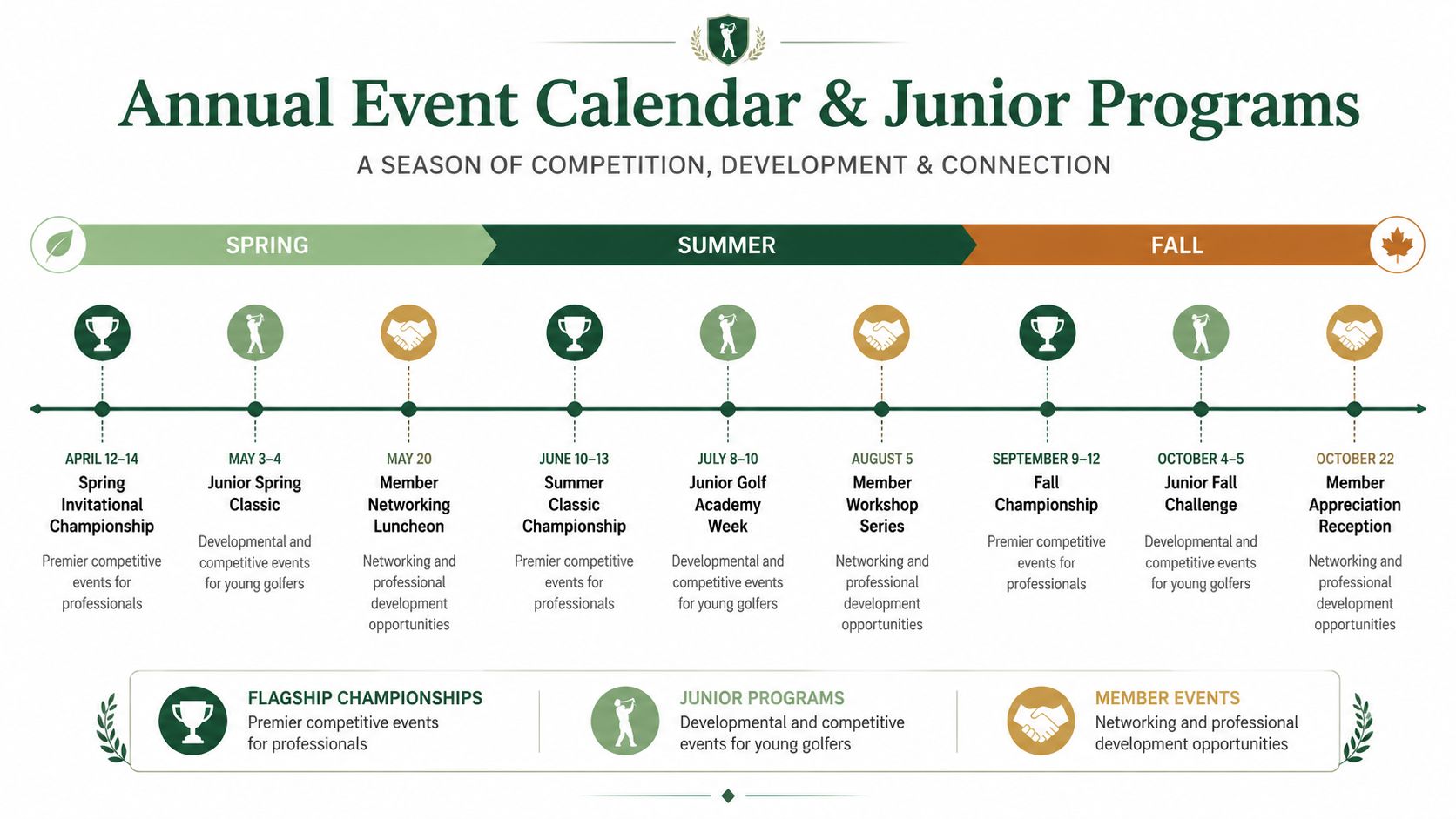
Every Section has a public face. In the Philadelphia PGA Section, that face is the competitive calendar. Through it, history, professional identity, and player development all become visible. For a new Head Pro, the important question isn't just what events exist. It's how those events shape your facility's opportunities across the season.
The flagship piece of that calendar is the Philadelphia PGA Professional Championship, which has been played since 1922 and stands as the section's showcase event, according to the Philadelphia PGA Professional Championship record. That same history includes five wins by Art Wall Jr. and the 1958 PGA Championship at Llanerch Country Club, the first contested at stroke play, as noted in that record.
Why the history matters operationally
At club level, historical prestige isn't just trivia. It affects how professionals perceive the Section, how members respond to hosting opportunities, and how your staff talks about local competitive golf. A championship with century-plus roots carries more weight when you're explaining to a board why regional involvement matters.
That history also creates standards. When a Section has a deep tournament tradition, players expect cleaner administration, better communication, and fewer avoidable errors. A casual member event can survive rough edges. A respected Section environment raises expectations across the board.
What a Head Pro should track during the season
You don't need to memorize every event. You need a working calendar philosophy.
Flagship championships: These shape the competitive identity of the Section and often influence how professionals prioritize their season.
Chapter events: These are often the most practical touchpoints for local engagement and staff participation.
Junior programs: These matter for player development, family engagement, and long-term facility positioning.
If your club wants to build a stronger junior pipeline, it helps to study broader scheduling patterns and how other facilities approach youth competition. This guide to a junior PGA tournament schedule is a useful reference point when you're planning your own calendar around junior demand.
Junior programs are more strategic than many clubs think
A lot of clubs still treat junior golf as a summer add-on. That's a mistake. Junior events do more than fill tee times. They create parent relationships, introduce future members to your property, and give teaching staff a stronger role inside the club.
A facility that supports junior competition well usually improves more than one department at once. Instruction gets stronger, family engagement improves, and the shop has a better story to tell.
A simple way to read the annual calendar
Calendar area | Why it matters | Club-level takeaway |
|---|---|---|
Showcase championships | Reputation and competitive prestige | Follow them closely and align staff interest early |
Chapter and specialty events | Local professional participation | Use them to keep assistants engaged |
Junior programming | Development and community connection | Build lessons, camps, and family communication around them |
The clubs that use the Section calendar well do more than react to posted dates. They build staffing, promotion, and player communication around it ahead of time.
How to Actively Participate and Host Events
Most facilities don't struggle because they lack interest. They struggle because the first few steps aren't obvious. The Philadelphia PGA Section covers a wide footprint, and that creates a common problem for operators. Public information often tells you what's happening, but not always how to move efficiently from interest to action.
A common challenge for members is navigating that large multi-state footprint, because the Section serves eastern Pennsylvania, southern New Jersey, and Delaware, and public-facing information often gives schedules without fully clarifying the operating implications across chapters and states, as reflected on the Philadelphia PGA Section website.
Start with the right operational question
Before you email anyone, decide what kind of participation you want.
Are you trying to:
Enter professionals in events
Get your assistants more involved locally
Host a Section or junior event
Use Section activity to raise your club's profile
Each goal points to a different first move. A lot of wasted time comes from broad inquiries that mix membership, scheduling, hosting, and chapter questions into one conversation.
A practical process for getting involved
Identify your chapter alignment
Don't assume geography alone tells the full story of where to start. Confirm the chapter structure that affects your facility and staff.Map your season before committing
Look at your member calendar, maintenance windows, outing volume, and staffing depth. If your club can't support an event cleanly, don't rush into hosting.Assign one internal owner
Every successful host site has one clear point person. That might be the Head Pro, first assistant, or tournament director. Shared ownership usually turns into missed details.Review the course through a host lens
Ask practical questions. Can your staff stage registration cleanly? Can the golf shop handle pace communication? Is parking manageable? Can scoring and results be managed without confusion?
What separates good host clubs from frustrated ones
The strongest host facilities tend to do three things well:
They commit early: Internal planning starts well before the event appears urgent.
They simplify communication: Staff know who handles rulings, pairings, carts, signage, and player questions.
They pressure-test the day: They walk through arrival, starting procedures, scoring, and departure as if it were already tournament morning.
Hosting isn't mainly about whether the course is good enough. It's about whether the operation is ready.
What doesn't work is volunteering to host because it sounds prestigious, then trying to patch together logistics in the final stretch. The event may still happen, but your team will feel every weak process.
For participation, the same principle applies. Clubs that engage well with the Section treat it as part of annual planning, not as a set of isolated sign-ups.
Elevating Your Tournaments with Modern Software
Most clubs are comfortable with digital tools until tournament week exposes the weak spots. Setup takes longer than expected. Staff have to explain the same scoring steps repeatedly. Players resist one more app. A simple member event starts to feel heavier than it should.
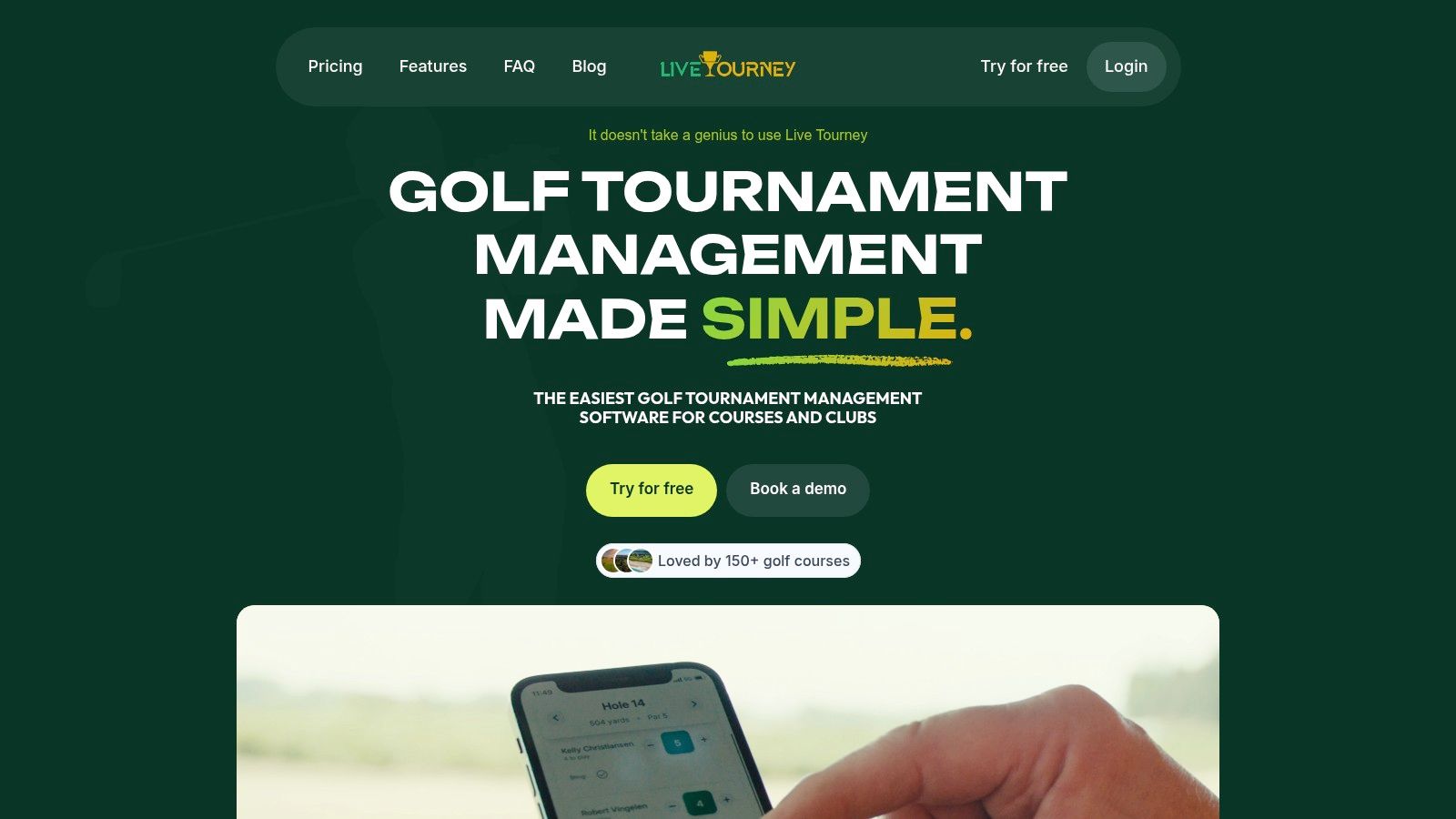
That's why the move toward digitally managed tournament workflows deserves a hard look. The Philadelphia PGA Section already uses a dedicated mobile app, which confirms that digital engagement is part of the member experience. At the same time, a common need for club staff is faster setup and simpler, app-free player adoption for live scoring, as reflected in the Philadelphia PGA Section mobile app listing.
What breaks in real tournament operations
The problem usually isn't that software exists. The problem is fit.
A Section-level system may be perfectly reasonable for official administration, but clubs still need a practical way to run their own events. Weekly leagues, member-guest formats, ladies' days, charity outings, and staff-led internal competitions often need something simpler. If the system asks too much of players, adoption drops. If it asks too much of staff, shortcuts appear.
This is similar to other operations decisions in the club business. You can compare technical platforms all day, but the decision only helps if the tool matches the actual use case. That same logic shows up outside golf too. If you've ever had to compare video streaming platforms for an event or member-facing project, you already know that feature lists don't matter as much as reliability, ease of use, and what your team can support without friction.
What to evaluate before choosing a tournament platform
Use a short checklist:
Player entry experience: Can a guest or member score without a training session?
Staff setup time: Can your shop team build an event quickly when the week gets busy?
Live scoring clarity: Can players and staff follow results without confusion?
Device flexibility: Does the system work well across phones and tablets?
Back-office usefulness: Can you handle pairings, reporting, and event communication without workarounds?
For a broader breakdown of what modern operators should evaluate, this guide to golf tournament management software covers the decision points well.
What works better now
The strongest modern setups tend to favor web-based access, cleaner interfaces, and fewer barriers for players. In practice, that usually means less explaining in the staging area, fewer download objections, and better compliance with live scoring during the round.
Good tournament software should disappear into the event. If your staff spends the day teaching the tool, the tool is too demanding.
Clubs don't need to replace official Section systems where those systems are required. They do need a better operating standard for their own events. That's where most tournament frustration actually lives.
Your Next Step Toward Section Success
The Philadelphia PGA Section matters because it sits at the point where professional identity and club operations meet. For a Head Pro, it's part network, part calendar, part opportunity structure. If you learn how to utilize it effectively, your staff gets more connected, your facility gets more engaged, and your programs gain momentum.
The bigger lesson is that participation alone isn't enough. Clubs benefit most when they pair Section involvement with strong execution at home. That means clear ownership, realistic scheduling, cleaner communication, and event systems that players will use.
A simple action plan
Review your club's current Section touchpoints: staff participation, junior activity, and possible hosting opportunities.
Clarify one priority for the next season: competitive engagement, junior growth, or stronger event visibility.
Audit your tournament operation: look for friction in registration, scoring, and post-event follow-up.
If your club also wants to promote events better, member communication matters almost as much as operations. Smaller facilities often overlook that side of the job. This practical guide to social media strategy for small business is worth reading if you're trying to make club events more visible without overcomplicating the marketing side.
The Head Pros who stand out in this Section usually do two things well. They show up, and they run clean operations when they do.
If you want a simpler way to run your club's leagues, outings, and tournaments with live scoring that works on any device, take a look at Live Tourney. It's built for golf operators who want faster setup, easier player adoption, and a more professional event experience without the usual software friction.