
Aug 3, 2026
golf las vegas tournament, tournament planning, live scoring, golf event logistics, golf course management
Plan a standout golf Las Vegas tournament with this playbook covering site selection, live scoring, logistics, sponsorships, and post-event reporting.

The first text from the committee lands at 5:12 a.m. The trucks are already unloading, the starter wants a clean shotgun, three players are asking about tee changes, and somebody at registration still can't find last night's final roster. That's a normal morning for a golf Las Vegas tournament, and it's exactly why the desert market punishes loose planning.
Las Vegas golf doesn't reward generic event playbooks. The city's long-running PGA Tour stop, now the Shriners Children's Open, gives the market a very visible championship standard, while TPC Las Vegas shows how demanding the setup can be with a 7,080-yard par-71 from the back tees and a wide tee range down to 4,963 yards on the red tees, according to PGA Tour scoring records and course data from the event venue PGA Tour scoring records. That's the benchmark. What matters on the ground is that desert tournaments tend to expose weak tee assignments, clunky scoring, and hidden costs fast.
If you're planning a charity outing, corporate day, or club championship, the operational friction is usually the same. Players expect a polished experience because they've flown in, driven in, or paid premium green fees. Organizers need a setup that respects mixed handicaps, keeps communication tight, and doesn't turn every small change into a spreadsheet fire drill. A useful planning framework for bigger fundraisers is the Anglian Charity Golf Event roadmap, because it reinforces the same truth Las Vegas teaches every season, strong golf events are built before the first cart rolls.
One more reason Las Vegas needs its own approach, the event history is deep enough to matter. The market has maintained a recognized tournament identity through the Las Vegas Golf Champions archive, and the local PGA Tour stop ran for 41 years before it was removed from the 2025 fall schedule, which made Las Vegas the only event to drop off that calendar Review-Journal coverage. That kind of continuity shapes expectations. Players and sponsors don't just want an outing, they want a tournament that feels like it belongs in Las Vegas.
Why Las Vegas Tournaments Need a Different Playbook
A Las Vegas tournament can look orderly before the first group tees off. The parking lot is still dark, the scorecards are stacked, and the starter's table is ready. Then players start asking which division they're in, whether the net groups are on the same tees, and how they are supposed to follow live scoring without downloading another app.
The desert puts pressure on every loose part of the setup. TPC Las Vegas shows why, recent play data there showed an average score of 85.6 over 27 rounds, with only 33.6% of greens in regulation and 51.6% of fairways hit TPC Las Vegas course stats. At that kind of scoring environment, weak tee assignments and slow scoring updates do more than irritate players, they distort the event.
The pressure points show up early
The first mistake is treating a Las Vegas outing like a casual local game. Players are often on unfamiliar grass, dealing with tight pace expectations, and competing in fields that mix scratch golfers with high-handicap guests. If the tees are not separated cleanly by division, the round quickly turns into arguments about fairness instead of golf.
Course setup carries more weight here than it does at many resort venues. TPC Las Vegas is listed at 7,080 yards from the back tees with a 73.4/136 men's rating and slope, while the same venue can flex all the way to 4,963 yards from the red tees TPC Las Vegas tournament venue data. That range gives organizers room to work, but it also means the tee plan has to be settled before invitations go out, not after scores start coming in.
When the field includes multiple abilities, the tee story has to be easy to explain. Gross players need a setup that preserves the test without dragging the round, and net players need a yardage that produces fair scoring inside their handicap band. If everybody is pushed to the same distance, complaints show up fast, pace slows down, and the net results lose credibility.
Practical planning matters before the first cart rolls. A useful comparison point is the Tournament Hills Las Vegas guide, which shows how venue choice and setup decisions affect the player experience in a Vegas event. The same lesson applies to charity outings and corporate days, and the Anglian Charity Golf Event roadmap reinforces that strong events are built before anyone reaches the first tee.
Choosing the Right Course and Setting Up Tees
A Las Vegas tournament gets messy fast if the course cannot support the field you want to run. The first question is practical, not scenic, can the layout handle a shotgun start, mixed handicap groups, and tee assignments that make sense once the scores start coming in? If the answer is shaky, the event loses time at check-in, and players start questioning the setup before the turn.
TPC Las Vegas is a useful example because it gives an organizer real room to work. One listed event setup uses a shotgun start at 8:00 a.m., with the gross division at 7,016 yards from the TPC tees, a net division at 6,699 yards from blue tees, and another net group at 6,221 yards from blended tees, all within a tee set that ranges from 73.9/146 down to 67.8/117 across standard boxes Vegas Golf Network event page. That kind of flexibility helps only if the division structure is settled early, because once invitations go out, tee confusion is hard to undo.
Match difficulty to the division
The cleanest setups start with segregation, not guesswork. Gross players need a setup that keeps the round fair without dragging it into a grind, while net players need a yardage that produces believable scoring inside their handicap band. Put everyone on the same distance and the complaints come quickly, pace of play suffers, and the net results lose credibility.
Course rating and slope give you a way to defend the setup before anyone argues about it. A useful reference point is the what is a course rating guide, which explains how those figures help organizers compare tee boxes in plain terms. For a Las Vegas field, that matters because one division may need a tougher line while another needs a setup that keeps scoring reasonable.
TPC Las Vegas shows why the tee choice cannot be made on prestige alone. The course is listed as par 71 at 7,080 yards from the back tees, with a men's rating and slope of 73.4/136 PGA Tour scoring records. That is a strong test for elite or upper-flight players, but it is not automatically the right fit for every net group. If your field spans a wide range of abilities, the tees should be used as a fairness tool, not a status symbol.
Set the tees before the field sees the sheet
A bad tee plan creates the same problems every time. The long hitters feel trapped, the mid-handicap players feel squeezed, and the organizer spends the day explaining decisions that should have been settled in advance. In a Vegas event, where many players compare notes across flights, those arguments spread quickly.
The safer route is to assign tee boxes only after the handicap bands are locked and the scoring setup is confirmed. That keeps the published field believable and avoids changing the structure after players have already built expectations around it. It also gives the shop and starter a clean script, which matters when the course is busy and the round has to move on schedule.
The right course is the one that lets you protect competition without creating extra friction. In Las Vegas, that usually means a venue with enough tee flexibility, clear rating data, and a staff that understands the difference between a tough round and a fair one.
Streamlining Registration and Player Communication
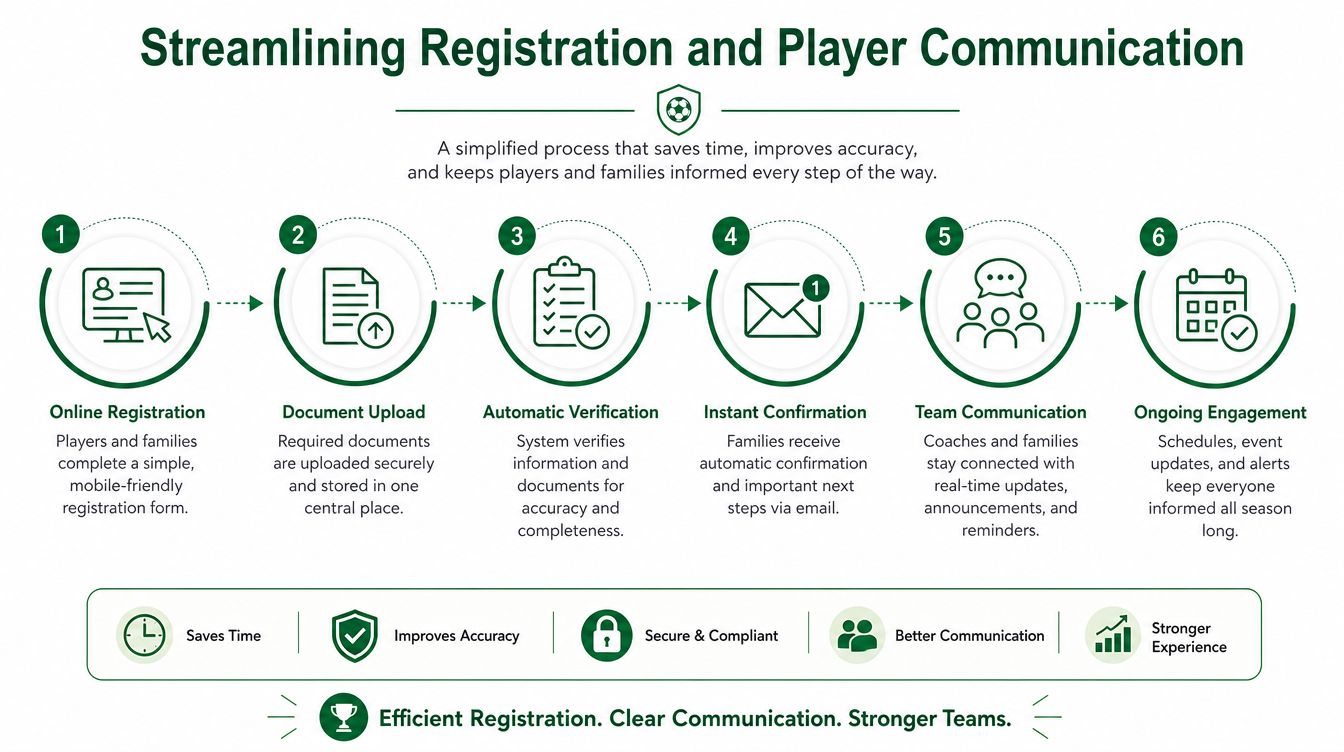
Registration is where most tournament goodwill gets won or lost. Players don't mind paying for a well-run event, but they hate re-entering information, chasing confirmations, or finding out at the first tee that the roster changed overnight. In a Las Vegas event, that friction gets worse because many players are traveling, coordinating spouses or guests, and asking questions from the airport or hotel.
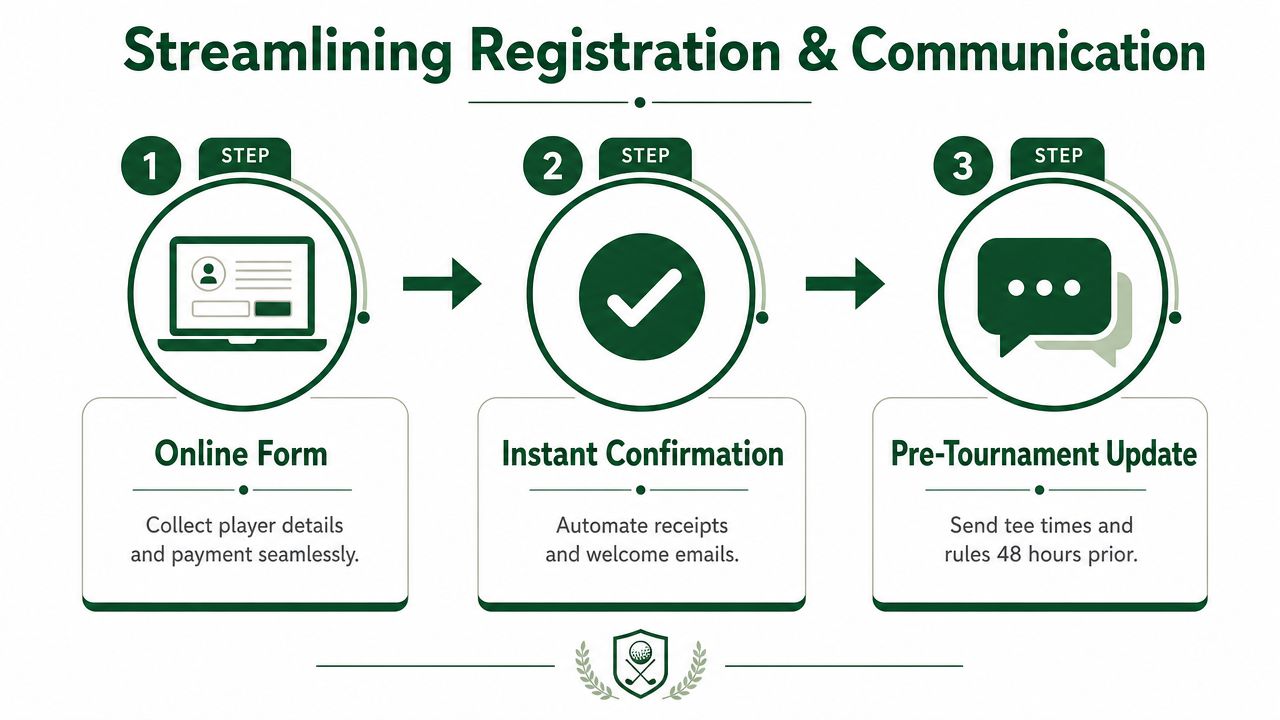
The cleanest workflow is the one that removes manual follow-up. Start with a form that captures the essentials, player name, handicap verification, pairing preferences, dietary restrictions, and any sponsor or team affiliation. Then connect that form to automatic payment confirmation, roster export, and a pre-event email sequence so the staff isn't rebuilding the same information in three places.
Keep the form short, but complete
Long forms scare people away. Short forms that miss key fields create more work later. The balance is to ask only for what affects pairings, scoring, or hospitality, then use dynamic emails to handle the rest.
The important part is timing. Send a welcome message immediately, then a rules and logistics note when the field is locked, then a final tee-sheet update before tournament day. That sequence reduces reply-all chaos and gives players one place to check details instead of hunting through a chain of texts.
Handle changes without spreadsheet drag
Waitlists and cancellations should move through the same system, not a side spreadsheet. If a spot opens, the next player on the waitlist should get a clear email, not a vague text from an organizer who's also trying to find cart assignments. That keeps the roster clean and the tone professional.
For broader event logistics, especially when out-of-town players are part of the field, the planning guide for multi-generational travel is worth a look because it reinforces how many small touchpoints guests need. A good tournament communication stack does the same thing, it anticipates questions before they become problems.
For organizers who want a simple tournament workflow reference, the local golf tournaments guide helps frame the difference between casual sign-up and a real managed field. One practical option in this space is Live Tourney, which handles registration, payments, roster uploads, and live scoring on the web without requiring an app download.
Making Live Scoring Work Without an App Download
A Las Vegas tournament can lose momentum fast if live scoring feels like another task instead of part of the round. If players have to download an unfamiliar app, create a new login, or learn a different screen while they are waiting on the 10th tee, adoption drops. A web link on the phone they already carry removes that friction before the first group even tees off.
That matters in this market because the field often includes guests who do not play tournaments every week. The easier the leaderboard is to reach, the more likely players are to check it, and the more the event keeps its energy through the closing holes. Live scoring also keeps side games and team formats visible while gross and net divisions are running at the same time.
Keep the experience friction free
The cleanest setup is the one players understand right away. Send the scoring link before the round, print it on cart signs and scorecards, and make the first email spell out where scores go and where the leaderboard lives. Older players and less tech-comfortable players usually do not object to scoring itself, they object to uncertainty.
A web-based system also gives the committee table more control over live updates. If a rules question comes up, the scoring chair can adjust the flow without waiting for a full technical reset. That keeps the event moving and keeps staff from turning into an unofficial help desk.
Let the scoreboard carry the atmosphere
A real-time leaderboard changes the tone of the day. Players check standings between holes, sponsors see active engagement, and the closing stretch feels like competition instead of paperwork at the end. People remember that when they decide whether to come back.
For a practical comparison point on how local events benefit from simpler tournament tooling, the local golf tournaments guide is useful background. The same principle holds here, fewer clicks usually means more participation.
If you are choosing software for a golf Las Vegas tournament, use the one that works on any device, gives players quick access, and does not force a download just to keep score. One practical option is Live Tourney, which handles registration, payments, roster uploads, and live scoring on the web without requiring an app download.
Budgeting for the Hidden Costs of a Vegas Event
Most Las Vegas planning conversations stop at green fees. That's too shallow for a real tournament budget. The line items that hurt later are the ones nobody talked about early, cart fees, food-and-beverage minimums, premium-course surcharges, and the extra staffing needed to keep a shotgun start moving.
The issue is transparency. Independent travel and course guides can point you toward venues near the Strip, but they usually don't spell out the full event bill in a way that helps a committee build pricing. That leaves planners guessing when someone asks the only question that matters, what will this cost per player? TPC Las Vegas travel guide
Las Vegas Tournament Cost Breakdown by Venue Tier | Public Course Near Strip | Championship Course | Private/Resort Layout |
|---|---|---|---|
Cost Category | Lower upfront access, fewer premium extras | Higher conditioning expectations, stronger player demand | Highest service expectations, most moving parts |
Cart and staging | Usually simpler | Often more structured | Usually tightly managed and bundled into a broader hospitality plan |
Food and beverage | May be flexible | Often tied to event standards | More likely to include minimums or package commitments |
Staff load | Leaner | Moderate to heavy | Heavy, especially if hospitality and sponsorship zones are involved |
Registration pricing pressure | Easier to keep accessible | Needs careful margin control | Usually requires stronger sponsorship support |
Price the event from the bottom up
Build the budget from the venue outward, not from a guess at registration revenue. Start with course access, then add hospitality, staffing, scoring, and contingency costs. If you're skipping that structure, you'll end up reducing player value somewhere later, usually in food quality, signage, or prize presentation.
Sponsorship packages can help, but only if they're tied to visible assets. Signage, leaderboard placement, cart exposure, and post-event recap materials are easier to sell than vague “brand support.” That's true whether you're managing a charity outing or a corporate invitational.
Watch the hidden friction costs
The non-obvious costs in Vegas are usually operational. You pay for smoother check-in when the roster is clean, smoother tee flow when divisions are separated properly, and smoother scoring when the system doesn't need staff intervention every ten minutes. Those costs are real even if they don't show up as a line on the first draft.
Desert layouts also tend to reward better-prepared fields, which means your budget should include enough room for communication and pace control. If you squeeze those out, the event still happens, but the experience degrades fast. That's the difference between a tournament and a one-day scramble with scores attached.
Running Tournament Day Without the Chaos
Tournament day runs on a clock, not on optimism. The cleanest Las Vegas starts are the ones where every station has a job before sunrise, check-in has the roster in hand, the cart crew knows the field split, and the starter is not trying to invent tee order while players are already gathering. Anyone who has watched a committee handle five small problems at once knows how fast that morning can slip.
Desert conditions make the margin tighter. On layouts like TPC Las Vegas, scoring pressure is real, so a small mistake in setup can turn into a bigger delay once the round begins. If the field is already working through a difficult course, the operation has to stay simple and steady.

Stage the site before players arrive
Cart signs, bag tags, scorecards, and leaderboard placement should all be ready before the first group arrives. If those pieces are printed, sorted, and staged the night before, staff can spend the morning answering player questions instead of sorting paper. That saves time and cuts down on mistakes in the first wave.
Sponsor zones need the same discipline. Do not block traffic just to squeeze more logo exposure into the day. Put partner signage where players naturally pause, near registration, practice areas, or the scoring return point, so the sponsorship feels part of the event instead of a barrier to movement.
Build a simple failure plan
Lost scorecards happen. Rules questions happen. Pace-of-play issues happen. The event gets judged by how quickly the committee handles them.
Field rule: one designated decision-maker beats three people arguing over the same problem every time.
In desert weather, the strongest contingency is usually practical. Shade, water, clear communication, and a committee that can reset expectations without drama matter more than theatrics. High wind and heat need a response, not a speech. If staff know who owns each issue, the day stays organized even when conditions are not ideal.
Turning Results Into Repeatable Success
The last group signing a scorecard is not the end of the event. It's the point where the review begins. If the final scores, payouts, and player feedback all live in different places, the next tournament starts with guesswork again.
Post-event reporting should be clean and specific. Send results quickly, include scorecards or divisional summaries where relevant, and give sponsors a recap they can use. A partner wants to see where their name appeared, how the field was structured, and what the event looked like from the participant side.
Close the loop while the event is still fresh
Player feedback works best when it asks about the parts of the day that organizers can change. That means registration clarity, tee assignment fairness, scoring visibility, pace of play, and hospitality flow. Vague “how was it?” surveys usually produce vague answers.
The committee should also review where the day slowed down. If check-in was backed up, if a division felt mismatched, or if live scoring wasn't used enough, that needs to shape the next field, not just the next email. The point is to make each Las Vegas event easier to run than the last one.
Turn one event into a better operating system
The strongest tournaments build a repeatable standard. Once your tee logic, communication flow, and scoring setup are stable, every new outing becomes less chaotic and more predictable. That's how organizers protect time, money, and goodwill in a market that already expects a polished experience.
A solid tournament platform can help with that cycle by keeping registrations, scoring, reports, and payouts in one place. Live Tourney does that on the web, which makes it easier to keep the process moving without asking players to install anything extra. For a golf Las Vegas tournament, that kind of simplicity is more than convenient, it's how you keep the event professional from sign-up to final report.
If you're planning a Las Vegas outing, choose tools and a process that match the market's standards, not your last local event. Visit Live Tourney to see how registration, scoring, and tournament reporting can sit in one workflow, then use that structure to run the next desert event with less friction and more player buy-in.





