
Aug 2, 2026
shoaff park golf, fort wayne golf, par 3 course, municipal golf, indiana golf
Plan your round at Shoaff Park Golf in Fort Wayne. Course layout, scorecard, green fees, tee times, tips, leagues, and nearby attractions covered.

If you've ever pulled into a municipal course expecting a quick casual nine and then realized you're standing on a full 18-hole par-3 loop, Shoaff Park Golf is that rare Fort Wayne round that changes the plan before the first swing. It's not a watered-down version of golf. It's a target-golf test with a history that goes back to a 1955 land donation, and the way it plays today still reflects that original municipal vision.
What Shoaff Park Golf Is and Where It Came From
Shoaff Park Golf starts with a simple shock to first-time visitors, every hole is a par 3. That alone tells you this is a different municipal experience, one built around precision and repeatable swings instead of brute force.
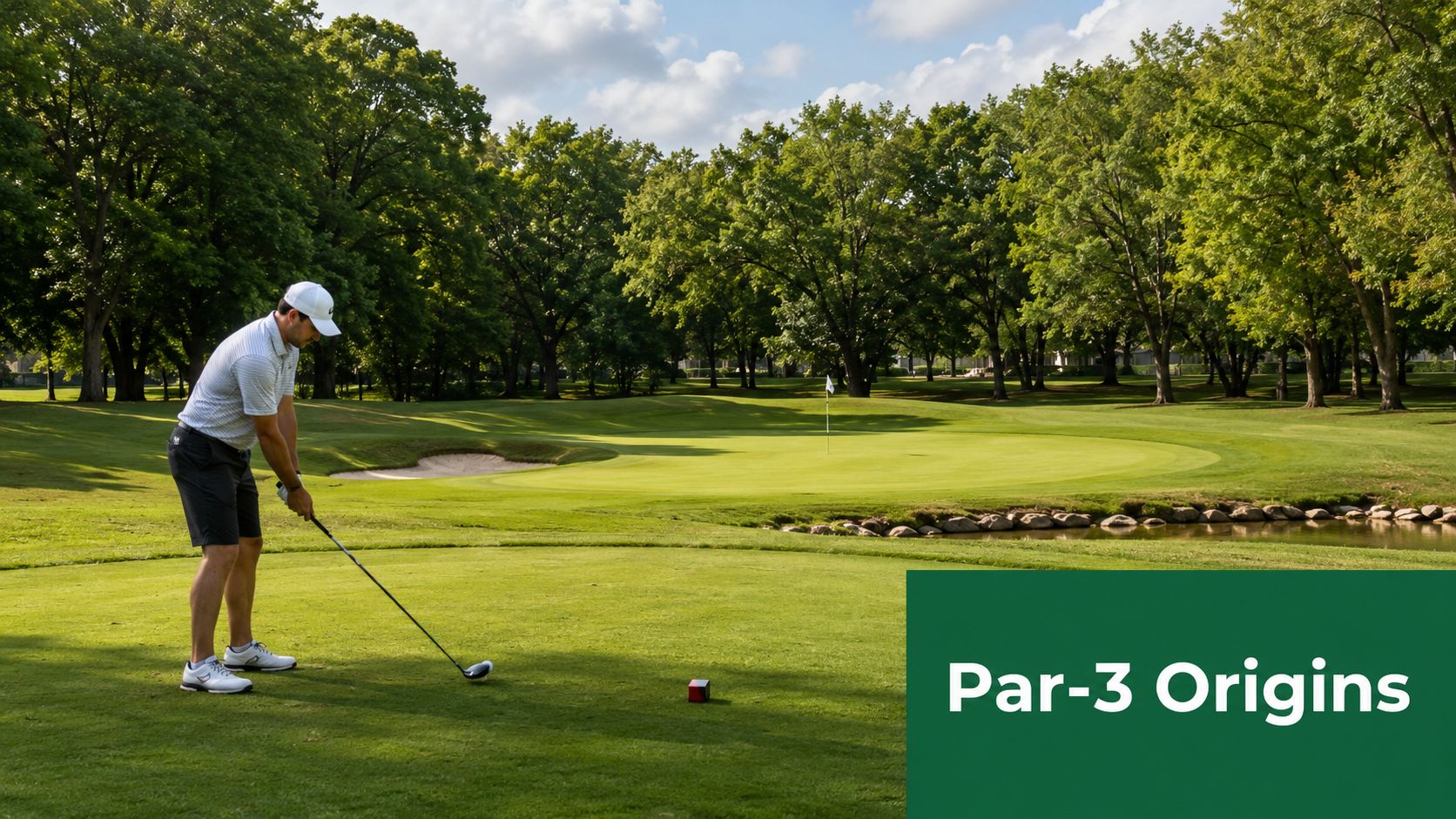
The course's roots go back to a 1955 land donation when the Shoaff family gave 185 acres to the Fort Wayne Parks and Recreation Department, with 95 acres becoming Shoaff Park and the remaining acreage later devoted to the golf course, according to the City of Fort Wayne's history page. The present 18-hole layout is widely identified as a Hal Purdy design, and local records vary on the opening year, with references to 1958, 1963, and 1964. That inconsistency doesn't change the bigger point. The routing has stayed virtually unchanged for more than six decades, which is a major milestone for a municipal course and one reason regulars feel such continuity when they return.
Why that history matters on the ground
Old layouts teach you faster than polished new ones. Shoaff's greens, angles, and hole order have had decades to settle into a dependable playing identity, so the course rewards players who learn where misses are safe and where they aren't. That matters in league play, in casual rounds, and in event prep.
The city's own description of the course as a public golf course and driving range fits that identity well, because it functions as both a place to play and a place to sharpen contact. For a local golfer, that's the value. Shoaff isn't trying to impersonate a resort track. It knows exactly what it is, and it's been the same thing for a long time.
Practical rule: If you're judging Shoaff by driver distance, you're asking the wrong question. Judge it by how well you control wedges, shape trajectory, and finish putts.
The Course Layout and What Makes a Par-3 Loop Different
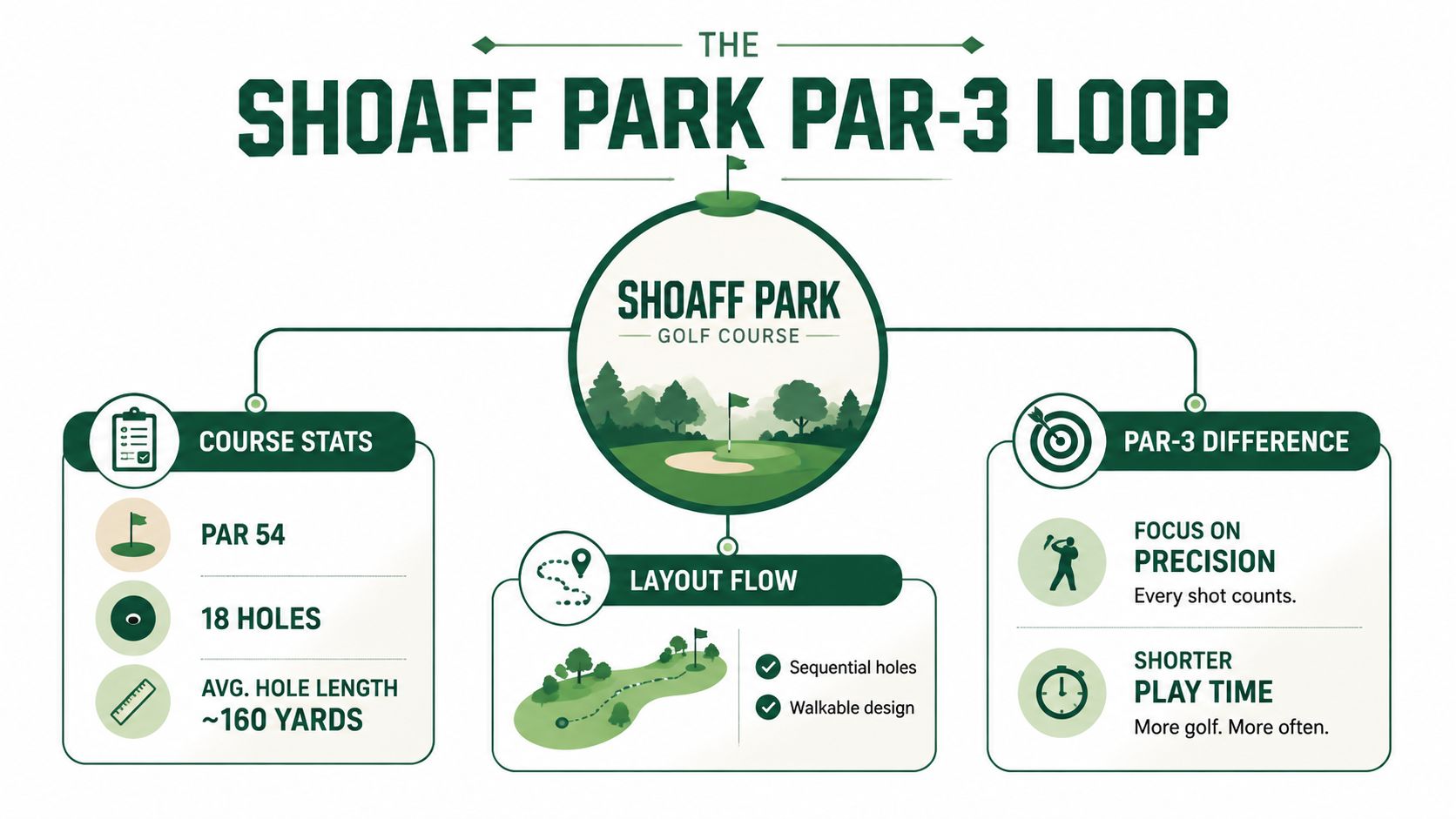
Shoaff Park Golf measures about 2,886 yards from the longest tees, carries a par of 54, and is listed with a course rating of 54.0 and a slope of 105 on GolfPass. Those numbers define the playing experience more clearly than any marketing line ever could. This is a short-course scoring environment, not a distance contest, and the entire layout is built around consecutive par-3 shots that ask for direction, carry control, and a calm putter.
An all-par-3 course changes your decisions immediately. You're not planning around layup zones on par 5s or placement on long par 4s. You're choosing whether to hit a full wedge, a controlled hybrid, or a long iron, then trying to leave the ball in the right part of the green and two-putt cleanly.
The modest slope tells you something useful too. A 105 slope usually means the course is playable for a wide range of handicaps without turning every mistake into a disaster. Bad contact still costs strokes, but the punishment is more about missed greens and awkward putts than lost balls and recovery disasters. That's why so many golfers can post respectable numbers here even when their full-length game isn't sharp.
The course's structure also makes pace predictable. On a par-3 loop, groups don't spend much time hunting for long drives, and that keeps the round moving. For golfers who want a brisk outing, the format is one of the biggest advantages of the property, especially when the goal is a focused loop rather than a half-day grind. For a hole-by-hole planning mindset, this kind of course rewards the same discipline you'd use when building a good scorecard, and resources like how to read hole-by-hole layouts become useful.
What to expect from your score
The biggest mental adjustment is simple. Treat every tee shot as a scoring chance, not a survival shot. A par-3 loop lives and dies on proximity, so the player who consistently lands shots in the right quadrant of the green usually beats the player with the prettier swing but looser distances.
Keep your eyes on green depth, pin location, and wind before you pick a club. On a course like this, one bad yardage decision often matters more than one imperfect swing.
Reading the Scorecard and Picking the Right Tees
The scorecard at Shoaff tells a clear story. GolfLink lists the course at 2,886 yards and par 54, and also notes that hole 4 is the most difficult hole on one card. That lines up with what the layout feels like on the ground. Some holes let you swing freely, but a few force you to commit to precise yardage and solid contact.
How to choose your tee set
If you normally play a full-length course from the back, resist the urge to treat this like a power test. A short par-3 layout rewards the player who can land shots crisply and choose the right club for each green. A longer tee set only helps if it matches your normal carry distances and doesn't turn the round into a string of forced shots.
Shoaff Park Golf Scorecard Snapshot | ||||
|---|---|---|---|---|
Tee Set | Total Yardage | Par | Holes | Slope |
Longest tees | 2,886 | 54 | 18 | 105 |
That snapshot matters because the course is short enough that many golfers can overswing themselves into trouble. A better plan is to build each shot around landing area, not ego. If a green sits shallow, hit the club that finishes short of the back edge and leaves an uphill putt. If a pin is tucked, aim for the fat side and take par.
The course's modest rating and slope also reinforce the idea that you should stay disciplined. The layout won't punish every miss harshly, but it will expose sloppy wedge distance and poor pace on greens. That's exactly why hole 4 and similar demanding tee shots often separate the players who manage the round from the players who chase low-probability birdies. For pin-sheet reading and target planning, this guide to pin sheets is worth understanding before league night or event day.
Best practice: On Shoaff, aim for your makeable range, not the flag. The course gives you enough birdie looks already.
Green Fees, Hours, and How to Book a Tee Time
Shoaff Park Golf is a municipal course, so the smartest approach is still the simplest one, check the city's official course page before you leave home. The city lists it as a public 18-hole course at 6401 St. Joe Road and describes it as a par 54 layout, while the Visit Fort Wayne course guide notes that tee times can be scheduled online or by calling the pro shop at 260-427-6745. Use the official city channel for the current details on hours and rates before you drive out.
What to plan for
The practical setup is easy. Bring a compact bag, a small wedge-to-putter mix is enough for most players, and expect a walking-friendly round. The course is built for that style of play, and the short format makes motorized carts less central than on a full-length track. If you prefer a cart, confirm availability at booking rather than assuming one will be waiting.
Indiana weather matters too. In the shoulder seasons, Shoaff can be a great quick round. In deep winter, conditions can change fast, so confirming the day's status is part of the routine. The official site is the right place to verify whether the course is open, limited, or adjusting hours due to weather.
The city and Visit Fort Wayne also point to the driving range and practice areas, which makes the property more useful than a one-off round. You can warm up, work on wedges, and get a few putts in before heading out.
For municipal operators who manage coupons or recurring promos, a structured QR rewards coupon system can keep those offers organized without turning booking into a mess. That's the kind of back-end detail that matters when a public course runs steady traffic through multiple seasons.
Who Shoaff Park Golf Is Really For
Shoaff Park Golf makes the most sense for players who want contact, control, and pace more than they want long-drive bragging rights. That's why it works so well for beginners, juniors, seniors, and anyone with a packed schedule. The format strips away the intimidation of long holes and gives golfers a place to learn how scoring works.
Beginners get the clearest benefit. A par-3 course reduces the number of repeated penalty shots that can derail a round on a full-length layout, so newer players can focus on making solid contact, finding the putting surface, and learning how to finish holes. Juniors and players with distance limitations get a fairer test too, because they can compete on the same playing field without needing carry distance that many standard muni setups assume.
Why leagues like it
League organizers like short courses for a reason. Pairings move faster, mixed-skill groups stay more competitive, and every hole offers a meaningful scoring chance without slowing the field to a crawl. That makes Shoaff especially useful for weekday leagues, family groups, and quick competitive rounds.

There's a common misunderstanding that par-3 golf is automatically easy. It isn't. It's just different. On a course like Shoaff, the player who controls wedge distance, keeps tempo steady, and rolls putts well usually separates from the player who assumes shorter means simpler.
If you're planning a family golf outing, it also helps to think about the day beyond the scorecard. The same group that wants a relaxed round may also want park time, snacks, or a simple post-round stop, and park day essentials for parents fits naturally into that planning mindset.
Shoaff is a better course for learning how to score than many longer public tracks, because every hole asks the same basic question, can you place the ball where you intended?
Leagues, Outings, and Running Events the Easy Way
Short municipal courses are built for event flow, and Shoaff Park Golf is a strong example of why. Its par-3 structure fits league nights, junior camps, couples events, corporate outings, and charity fundraisers because players don't get bottlenecked behind long, drawn-out holes. A course like this is easier to organize, easier to score, and easier to keep moving.
Why the format works for event directors
The biggest operational advantage is predictability. When every hole is a short approach shot, shotgun starts feel natural, groups stay close together, and the pace of play is far more manageable than at a full-length parkland course. That matters when your field includes golfers with different skill levels and you need the round to feel fair without dragging into the evening.
For modern event management, the mechanics matter just as much as the venue. A platform built for live scoring and league administration can handle roster uploads, pairings, live leaderboards, scorecards, cart signs, side games, and payout tracking without forcing staff to juggle spreadsheets or paper sheets. That's the win for a course like Shoaff, where clean organization keeps the focus on the golf instead of the admin.

Live scoring also changes the player experience. Golfers can follow results in real time on any phone, and staff don't need to babysit manual score entry all day. For a short course with steady league traffic, that kind of setup saves time before, during, and after the event.
If you're planning recurring competitions, golf league programs are worth studying because Shoaff's format is naturally aligned with them. It's the kind of venue where organized play doesn't feel bolted on, it feels like part of the property's identity.
Getting There, Amenities, and Nearby Attractions
Shoaff Park Golf sits at 6401 St. Joe Road on Fort Wayne's north side, which makes it easy to reach for locals and manageable for visitors coming in from other parts of the city. The City of Fort Wayne also lists the course alongside a driving range, and Visit Fort Wayne notes practice features including a putting green and short-game areas. That combination makes the stop more useful than just a tee time, because you can warm up properly instead of showing up cold.
The surrounding park gives the outing extra flexibility. The area includes family-friendly options beyond golf, so the trip can work for players who are bringing non-golfers along. That's useful when you're trying to make a simple round feel like a half-day plan instead of a one-purpose errand.
What to check before you leave
Parking and access: Use the main park access points off St. Joe Road and give yourself a little extra time if the park is busy.
Practice options: If you want range balls or a short warm-up, the city's course information points to the driving range and practice areas.
Food and extras: Confirm the day's food, beverage, and rental availability through the official course contact before you arrive.
Family plans: If you're turning the round into a park outing, build in time for the rest of the property, not just the scorecard.
Fort Wayne's north side also makes it easy to connect golf with errands, a casual meal, or a stop elsewhere in the city. That's part of the appeal of a municipal course like Shoaff. It fits real life. You can play quickly, keep the day moving, and still feel like you got outside for something more than a rushed nine.
Tips for Your First Round and What to Do Before You Go
First-time players at Shoaff should keep the bag simple. Bring clubs that help you hit crisp wedges and confident putts, because the round lives on contact and distance control more than raw power. A par-54 scorecard plays best when you stop chasing hero shots and start treating each tee ball like a scoring chance.
The other key is pace. Plan for a fast round and stay realistic about what the course asks of you. Shoaff's 2,886-yard layout from the longest tees and public/municipal setup make it ideal for golfers who want a concentrated loop without the wear and tear of a long full-day walk.
Before you go, confirm the official hours and current green fees through the city page or the pro shop contact. That one step prevents most first-visit mistakes, especially in weather-sensitive months. If you're organizing a league or outing, use a modern tournament workflow so scorekeeping and pairings don't slow down the day.
Simple checklist: wedges, putter, short-game focus, current hours, current fee, and a plan to play fast.
Shoaff Park Golf belongs on the rotation for golfers who value practical scoring, quick rounds, and a course that rewards clean fundamentals. It's also one of the better municipal options in Fort Wayne for learning, competing, and keeping the day moving without losing the feel of a real round.
If you're running a league, outing, or weekly competition, Live Tourney gives you live scoring, roster tools, and event setup that fit a short-course venue like Shoaff Park Golf. Visit Live Tourney to see how it can help you run smoother events and keep players engaged from the first tee to the final leaderboard.





