
Jun 18, 2026
tournament housing services, event housing, golf tournament planning, hotel block management, stay to play
Master tournament housing services with this playbook. Event organizers: source, negotiate, & manage hotel blocks to elevate your event.

You've got player registrations opening soon, hotel sales managers are asking for projected pickup, and your staff already has enough on its plate. That's when tournament housing stops being a side task and becomes an operating decision.
Most articles treat housing like a simple room-block exercise. In practice, tournament housing services affect staffing, event margins, player satisfaction, reporting, and risk. The right setup saves time and gives you cleaner data. The wrong one creates manual work, bad forecasts, and frustrated families.
What works is choosing the model before you chase hotel rates. Then build a booking flow players will use, keep housing connected to registration, and write policies that can survive scrutiny if someone challenges them later.
Laying the Foundation for Tournament Housing
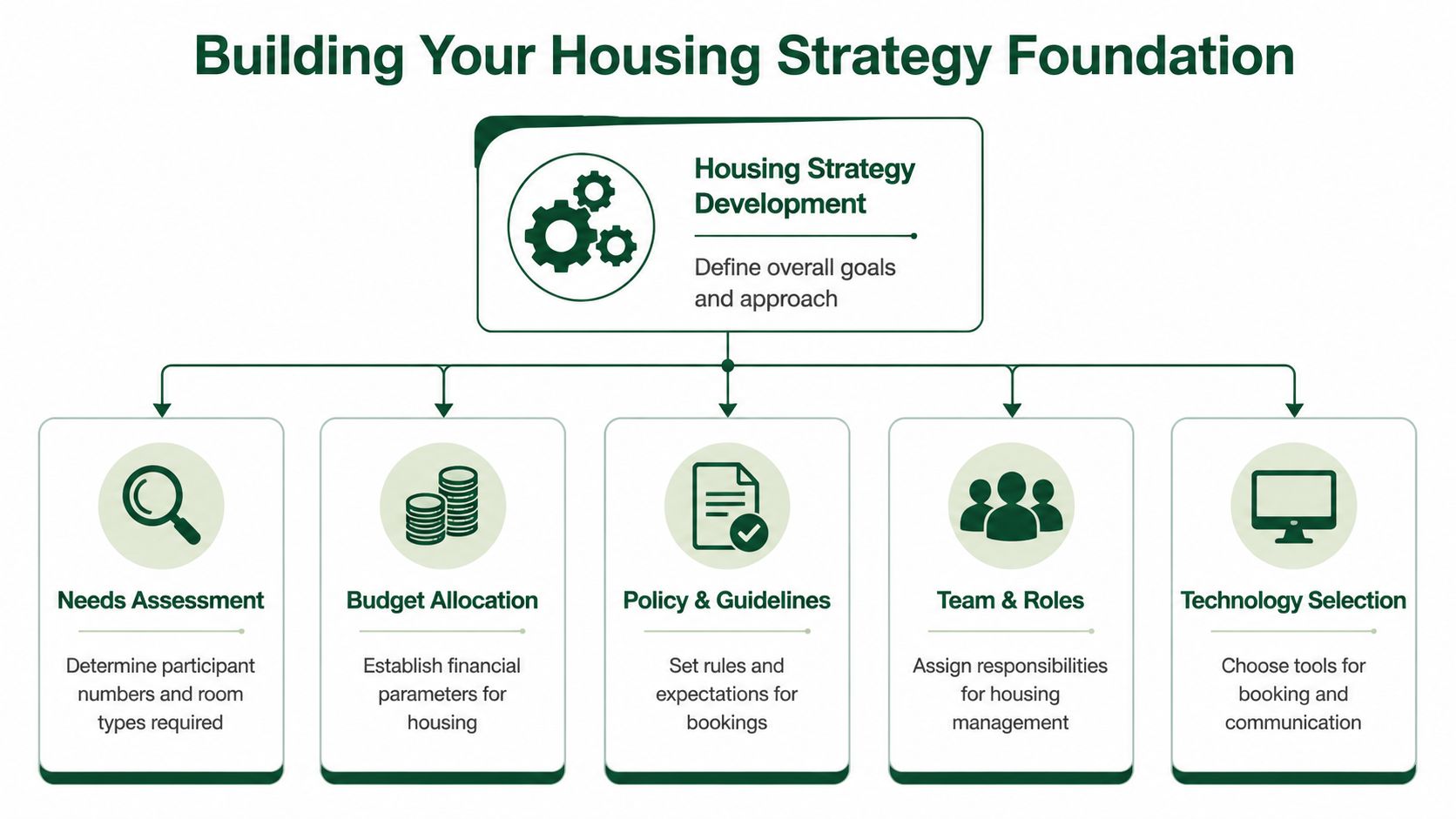
Housing decisions go sideways when organizers start with hotels instead of starting with the event. Before you ask any property for rates, decide what job your housing operation needs to do.
For some tournaments, housing is a light coordination task. For others, it's part of compliance, participant communications, sponsor hospitality, and post-event reporting. That difference matters because the market no longer revolves around basic room blocks. Sports ETA noted in February 2025 that there is a distinction between a housing services provider and a housing technology provider, with modern platforms increasingly covering the full booking lifecycle from RFPs through reconciliation in its housing services and housing technology announcement.
Start with demand, not with inventory
A clean housing plan begins with a few practical questions:
Who's traveling: Local players behave differently from out-of-town teams, invited guests, and families who extend the trip.
What room types matter: Doubles, suites, staff rooms, and accessible inventory should be identified early.
How much flexibility you need: A one-site amateur event and a multi-venue tournament don't need the same housing structure.
Who owns communication: If coaches, parents, and players all book differently, someone must control the message.
Pull past registration lists, not just memory. Look at geography, length of stay, and when participants usually commit. If you don't have strong historical data, build conservative assumptions and leave room to add inventory later rather than overcommitting early.
Practical rule: Housing forecasts are usually wrong at the edges. Build your plan so being slightly wrong doesn't become expensive.
Choose the model that fits your event
There are three workable models, and each has trade-offs.
Model | Best fit | What works | What usually breaks |
|---|---|---|---|
DIY | Smaller events with stable demand | Direct control, direct hotel relationships, simple costs | Staff gets buried in edits, exceptions, and reminders |
Full-service provider | Events with multiple hotels, heavy traveler volume, or thin internal staff | Negotiation support, reservation management, attendee communications | Less direct control over every touchpoint |
Technology platform | Teams that want process control with better tools | Better workflow, reporting, and reconciliation | You still need staff discipline and clear ownership |
DIY can work well when your field is predictable and your staff already owns registration, pairings, and hospitality. But if your event has multiple arrival patterns, waiver requests, or family travelers, manual housing work expands fast.
A full-service partner is useful when the workload itself is the problem. Independent industry guidance describes third-party housing companies as handling hotel contracts, reservations, and attendee communications on the planner's behalf, which is why many organizers use them to centralize logistics rather than patching together emails and spreadsheets.
A pure technology option makes sense when you want structure without fully outsourcing judgment. That model is often stronger than DIY if your staff is organized and willing to monitor pickup consistently.
Match housing to the rest of the event
If registration, communications, and roster management are already central parts of your process, housing should fit that same operating style. Don't choose a housing setup that requires a separate universe of logins, exports, and manual reconciliations unless there's a clear reason to do it.
If you're tightening the rest of your event workflow, it helps to review a broader golf tournament planning guide at the same time. Housing is easier when the event timeline, registration windows, and communication cadence are already defined.
Sourcing and Negotiating Hotel Partnerships
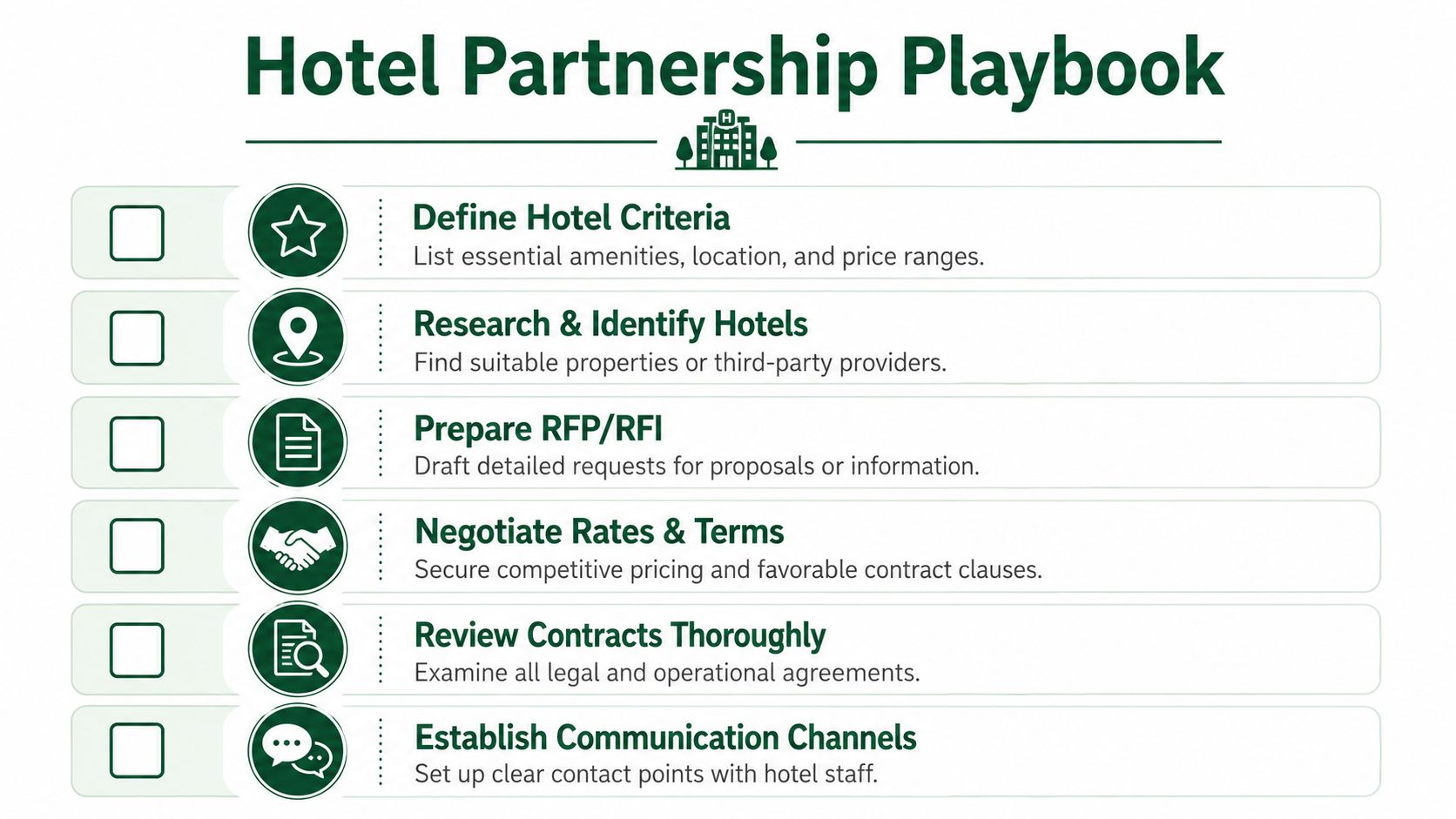
Good hotel partnerships are built on clarity, not optimism. Sales managers respond faster when your request reads like a real event brief instead of a vague room inquiry.
Send an RFP that gives hotels enough context to price and plan correctly. Include event dates, likely arrival and departure patterns, expected room types, whether players book individually or through one coordinator, and whether your event may need overflow options. If you're using a housing company, ask the same level of detail from them. The point is comparison. You want to line up responses side by side instead of guessing which offer is better.
What to compare in every offer
Room rate gets all the attention, but it's rarely the biggest issue. The actual influence is in terms.
Look closely at these points:
Attrition exposure: If pickup misses the target, who carries the risk and how is it measured?
Cutoff dates: Late cutoffs help players. They can also increase your forecast pressure if the hotel wants inventory certainty.
Comp room rules: Ask when comps are earned and how they're applied.
Commission structure: If a third party is involved, understand whether the model is a flat fee, a hotel commission, or a mix.
Inventory control: Clarify who can add rooms, close room types, or release unused rooms.
Escalation contacts: Get names for sales, front desk, and accounting. Problems rarely stay in one department.
A fair contract protects both sides. Hotels want confidence that your event is real. You want room to manage normal demand swings without turning every adjustment into a penalty discussion.
Where third-party models can help
One reason organizers use a housing company is to centralize negotiation and communication. Sports Planning Guide reports that this model is often structured as a flat fee or hotel commission, and one experienced operator said a well-implemented program can increase overall housing revenue by 20% or more in its discussion of the future of third-party housing.
That upside is real when the partner manages the process well. It disappears when booking is fragmented across direct calls, side emails, and family-by-family exceptions that never make it into one report.
A hotel block is only valuable if everyone is using the same playbook.
Small contract details that save headaches
One of the easiest misses is failing to think through edge cases before the event launches. Age-related booking issues are a good example. If you host junior events, college fields, or younger assistants traveling without a parent, review basic lodging restrictions early. A practical primer on avoiding hotel age restriction issues is useful because those problems usually surface after rates are loaded, not before.
Another common mistake is assuming every participant wants the same stay pattern. Build optional shoulder-night language if your event tends to attract early arrivals or families turning the tournament into a weekend trip.
Building Your Booking and Communication Workflow
A strong contract can still produce a messy participant experience. The housing process has to be easy enough that players, coaches, or parents follow it without asking your staff to decode every step.
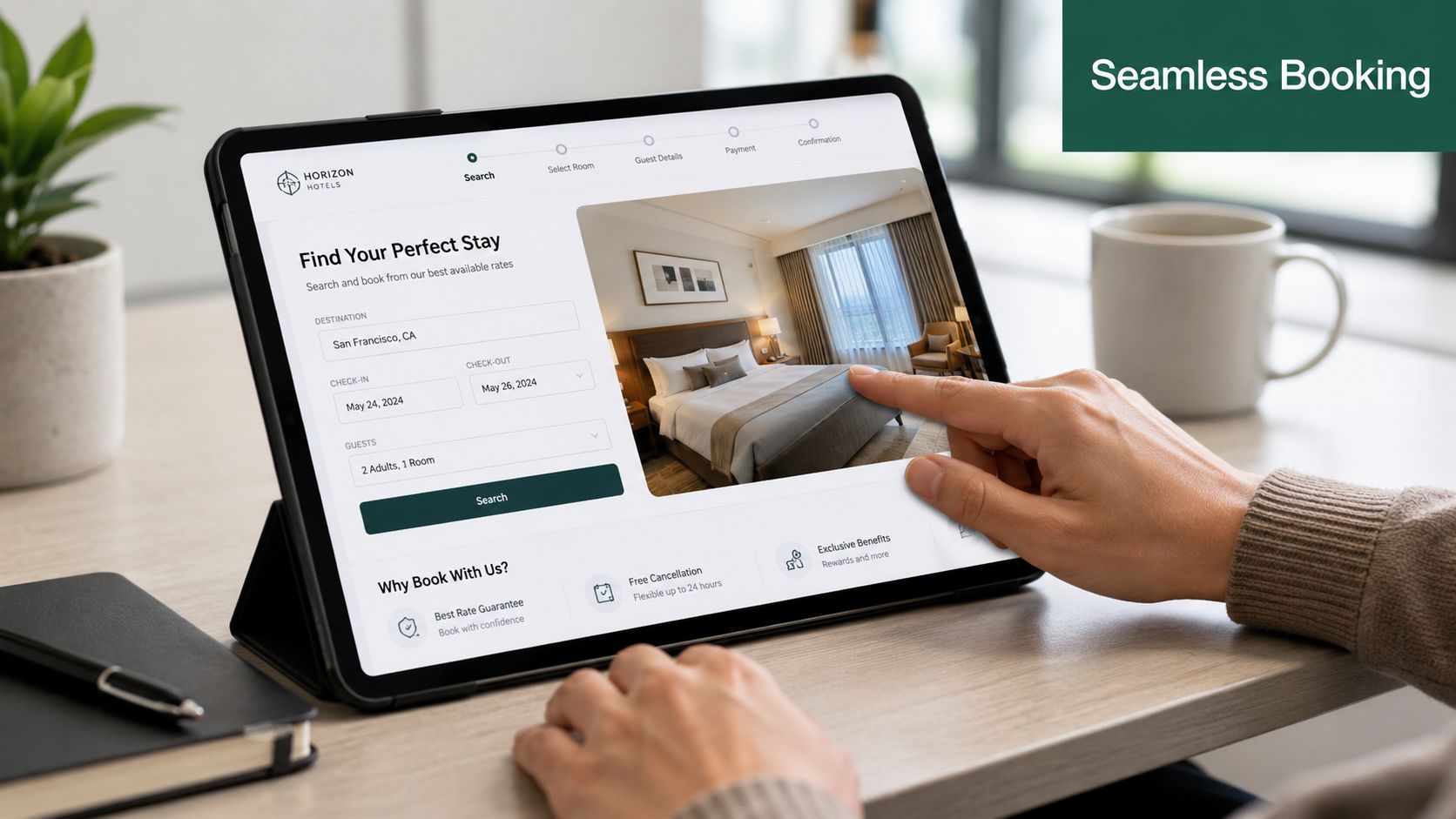
The smoothest workflow is short. One booking path. One confirmation path. One support contact. Tournament Housing Services, for example, outlines a simple process where users select the sport and event, click BOOK NOW, and then forward the confirmation email to THS@THSweb.com, which triggers follow-up from a customer support specialist. That kind of direct sequence works because it removes ambiguity.
The booking flow that gets used
A practical setup usually looks like this:
Registration confirmation sends the official lodging path
Participant clicks to one booking page
Booking confirmation goes to the participant and the organizer or housing partner
Reminder emails go only to people who haven't booked
Exceptions route to one inbox, not to individual staff phones
That structure matters because housing falls apart when people can “just call the hotel” or “email the coach.” Every side channel creates reporting gaps.
The message itself should be plain. Tell participants what's available, who should book, the deadline, the cancellation policy, and how to ask for an exception. Don't hide the important parts in a long event newsletter.
Start small and track pickup
This is the most reliable risk-control move in housing. Sports-event housing guidance recommends starting with a small room block, tracking pickup in software, and adding inventory only if bookings are on pace in its Housing 101 guidance.
That approach does two things. It reduces the chance that you'll sit on unsold rooms, and it forces you to watch actual booking behavior instead of defending a forecast that may already be wrong.
Field note: The safest room to add is the one demand has already justified.
Use the booking window to learn, not just to collect reservations. If booking velocity is slow, don't assume the field is weak. Check the basics first:
Link friction: Is the booking link buried in a PDF or registration email?
Message timing: Did you ask people to book before they fully committed to the event?
Stay pattern mismatch: Are your blocks loaded for dates players don't want?
Price resistance: Are nearby public rates changing the conversation?
Keep reminders tied to actual status
Manual reminder blasts create confusion. Participants who already booked get annoyed, and people who haven't booked learn they can wait.
Your operations stack matters. If your event team is modernizing workflows, a broader look at golf tournament management software can help you think through how registration, communication, and participant status should work together rather than living in separate tools.
Integrating Housing with Your Tournament Platform
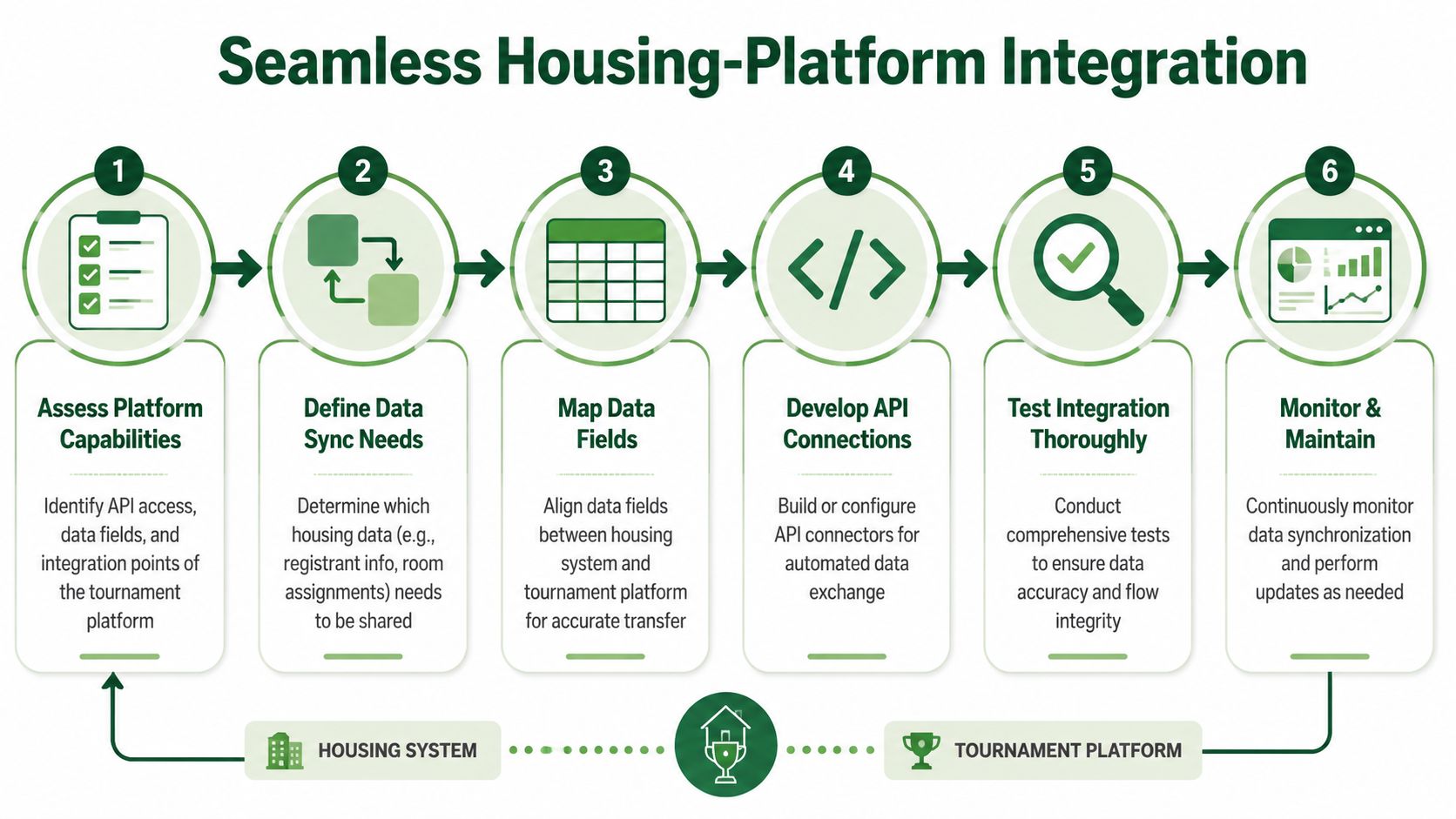
Housing shouldn't be managed in a silo once registration is live. The participant list and the reservation list need to stay aligned, or your staff ends up cleaning up errors by hand.
That issue gets bigger as events grow. The same Sports ETA housing guidance referenced earlier says organizers should connect registration and housing systems so the reservation list stays aligned with the participant list, because disconnected systems can create missed upsell opportunities and weaker service. In practice, this means one source of truth has to win.
What integration actually fixes
When housing and tournament operations share data, several recurring problems shrink fast:
Duplicate entry drops: Staff isn't retyping names, arrivals, or changes.
Roster accuracy improves: Withdrawals and late additions don't live in separate files.
Communication gets smarter: You can target booked, unbooked, local, and exempt participants differently.
Reconciliation is cleaner: Hotel pickup is easier to compare with your actual field.
This isn't just a convenience issue. It changes the quality of the player experience. A participant who registers and immediately sees the official lodging option is less likely to drift into side-channel booking.
Service versus software is no longer a minor distinction
Some organizers still think the main choice is “book direct or use a housing company.” That's outdated. The sharper question is whether you need people, software, or both.
If you want a useful comparison framework, it helps to look beyond sports for a moment. In lodging-heavy operations, guides like hostAI's guide to rental software are useful because they show how booking, messaging, and operational data become much more reliable once they're connected instead of patched together.
The best housing setup is the one your staff can operate accurately on a busy week, not the one that looks impressive in a demo.
If your event team is evaluating broader operational systems, review how your golf tournament manager software handles registration status, communications, and reporting. Housing integration works best when your tournament platform already has clean participant records and clear ownership of data.
Managing Risks and Stay-to-Play Policies
The hard part of housing isn't getting a block loaded. The hard part is deciding how much control you'll exert over participant booking behavior, and whether that control is fair.
A lot of organizers default to stay-to-play because it seems efficient. It can be. It can also create resentment fast if families think the event is using housing as a gatekeeping tool rather than a convenience.
Where mandatory policies get risky
The fairness and legality of mandatory housing policies are getting more attention. Independent reporting said that in May 2026, a class-action lawsuit was filed against a youth sports housing provider alleging that its stay-to-play policy unlawfully required teams to use its booking platform as a condition of participation, as discussed in this report on the youth sports housing lawsuit.
That doesn't mean every official hotel program is a problem. It does mean organizers should stop assuming that “mandatory” is self-justifying.
The line between structure and coercion
A housing policy is easier to defend when participants can understand it before they pay, and when exceptions are real rather than theoretical.
These are the pressure points to review:
Disclosure: State whether official booking is required, encouraged, or optional.
Exemptions: Explain local-distance waivers, loyalty-point requests, and staff or sponsor exceptions.
Refund timing: Spell out what happens if the event or participant cancels.
Data handling: Tell people what booking data is collected, who sees it, and why.
Appeals path: Give one clear contact for waiver or hardship requests.
If your policy depends on hidden terms, hard-to-find deadlines, or selective enforcement, the issue isn't just legal exposure. It's reputational damage. Families talk. Coaches compare notes. Hotels hear the complaints too.
If you'd be uncomfortable reading the housing policy aloud during registration, it probably needs rewriting.
Risk controls that actually help
The best risk plan is operational, not rhetorical.
Build these habits into your process:
Monitor pickup weekly: Don't wait until the cutoff date to discover a gap.
Release unused inventory early when possible: Hotels usually prefer a clean adjustment to a late surprise.
Document exceptions consistently: The problem isn't granting waivers. It's granting them inconsistently.
Separate policy from pressure: “Use the official block” lands differently than “book here or you can't play” unless you've clearly disclosed the rule and basis for it.
Organizers sometimes think strictness reduces chaos. In reality, opaque rules create more work because every upset participant becomes a one-off negotiation.
Post-Event Reconciliation and Future Planning
The tournament isn't over when players check out. Housing work ends when the numbers are reconciled, the invoices are verified, and the final reports are archived for next year.
Close the file while details are fresh
Start with a three-way check between your booking records, the hotel's pickup report, and any internal participant roster changes. Look for no-shows, early departures, duplicate reservations, and rooms that were moved outside the block. Small mismatches become payment disputes if they sit too long.
Then review commissions or service fees against the actual production terms in your agreements. If you used multiple hotels, reconcile each one separately before rolling up a final event summary.
Save the reports that matter next year
Professional tournament housing services with over 25 years in the market and operational scale such as Tournament Housing Services, operated by The THS Company LLC established in 1998, emphasize accurate roomnight reporting for tournament administrators. THS is described as having $5.3 million in annual revenue and 40 employees, and that reporting is important because organizers use roomnight data to share with local CVBs and demonstrate event impact.
Your final packet should include:
Pickup by property
Booked versus used rooms
Waiver and exception log
Arrival pattern notes
Communication issues worth fixing
Recommended block strategy for the next edition
Treat this as planning data, not just accounting cleanup. The best advantage in next year's negotiations usually comes from the accuracy of this year's records.
Frequently Asked Questions About Tournament Housing
Should I manage housing myself or use a provider
Use DIY when your event is small, your travel patterns are predictable, and one staff owner can monitor the process start to finish. Use a provider when the workload includes hotel negotiation, attendee communications, exception handling, and reconciliation across multiple properties. Use software-first tools when you want control but need stronger workflow discipline than spreadsheets can provide.
What's a fair hotel commission structure
There isn't one universal answer. The right structure depends on event size, service scope, and who carries the work. What matters is transparency. If a housing partner is paid by hotel commission, flat fee, or both, document that clearly and make sure the compensation model doesn't create confusion about rates, policy enforcement, or participant choice.
Can players use reward points instead of booking through the block
They can if your policy allows it. The key is consistency. If you permit points-based stays, say how participants request approval and what proof you require. If you don't allow it, explain why before registration closes. Hidden exceptions create more complaints than firm rules.
Should local teams get a waiver
Usually, yes, if they don't need lodging and your policy says local exemptions exist. Define “local” in writing and apply it the same way every time. The issue isn't whether waivers exist. The issue is whether people can predict how you'll handle them.
What's the biggest housing mistake
Overcomplicating the path to book. Players and families follow simple instructions. They abandon confusing ones. If booking, confirmation, reminders, and exception requests all route through different channels, your reporting won't stay clean and your staff will end up manually repairing the process.
If you're tightening tournament operations as a whole, Live Tourney helps golf courses and event organizers run professional events with simpler workflows, real-time scoring, and app-free player experiences. It's a practical fit for teams that want registration, communication, and tournament management to feel organized from the first signup through final reporting.





