
Jun 13, 2026
lite scratch tour florida, amateur golf tour florida, florida golf tournaments, competitive golf, panhandle golf
Guide to the Lite Scratch Tour Florida 2026. Discover tournament formats, eligibility, & registration for this amateur golf tour.

If you're a Panhandle golfer who's outgrown casual weekend games, you usually hit the same wall. You want real competition, a field that cares about score, and an event structure that feels like a tournament instead of a loosely organized tee time block.
That's where the Lite Scratch Tour Florida enters the conversation. For players, it offers a serious amateur outlet with visible standings, player pages, and repeat events. For course managers, it shows what a regional tour can become when it builds local roots and keeps players coming back year after year.
What Is the Lite Scratch Tour Florida
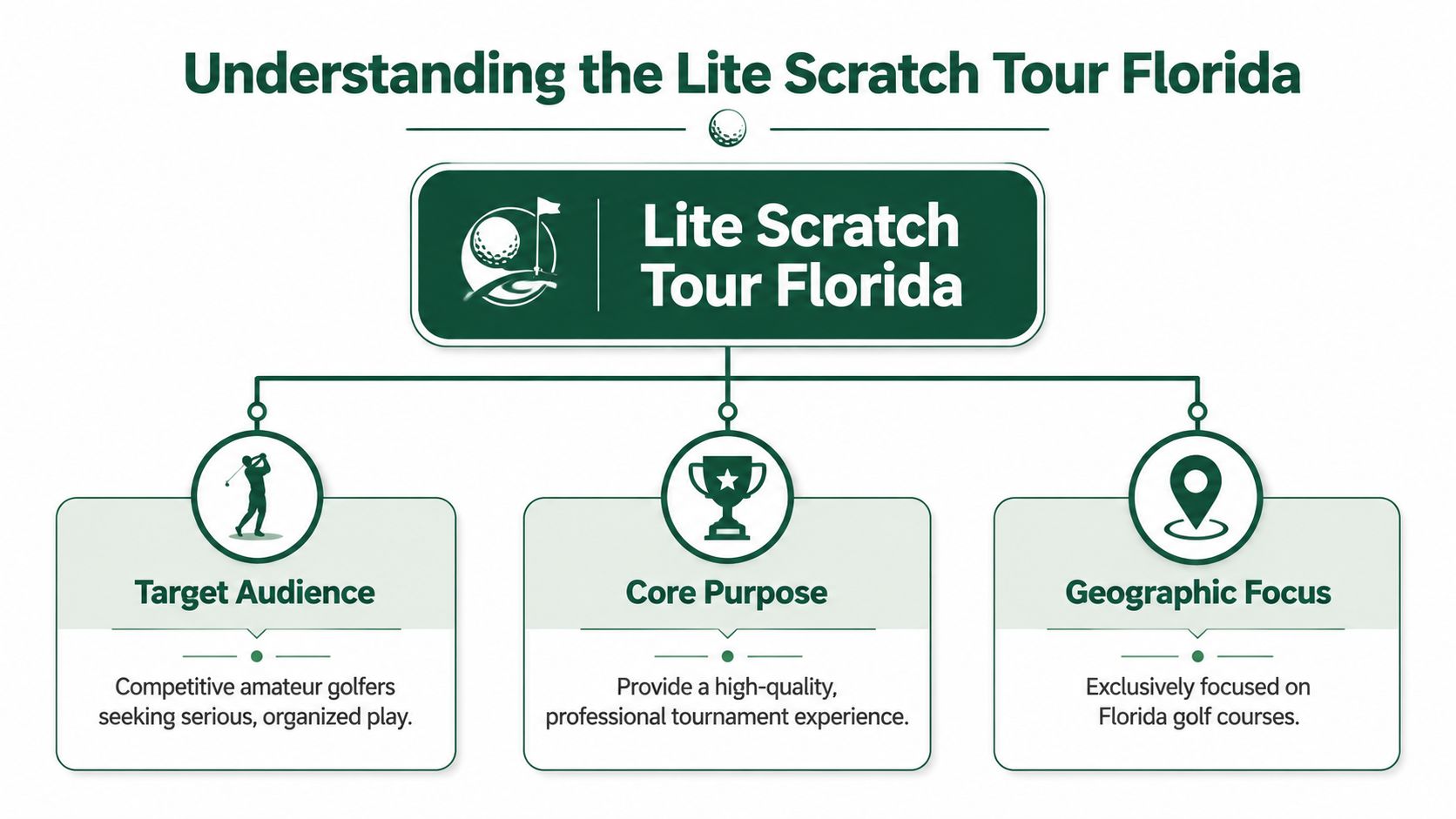
The Lite Scratch Tour Florida sits in a space that a lot of amateur golfers look for but don't always find. It isn't built around social golf first. It's built around competitive amateur play, with the kind of structure that gives players a reason to prepare, travel, and measure their true ability.
The tour describes itself as “The Gulf Coast's Original Amateur Golf Tour” and says it was established in 1990 on its about page, which gives it a history of more than three decades in the region according to the Lite Scratch Tour Florida about page. That matters. Longevity doesn't guarantee quality, but in tournament golf it usually means the organizers have solved the basic problems that sink newer circuits: course access, repeat scheduling, player communication, and enough credibility to keep fields intact.
Who the tour is really for
This is the kind of tour that appeals to players who want gross-score competition and clear accountability. If you're still learning the difference between handicap golf and true scratch-style competition, it helps to review what a scratch golfer is before jumping in.
In practical terms, the Lite Scratch Tour Florida fits golfers who want:
Structured tournament days with pairings, results, and posted outcomes
Competitive comparison against other amateurs who care about performance
Regional consistency instead of one-off events with no season-long identity
Players often underestimate how important that third point is. A recognizable tour creates rhythm. You know the people, the expectations, and the standard of play. That usually leads to better pace, fewer rules disputes, and a more serious atmosphere from the first tee.
Practical rule: A good amateur tour doesn't just provide a date and a golf course. It provides a competitive environment players can trust.
Why the tour still matters locally
The Florida Panhandle has plenty of golf, but not every event gives competitive amateurs a clear home. The Lite Scratch Tour Florida fills that gap by operating as a repeat circuit rather than a novelty event brand.
That distinction matters to course operators too. A stable tour tends to bring players who understand tournament etiquette, arrive with realistic expectations, and return if the experience is consistent. That's easier to host than a random field with no shared norms.
The tour's identity is simple. It gives Panhandle-area golfers a place to test their games under pressure, on real courses, in a format that values performance over excuses. That's why it has remained relevant.
How to Join the Lite Scratch Tour
Joining a regional tour should be simple. In practice, many tours lose players, not because golfers aren't interested, but because the sign-up flow leaves too many basic questions unanswered.
The Lite Scratch Tour Florida gives you enough to understand the basic cost of participation. A preview entry listing shows a $160 event fee plus a $100 membership add-on, which you can see on the 2025 preview entry page. That's useful starting information, but it also highlights a common issue in amateur golf operations: fees are often visible before the registration logic is fully explained.

What a prospective player should verify first
Before you enter any event, confirm a few basics:
Amateur status
Make sure the event is aimed at the kind of player you are. Most regional tours are built for amateurs, and you should confirm you fit the field before paying anything.Handicap or player background expectations
Even in scratch-oriented environments, organizers may still want player background details for flighting, records, or roster purposes. If you need one, this guide on how to obtain a USGA handicap is a practical starting point.Membership requirement
Don't assume a posted event fee is your all-in cost. Some tours require annual membership before event entry is considered complete.
What works and what usually causes friction
From an operator's side, the best registration systems answer five questions before a player has to ask them:
Question players ask | Why it matters |
|---|---|
Is membership required? | Players want to know the true barrier to entry |
What does the event fee cover? | It affects value perception immediately |
When do I pay? | Timing changes whether players commit |
What happens if I withdraw? | This reduces day-of confusion |
How do I know I'm in the field? | Confirmation reduces inbox traffic |
When a tour doesn't surface those answers clearly, staff ends up handling the same emails and calls repeatedly. Players also hesitate longer than they should.
Clear fee presentation does more than reduce confusion. It tells players the tournament operation is under control.
The practical way to approach signup
If you're interested in the Lite Scratch Tour Florida, treat signup like you would any competitive event calendar. Review the current season information, confirm the event you want, and verify membership rules before assuming the listed fee tells the whole story.
For operators reading this, the lesson is broader than one tour. Registration friction is rarely about the dollar figure alone. It's usually about whether the player understands the process without needing help.
Understanding the Competition Format
What separates a serious tour from a casual series isn't the website language. It's the scoring culture. The Lite Scratch Tour Florida shows that it takes player performance seriously because it tracks detailed metrics rather than stopping at basic finish positions.
A sample player page from the tour's stats section lists 85.33 scoring average, 40.00 points per event, 2.78% sub-par holes, 47.22% bogey avoidance, and a 3.79 par-3 performance rating on the tour's 2020 player stats page. Those kinds of numbers tell you this isn't just a leaderboard operation. It's a circuit that treats player records as part of the competitive product.
What that usually means on tournament day
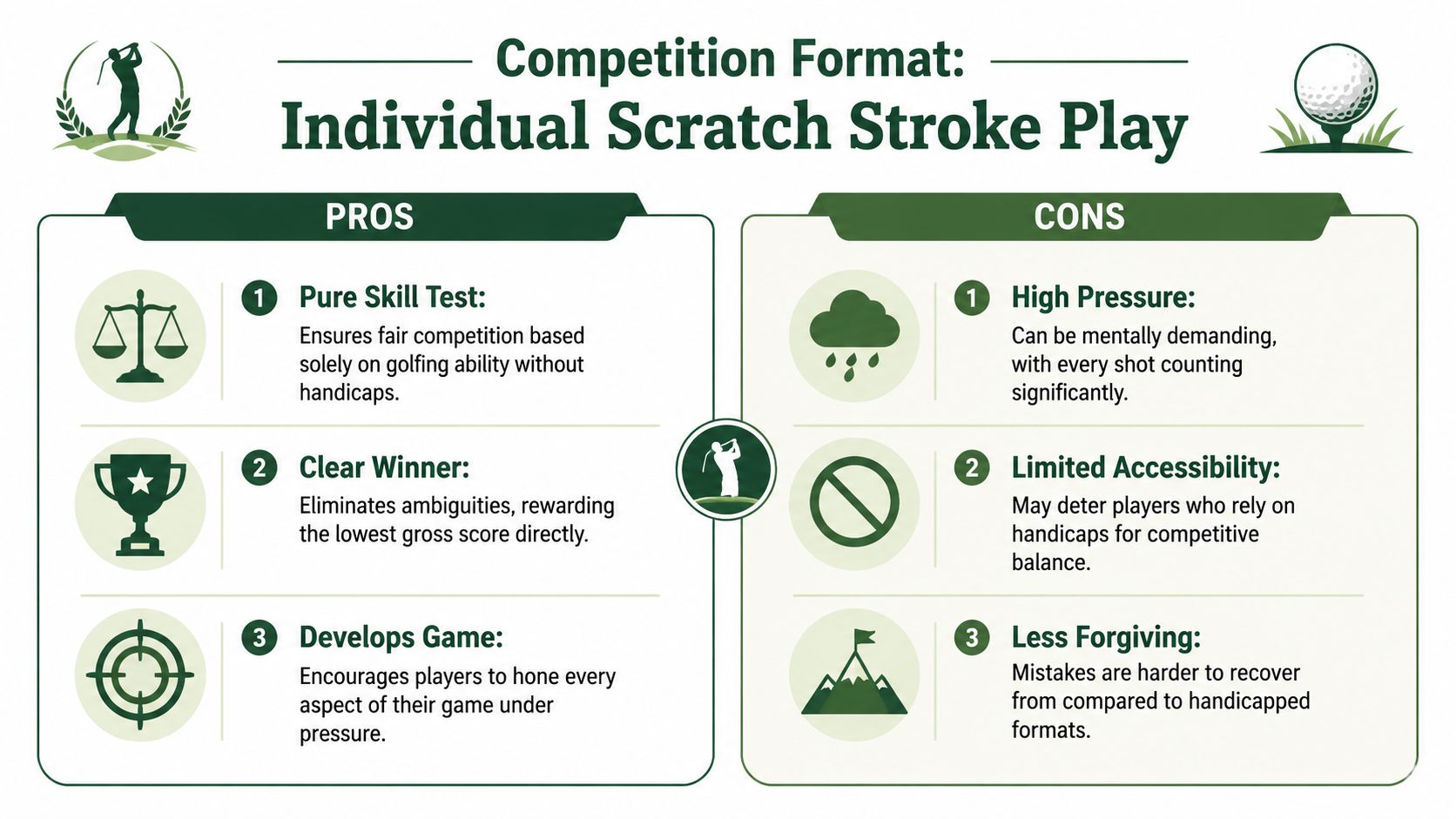
While each event can have its own terms, the tour's identity and player tracking strongly suggest a scratch-oriented individual competition environment. That style does a few things well:
It rewards total play. There's nowhere to hide when gross score decides the outcome.
It creates cleaner comparisons. Players know exactly what they shot against the field.
It builds stronger season records. Stats become meaningful because they aren't heavily diluted by casual formats.
That's also why these tours attract a particular golfer. Not always elite. But competitive, score-aware, and willing to be measured.
The upside and trade-off of scratch-style competition
There's a reason experienced tournament directors like gross-score formats for regional competition. The winner is easy to identify, the standings are clean, and the field usually respects the result.
The downside is just as real. Scratch-style formats can feel unforgiving to players who aren't ready for every mistake to count in full. That's not a flaw in the format. It's the point of the format.
Serious amateur tours work best when the format matches the audience. If players want a pure test, keep the scoring clean and the rules consistent.
Where traditional administration still gets clunky
Many long-running tours developed around paper scorecards, manual verification, and later leaderboard updates. That method can still function, but it creates pressure points:
Score posting is slower
Players wait longer for final results
Staff has more chances to transpose numbers incorrectly
Friends and family can't easily follow the round as it unfolds
For a tour that already values detailed stats, modern live scoring is the logical extension. It doesn't change the integrity of the competition. It improves the speed and visibility of the operation around it.
The key point for players is simple. If you join the Lite Scratch Tour Florida, expect a setting where score matters, records matter, and performance is treated as something worth tracking in detail.
The Annual Tour Schedule and Host Courses
Regional tours live or die on rhythm. Players need to know there's a dependable calendar. Courses need to know the organizer can fill a field, communicate clearly, and leave the operation in good shape after the last group finishes.
The Lite Scratch Tour Florida appears to benefit from that kind of continuity. Its homepage materials cite a history tied to either 1980 or 1990, depending on which page you read, and that long timeline suggests the tour has had time to build durable course relationships across the Panhandle, as noted on the Lite Scratch Tour Florida homepage. As an operator, I'd treat the date discrepancy carefully, but I wouldn't miss the larger point. Tours don't stay visible that long without some level of repeatable local infrastructure.
What longevity usually means for players
For players, a multi-decade regional circuit usually offers a few practical benefits:
More predictable scheduling so you can plan your season around known event windows
Familiar venues where returning players develop course-specific strategy over time
A steadier field culture because regulars understand how the tour runs
That last point matters more than most golfers think. When players know the drill, check-in is smoother, pace is better, and the day feels organized from the start.
What courses look for in a returning tour
From the course side, repeat partnerships aren't just about filling tee times. Operators want tours that understand setup and flow. That includes pairing logic, range usage, cart staging, score return, and staff communication.
Here's what usually keeps a tour in rotation:
What courses value | Why it affects renewal |
|---|---|
Reliable field management | Staff can plan labor and cart usage |
Clear player communication | Fewer day-of disruptions at the shop |
Fast results handling | Less post-round congestion |
Respect for pace and policies | Protects the course's member and guest experience |
A regional tour with history tends to learn those habits, even if some parts of the player-facing experience still feel dated. That's the trade-off you often see. The core operation is stable, but the digital layer hasn't always caught up.
For golfers deciding whether to play, the takeaway is straightforward. The Lite Scratch Tour Florida looks like a real circuit, not a one-season experiment. For courses, it's a useful example of how local trust and repeat scheduling create staying power.
A Modern Approach for Tour Organizers and Courses
A long-running tour can still run into modern problems. Registration details get scattered across pages. Staff spends too much time answering the same entry questions. Pairings take longer than they should. Scoring is accurate enough, but the process around it feels manual.
That's where tournament software earns its keep. Not because technology replaces tournament know-how, but because it removes routine admin work that doesn't need to stay manual.
Where older workflows usually break down
Most regional tours hit the same friction points:
Entry management
Players want one clean place to register, pay, and confirm status.Tee sheet production
Staff needs pairings that can be adjusted quickly without creating a ripple of manual edits.Score collection
The longer scores stay off-system, the more work the staff inherits after the round.Player communication
Last-minute updates are hard to handle well when communication lives in email threads and phone calls.
Those aren't glamorous problems, but they decide whether an event feels polished.
What a better setup looks like
A current platform should handle registration, pairings, reporting, and live scoring in one operational flow. One option is Live Tourney's tournament hosting platform, which is built for golf event management with web-based scoring, registration handling, tee sheets, and event administration in one system.
For courses and tour operators, the biggest operational gain usually isn't flashy. It's fewer handoffs. When the roster feeds the pairings, the pairings feed the scoring, and the scoring feeds the leaderboard, staff has fewer places to make mistakes.
The most useful tournament tech doesn't change your format. It reduces the labor required to deliver it cleanly.
There's also a branding angle that organizers sometimes miss. If your tour sells merchandise or wants a more complete event package, working with a local partner like T-Shirt Envy's event t-shirt service can make sense for tournament apparel, volunteer shirts, or commemorative event gear without adding another ad hoc task to tournament week.
What works and what doesn't
What works
A single registration path
Clear payment logic
Real-time or near-real-time scoring visibility
Auto-generated event materials
Simple mobile access for players
What doesn't
Separate spreadsheets for roster and pairings
Re-keying scores after the round
Fee details buried in multiple pages
Manual status confirmation for every entrant
For a tour like Lite Scratch Tour Florida, modernization wouldn't replace what made it durable. It would sharpen the player experience and reduce operator workload around the edges where older systems usually show strain.
Is the Lite Scratch Tour Right for You
The Lite Scratch Tour Florida makes sense for a specific golfer. You want competitive amateur golf in the Panhandle. You care about score, field quality, and playing in a tour environment that has some history behind it.
It's also a useful model for course operators. A regional tour with staying power usually gets the basics right: repeat scheduling, local course relationships, and a player base that understands competitive golf. The next step for many tours isn't rebuilding the concept. It's modernizing the delivery.
Quick decision guide
You should look closer if you want organized amateur competition rather than social events.
You may want another fit if you prefer relaxed formats or handicap-centered play first.
You should pay attention as an operator if you run recurring events and see too much staff time disappearing into registration, scoring, and communications.
For players, the smart move is to review the official tour site for current event details and entry requirements. For course managers, the bigger takeaway is this: a good tour structure ages well, but the admin layer around it still needs updating if you want a cleaner experience for everyone.
Your Questions About the Lite Scratch Tour Answered
Does the tour use flights?
It may, depending on the event and field makeup, but you shouldn't assume every tournament is structured the same way. The safest approach is to review the specific event information before entering. Regional tours often adjust competitive groupings based on turnout, player mix, or season structure.
Can you expect a serious rules environment?
Yes, that's the right expectation. A tour built around player stats, standings, and repeat competition usually relies on a firmer tournament standard than a casual outing. That doesn't mean every event feels tense. It means players should expect rules awareness, score verification, and accountability.
Are caddies or distance devices allowed?
Those details can vary by event terms and local policy. Don't guess. Check the event information in advance and, if anything is unclear, ask before the tournament day starts. Good players avoid preventable rules questions by handling them early.
How are payouts usually handled on a tour like this?
The exact structure depends on the event. Some tours publish prize or credit details clearly, while others handle that information closer to the event date or through member communication. If prize structure matters to you, confirm it before entry rather than assuming all events operate the same way.
What should players pay most attention to before signing up?
Focus on these items first:
Eligibility fit so you know you belong in the field
Total cost including any membership requirement
Withdrawal policy before your schedule changes
Check-in and scoring method so tournament day feels routine, not confusing
What should course managers learn from tours like this?
The main lesson is that players value consistency more than flash. If the event starts on time, the pairings are clean, the scoring is handled properly, and the communication is clear, the tour earns trust. That trust is what keeps a regional circuit alive.
If you run golf events and want a cleaner way to handle registration, pairings, scoring, and leaderboards, Live Tourney is worth a look. It gives courses and organizers a web-based system for running tournaments without forcing players through a complicated app workflow.





