· 20 min read
Golf Tournaments in California: Pro & Am Guide 2026
Explore the top professional & amateur golf tournaments in California for 2026. Get dates, ticket info, and entry details for Pebble Beach, Riviera & more.

You're probably in one of three spots right now. You want tickets to a big PGA TOUR week and don't want to guess which California stop is worth the trip. You're an amateur trying to sort out which events are prestige plays, which are realistically accessible, and which fill before you even notice registration opened. Or you're on the operations side, staring at pairings, sponsor asks, tee sheets, volunteer questions, and a scoring workflow that already feels too manual.
That's why golf tournaments in california deserve a practical guide instead of another vague event roundup. This state has scale, history, and tournament density that few places can match. A widely cited Golf.com ranking says California has 916 golf courses and 20 Top 100 designs, which helps explain why the calendar stretches from iconic PGA TOUR weeks to serious state amateur championships and city events with deep roots.
For spectators, the choice usually comes down to experience. Do you want coastal major-event atmosphere, Los Angeles prestige, desert resort energy, San Diego municipal pedigree, or wine-country convenience? For players, the decision is different. You need to know which events reward elite competitive golf, which offer better access, and which formats fit your game.
Organizers see things from a unique perspective. California's tournament market is busy, expectations are high, and most public-facing content still focuses on venue promotion instead of how events operate in practice. The true difference between a smooth event and a messy one usually isn't the course. It's registration, communication, pairings, scoring, pace management, and whether staff can keep the day moving without building everything by hand.
Here are the California tournaments that matter most in 2026, plus what each one does well, where the friction shows up, and who should put it on the calendar.
1. AT&T Pebble Beach Pro‑Am (PGA TOUR)
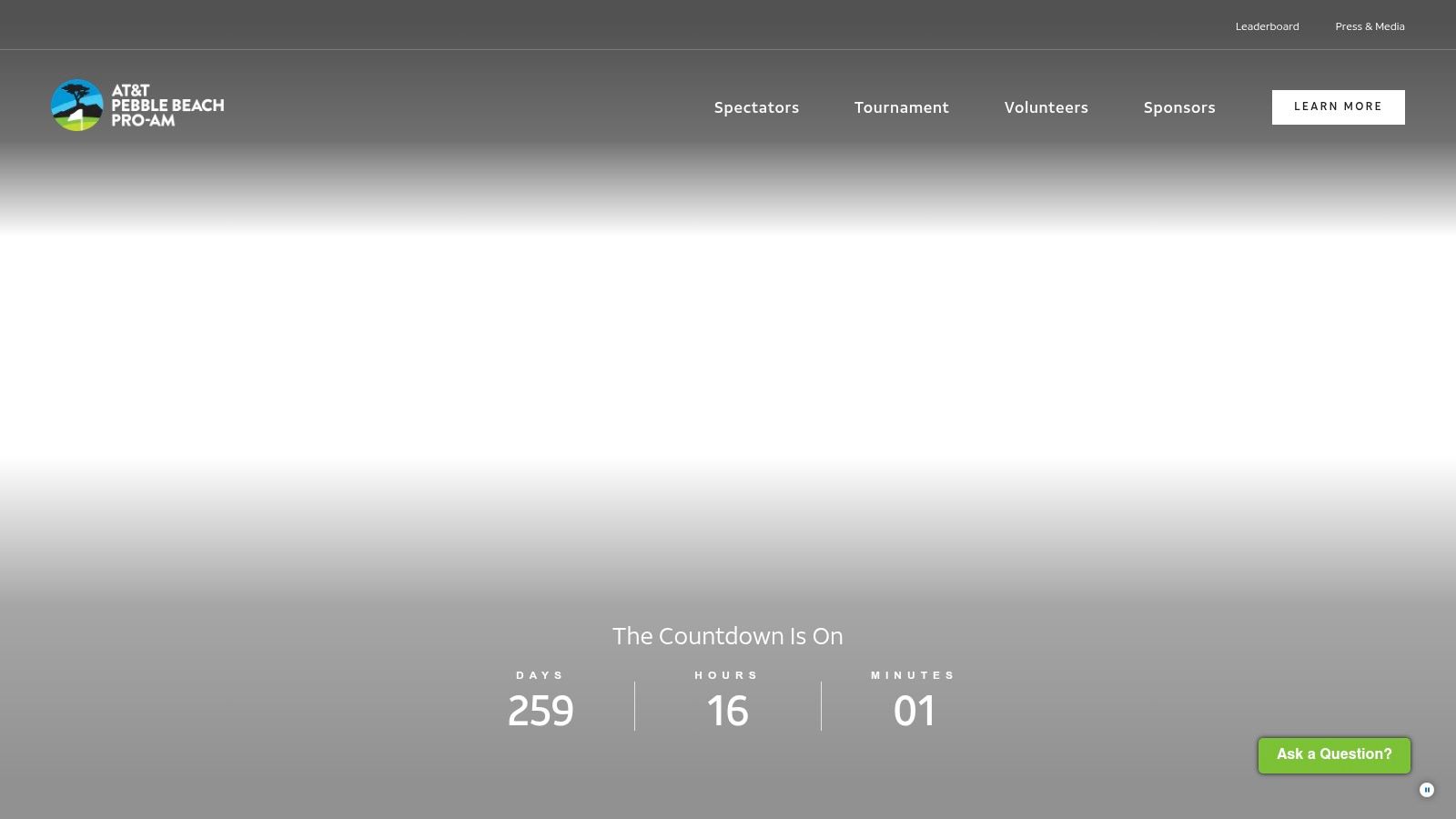
Pebble Beach is one of the easiest events in California to recommend if you want a true marquee week. It has the scenery casual fans expect, but the bigger draw is operational scale. This is the kind of tournament that shows what happens when elite venues, sponsor demand, television, and pro-am participation all collide on a compact peninsula with limited space.
The event's multi-course structure early in the week is part of the appeal and part of the challenge. It spreads play across Pebble Beach and Spyglass Hill, then narrows attention to Pebble for the pro-only finish. For spectators, that creates a more layered experience than a standard single-course stop. For operators, it's a reminder that routing, transportation, credentialing, and communication all matter more once guests and players aren't moving through one simple footprint.
Why it stands out
Pebble is a benchmark for hospitality and sponsor inventory. Premium viewing areas, high-end guest experiences, and heavy volunteer activation all fit the venue. That also means the best options don't last long, and if you wait too long to plan, your choices shrink fast.
If you play or organize golf pro-am tournaments, this is one of the clearest examples of how the format should feel when it's fully built out. The amateurs aren't an afterthought. They're part of the event identity.
Practical rule: If you're attending Pebble, lock in transportation before you lock in anything else. The course experience is premium. Getting in and out usually isn't.
Best fit and trade-offs
This is the right pick for fans who want prestige, scenery, and a strong sense of occasion. It's also useful for club operators and event directors who want to study what a polished guest journey looks like, from ticketing to hospitality flow.
A few trade-offs are real:
- Best for prestige: Pebble delivers one of the strongest TV and sponsor profiles among golf tournaments in california.
- Hardest part logistically: Parking and movement around the Monterey Peninsula can be tighter than first-time visitors expect.
- Least forgiving on budget: Premium hospitality and top viewing products are where the sticker shock usually lands.
For spectators, the upside is obvious. For organizers, the true lesson is that top-tier tournament weeks aren't defined by the leaderboard alone. They're defined by how many moving parts stay invisible to the guest.
Visit the official AT&T Pebble Beach Pro‑Am website.
2. The Genesis Invitational (PGA TOUR)
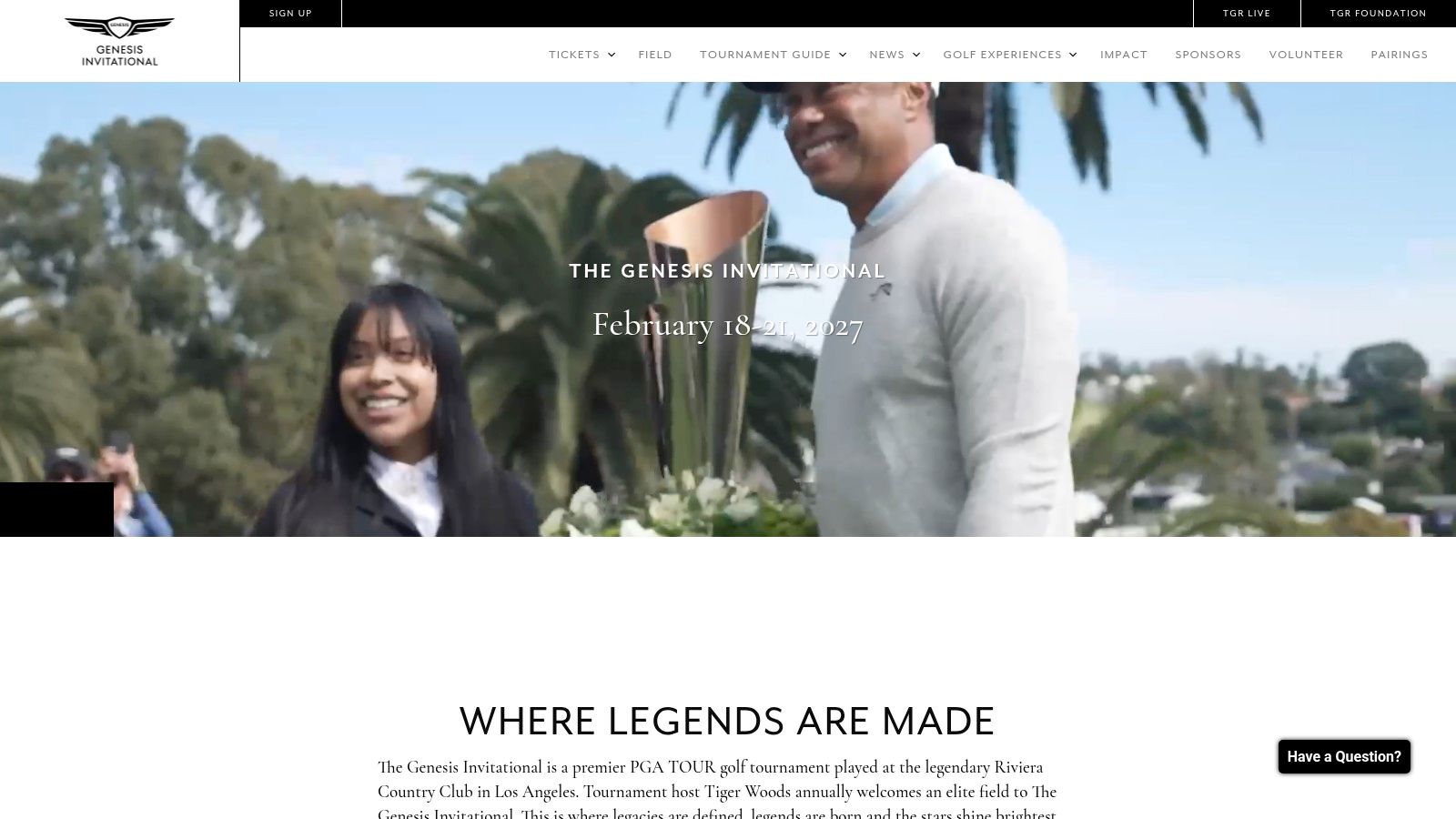
If Pebble is the coastal showcase, Genesis is the Los Angeles power stop. Riviera Country Club gives this tournament a look and feel that translates well on television and still feels substantial in person. You don't go to Genesis for novelty. You go because it's one of the cleanest combinations of history, field strength, and corporate hospitality on the West Coast schedule.
The L.A. setting matters. Southern California has a broad golf audience, a deep sponsor base, and no shortage of premium entertainment competition. An event survives in that environment only if it feels worth the effort. Genesis usually does, especially for fans who care as much about venue character and player roster as they do about festival-style extras.
What works best at Riviera
Riviera rewards spectators who like to follow golf, not just attend an event. The routing is recognizable, the viewing corridors are familiar to serious fans, and the atmosphere tends to feel more classic than gimmicky. That's a plus if you want a tournament week built around the golf itself.
The hospitality side is strong too, especially for business hosting. Los Angeles is one of the places where sponsor integration isn't just visible. It shapes the whole week. That can be a major advantage if you're entertaining clients or looking for a premium event with a polished VIP ladder.
Riviera teaches a useful lesson for organizers. Great tournaments don't need to be loud if the course, player field, and guest service are already doing the work.
Where attendees feel friction
The drawback is predictable. Westside traffic is part of the event whether you like it or not. Parking, arrival timing, and exit strategy matter more here than at many other stops, and first-time spectators often underestimate that.
A few practical takeaways:
- Strongest for corporate hosting: Genesis is one of the better California options for sponsor and client entertainment.
- Best for traditionalists: Fans who value routing, shotmaking, and tournament history usually prefer this atmosphere.
- Main downside: Premium access comes with premium pricing, especially for the best sightlines and hospitality zones.
For anyone comparing golf tournaments in california from a fan perspective, Genesis is one of the safest bets. It's high-end, serious, and less chaotic in tone than some newer fan-driven sports events, even if the transportation side still requires patience.
See current event details on the official Genesis Invitational website.
3. Farmers Insurance Open (PGA TOUR)
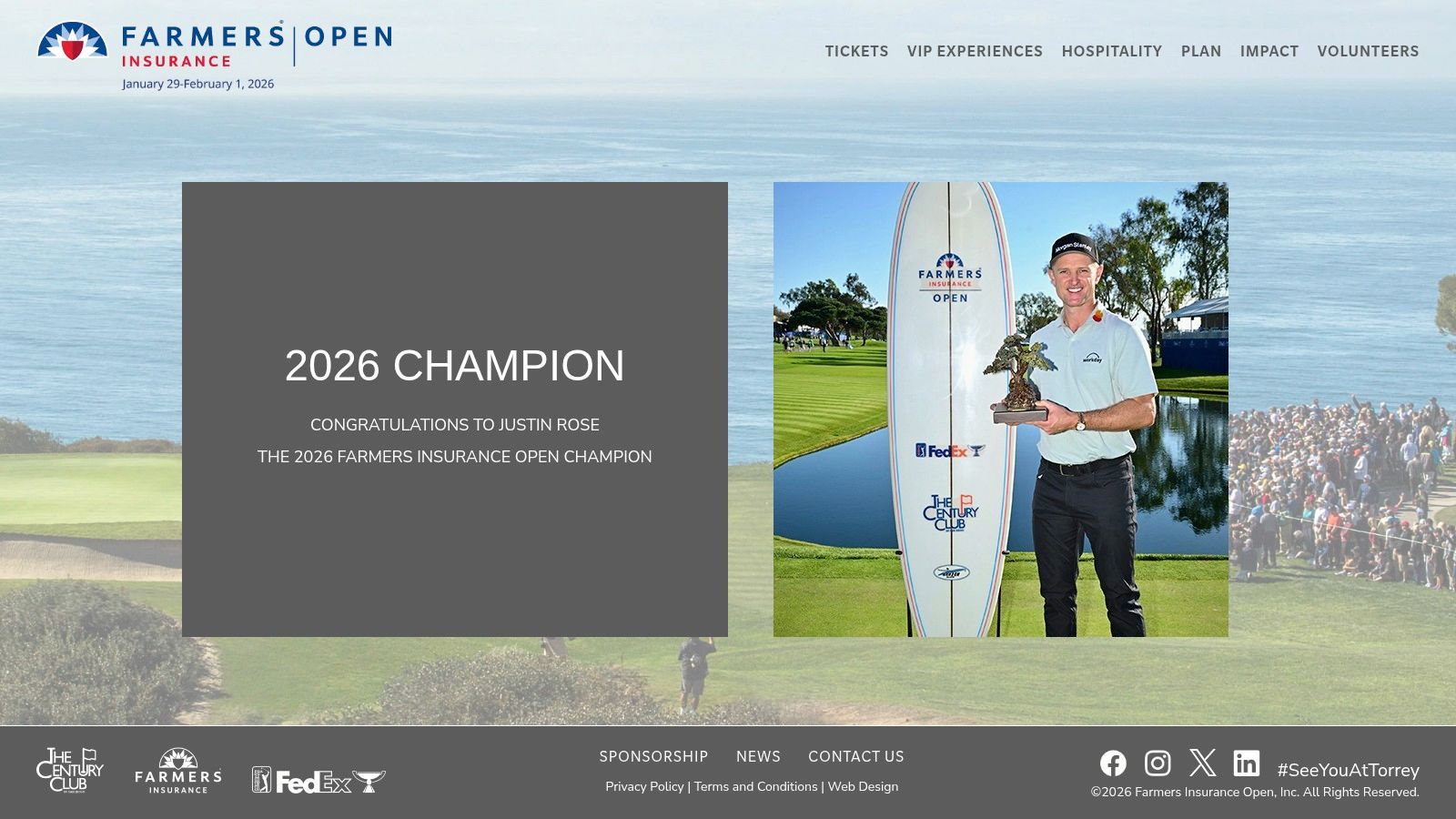
A fan can watch PGA TOUR golf at Torrey Pines in the morning, then book a municipal tee time there later in the year. Very few California events offer that kind of connection between elite tournament golf and everyday public play.
That is the Farmers Insurance Open's edge. Pebble Beach trades on exclusivity. Riviera trades on status and architecture. Torrey Pines brings a major-stage setting to a public facility, which changes the tone for both spectators and players. It feels more accessible without feeling small.
For a guide that compares PGA TOUR stops with top amateur championships, Farmers matters because it sits in the middle of those worlds. Fans get a recognizable TOUR event. Competitive players get a close look at a venue that has hosted elite championships and asks for disciplined ball-striking in coastal conditions. Organizers get a useful case study in running a large event at a course the public knows well.
Why Torrey Pines works
The spectator experience is usually straightforward by California standards. The property is familiar, the sightlines are strong in several spots, and the atmosphere tends to attract serious golf fans rather than only hospitality traffic. If you want to watch players deal with demanding long-iron shots, rough, and changing wind, this is one of the better tickets in the state.
The venue also gives the week a different kind of credibility. Municipal courses can host first-rate tournament golf if setup, traffic flow, and staffing are handled properly. That lesson applies well beyond the PGA TOUR. Amateur championships and city events across California can learn from that balance between public access and tournament discipline.
One trade-off is distance inside the venue. Torrey can feel spread out, and the terrain is not especially forgiving if you plan to follow a single group all day.
Practical advice for attendees and organizers
Weather shapes the week more than first-time visitors expect. The ocean backdrop looks pleasant on television, but cool air and wind can turn a long day into work. Dress for hours outside, not for a postcard.
Transport also deserves planning. Parking, shuttle timing, and exit flow can test your patience on busy rounds. Arrive early if you care about seeing specific groups or settling into a premium viewing spot.
For organizers, Farmers is useful because it exposes operational weak points quickly. A venue of this scale rewards clear wayfinding, reliable shuttle staging, visible scoring, and fast communication to players, volunteers, and guests. Those same basics matter at amateur championships, even when the budget is smaller.
- Best fit for public-golf credibility: Torrey shows how a municipal course can stage a premier event.
- Best for fans who want demanding golf: The setup usually rewards patience, control, and solid driving.
- Main drawback: Transportation and on-foot fatigue are real factors, especially on crowded days.
Current ticket, parking, and onsite information is available on the official Farmers Insurance Open website.
4. The American Express (PGA TOUR)
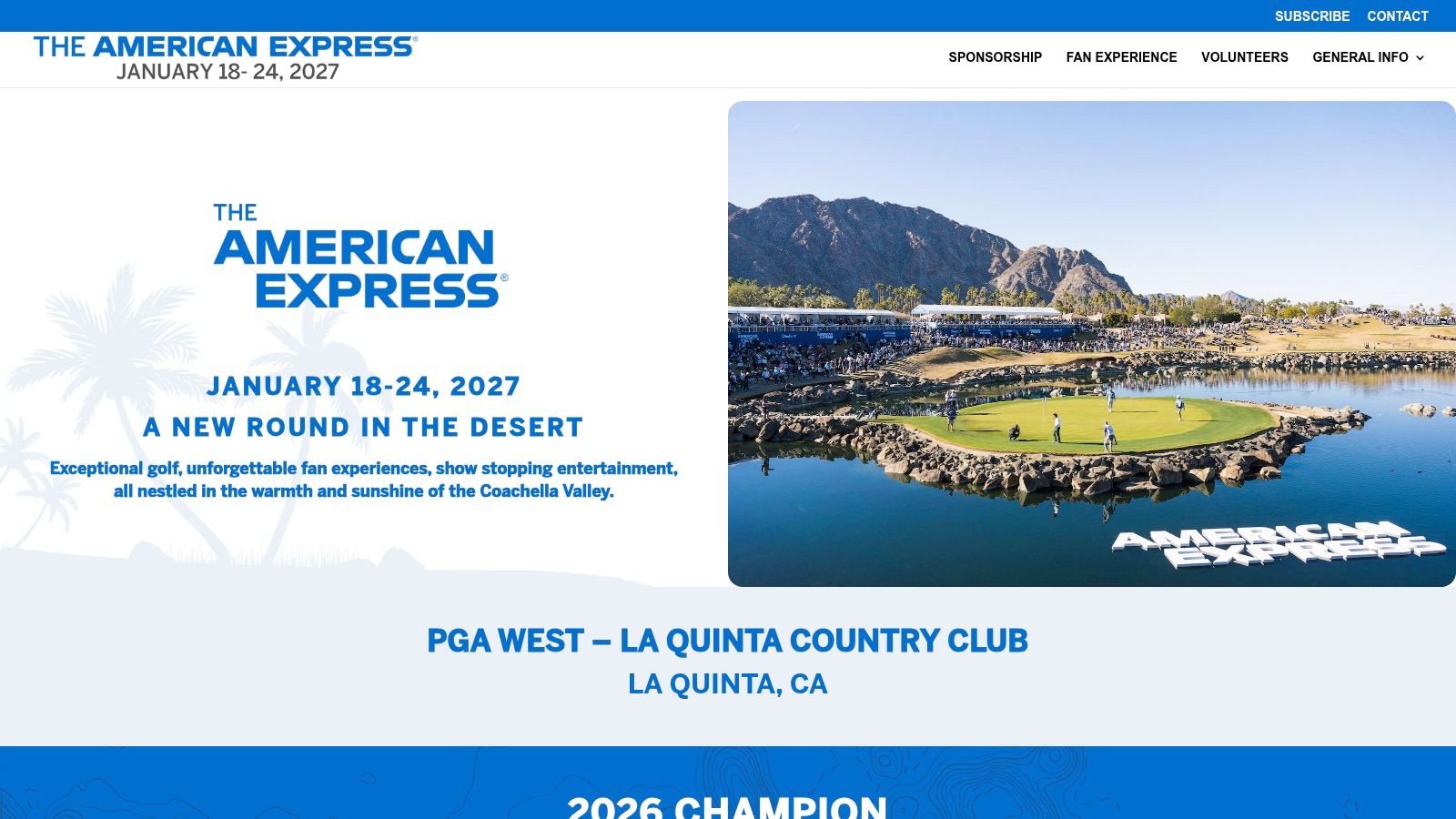
The American Express is the desert stop that often appeals to the widest mix of people. Spectators get winter golf in a resort market. Sponsors get a relaxed hosting environment. Players and organizers get a format that feels more layered than a standard single-course event because multiple courses are in the rotation before the finish tightens up.
This tournament leans into experience. The golf matters, but so do the entertainment elements, volunteer presence, and sponsor-facing programming. In the Coachella Valley, that approach makes sense. The audience often wants a day that includes tournament golf without feeling locked into a one-dimensional sports outing.
Where the event gets it right
The desert setting changes the mood compared with the coast. It's easier to build a trip around this event because lodging, food, and off-course options are part of the package. That makes The American Express especially attractive for groups and corporate guests who want more than a walk-around gallery pass.
The multi-course layout also gives the tournament a wider footprint. That's good if you prefer space and movement. It's less ideal if you want one concentrated fan village where everything happens in one place.
Operator note: Multi-course events don't just need good pairings. They need clear same-day communication. Players and guests tolerate travel. They don't tolerate confusion.
The trade-offs most people notice
Product availability can shift from year to year. That's normal for an event with layered ticketing and hospitality offerings, but it does mean you should check details early rather than assuming last year's setup will match the next one.
A few practical differences stand out:
- Best for destination planning: This is one of the easiest California TOUR events to turn into a full golf trip.
- Strong for mixed groups: It works well when some people are there for golf and others want a broader entertainment day.
- Less concentrated onsite: Spectators who prefer one central tournament core may find the spread-out routing less intuitive.
Among golf tournaments in california, The American Express is one of the more fan-friendly choices if you value flexibility and atmosphere over a purely traditional major-championship feel.
Check current access and event information on The American Express website.
5. Fortinet Championship (PGA TOUR)
You feel the difference at Fortinet as soon as tournament week starts. Instead of a sprawling major-market setup, you get a PGA TOUR stop built around Silverado's resort property in Napa. That changes the day for everyone involved, from spectators trying to see golf without long resets between holes to sponsors who need a polished hosting environment that does not feel chaotic.
For fans, the appeal is efficiency. You can follow play, find food and hospitality, and move through the property without the stop-and-start rhythm that wears people down at larger venues. For corporate groups, that matters even more. A good guest day is not just about logos and access. It is about whether people can arrive, connect, watch meaningful golf, and leave feeling the event was well run.
That is also why Fortinet belongs in a guide that covers both PGA TOUR stops and California's top amateur championships. It shows one end of the calendar: a professional event with strong destination value, sponsor utility, and a venue layout that supports cleaner operations than many public-facing tournament sites.
Why organizers pay attention to this event
Silverado gives the tournament a built-in hospitality structure, and that solves real operational problems. Staff are not forcing premium hosting into a site that was never designed for it. Parking, guest flow, lodging strategy, food service, and sponsor activation all benefit from being tied to a property that already works for high-end leisure traffic.
There is a trade-off. Resort venues can feel easier to run, but they also raise the standard. Guests notice slow check-in, weak signage, and poor shuttle timing faster in a premium setting because the rest of the experience sets higher expectations. Organizers planning smaller California events can learn from that. Clean registration, visible information, and reliable day-of communication usually matter more than adding one more sponsor tent. A practical golf tournament planning guide for modern event operations is a better starting point than copying TOUR aesthetics without TOUR infrastructure.
What to plan for before you go
Napa is a strong draw, and that can work against late planners. Hotel inventory tightens quickly around event week, especially if visitors are pairing the tournament with wine country dining or a longer weekend. If you want Fortinet to function as a spectator trip rather than a last-minute scramble, book lodging early and verify ticket options directly with the event.
A few practical takeaways stand out:
- Best for hosted experiences: The resort setting supports sponsor and guest days that feel organized and easy to manage.
- Strong for Northern California travel: It pairs well with a short leisure trip, which gives it broader appeal than a one-day gallery visit.
- Main limitation: Lodging and nearby availability can become the first planning problem, not the golf itself.
Among golf tournaments in california, Fortinet offers a useful middle ground. You still get a real PGA TOUR week, but with a setting that is often easier to attend, easier to host, and easier to study if you run events yourself.
The current home for tickets and tournament details is the Fortinet Championship website.
6. California Amateur Championships (NCGA/SCGA)
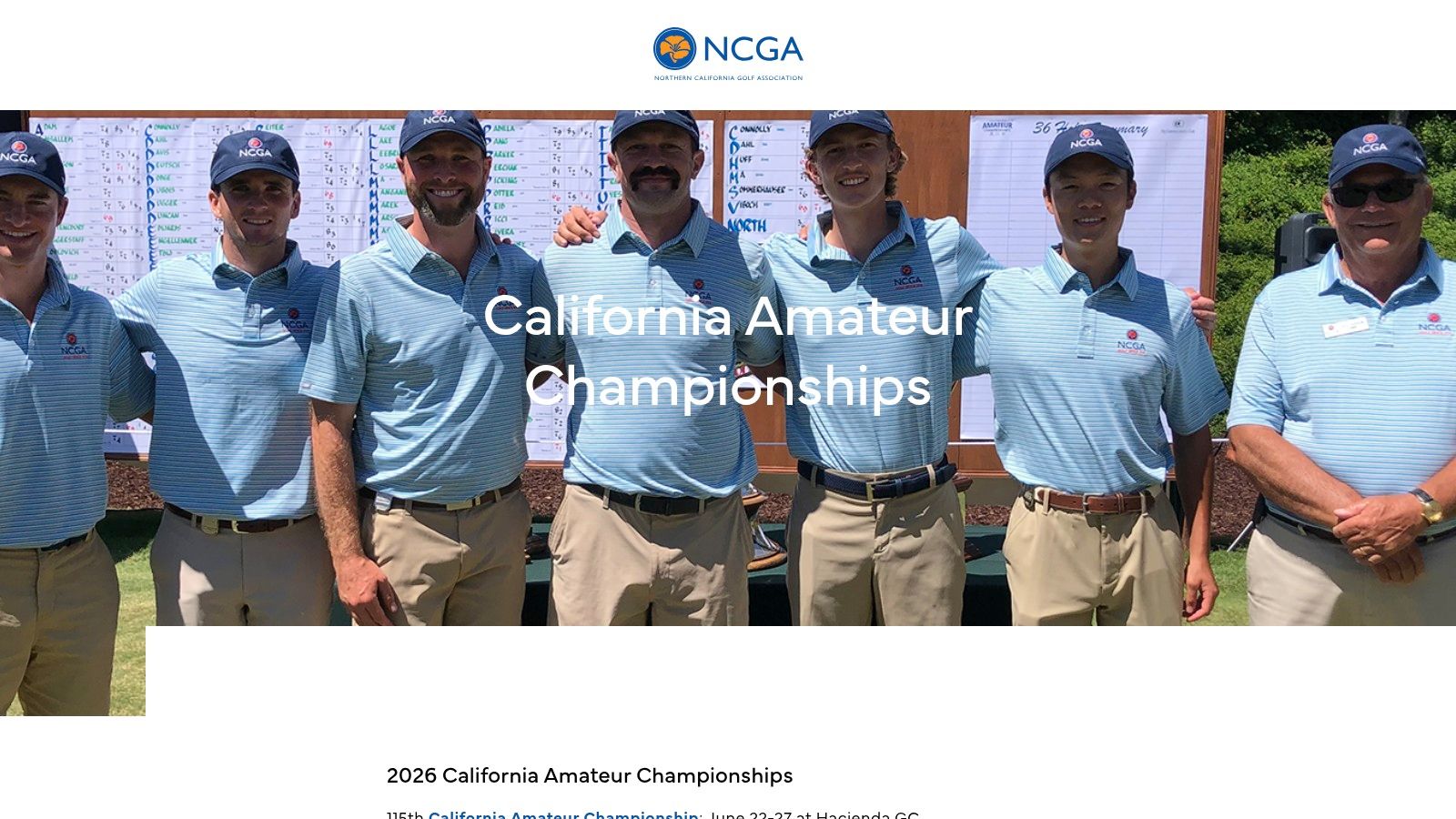
If you care more about playing than spectating, the California Amateur Championships belong near the top of the list. These aren't casual local events with a state label attached. They're serious championships with published regulations, qualifying pathways, and the kind of structure competitive players usually want to see before they commit time and travel.
The strength here is clarity. Good amateur administration isn't flashy. It's rules access, transparent policies, understandable exemptions, and a format players can trust. That's exactly why these championships matter. They feel earned, and the process reflects that.
Why serious players respect these events
The joint NCGA and SCGA framework gives the championships statewide credibility. Rotating host sites also matter because they showcase different California courses while keeping the title itself larger than any one venue. For players, that helps the event feel like a championship rather than just another tournament on a familiar property.
The format side is also instructive for organizers. Some divisions use combinations of stroke play and match play, which means administration has to be tight from the start. If you're building your own event calendar, a good golf tournament planning guide matters most when the format gets more demanding and policies have to hold up under pressure.
The best amateur events publish more than dates and entry forms. They publish expectations.
Who should enter and who shouldn't
These championships fit competitive amateurs who want a recognized title and are comfortable with qualifying pressure. They are less ideal for players looking for a social event, broad handicap flexibility, or a beginner-friendly entry point.
A few realities to keep in mind:
- Best for competitive players: Prestige, structure, and quality of field matter most here.
- Strongest administrative model: Entry rules and policy documentation are usually more transparent than at many smaller independent events.
- Main challenge: Registration timing and qualifying standards can shut the door quickly if you're not ready.
For people searching golf tournaments in california with the intention of teeing it up, these state amateur championships are among the clearest dividing lines between recreational event golf and championship golf.
Learn more through the official California Amateur Championships page.
7. San Francisco City Golf Championship
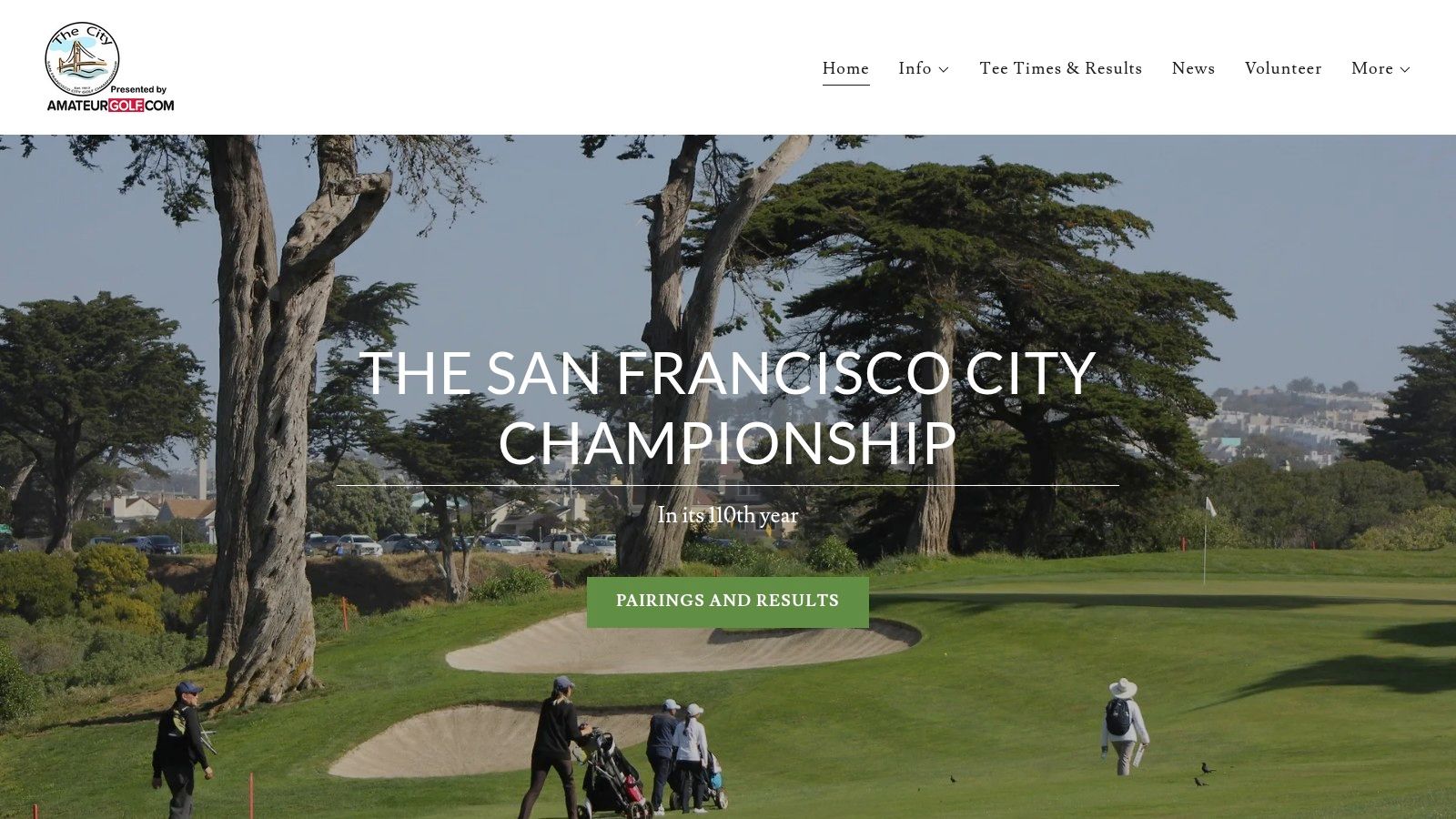
The San Francisco City Golf Championship is one of the best examples of why public-course tournament golf still matters. It carries real history, but it doesn't depend on private-club mystique to feel significant. That gives it a different appeal from the state ams. It's still competitive and respected, but the public-course identity broadens the audience and keeps the event culturally grounded.
This is the kind of tournament that speaks to players who like the idea that serious competition can still happen in a municipal setting. That matters in California, where access and affordability are part of the conversation even in a deep golf market.
What makes the format work
The multi-flight structure is one of its strengths. Championship divisions, women's categories, senior play, and other competitive lanes help the event serve a wider range of entrants without pretending every participant is playing the exact same tournament. That's smart design. Broad participation works best when formats are segmented clearly.
The online registration and communication setup also deserves credit. A lot of amateur events still communicate like everyone has time to hunt for details. Better events don't do that. They post schedules, policies, and updates in a way players can readily use. If you're newer to tournament golf, understanding scoring in golf and how different competitive structures work will make these events much easier to handle.
Why players keep coming back
Tradition is part of it, but tradition alone doesn't hold fields together. The event works because it pairs heritage with a usable public-facing process. That combination is harder to pull off than it looks.
- Best public-course championship feel: The event carries weight without losing accessibility in spirit.
- Strong annual rhythm: Players know to watch for it, and that predictability helps.
- Biggest risk: Popular divisions can fill quickly, and weather can complicate the early-season window.
California's tournament economy has long been substantial. A University of California Riverside report says the state hosted 16 professional golf championships in 2006 that generated $95.8 million in event-related economic activity, excluding purse money and TV broadcasting costs. City and amateur championships live on a different scale, but they benefit from the same deep tournament culture.
Visit the official San Francisco City Golf Championship website.
California Golf Tournaments, 7-Event Comparison
| Event | 🔄 Implementation complexity | ⚡ Resource requirements | ⭐ Expected outcomes | 📊 Ideal use cases | 💡 Key advantages |
|---|---|---|---|---|---|
| AT&T Pebble Beach Pro‑Am (PGA TOUR) | Very high, multi‑course early rounds, large volunteer & sponsor ops | Very high, extensive hospitality, transportation, ticketing (Ticketmaster) | Elite field, national TV exposure, strong sponsor ROI | High‑visibility brand activations, premium corporate hospitality, operational benchmarking | Historic venues and benchmark fan experience; plan transport/logistics well in advance |
| The Genesis Invitational (PGA TOUR) | High, signature routing at Riviera with traffic/parking constraints | High, blue‑chip sponsor integrations and premium VIP services | Strong media visibility and corporate engagement in L.A. market | Prestige branding, corporate hospitality, sponsor relations in major metro market | Storied, TV‑friendly venue; secure premium inventory early |
| Farmers Insurance Open (PGA TOUR) | Medium‑High, multi‑course early week with established operational plans | Medium, shuttle systems, fan village, spectator services | Consistent strong local attendance and charitable impact | Community engagement, spectator‑focused experiences, municipal course showcase | Clear spectator services and mobility options; prepare for coastal weather variations |
| The American Express (PGA TOUR) | Medium, multi‑course rotation with entertainment programming | Medium‑High, concerts, volunteer programs, multi‑site logistics (SPORTFIVE) | Broad fan appeal, strong fundraising, diverse hospitality options | Festival‑style fan engagement, sponsor entertainment, charity fundraising | Desert resort setting and varied spectator products; monitor ticket/product windows |
| Fortinet Championship (PGA TOUR) | Low‑Medium, resort‑based, compact on‑site footprint simplifies wayfinding | Medium, hospitality, pro‑am, wine‑country activations, volunteer support | Attractive sponsor/guest experiences and strong regional attendance | Resort hospitality packages, sponsor entertaining, season‑opener promotions | Distinctive Napa experience; manage lodging availability for peak weekends |
| California Amateur Championships (NCGA/SCGA) | Medium, statewide qualifying, USGA‑style administration, rotating hosts | Low‑Medium, admin, qualifying infrastructure, course coordination | Prestigious amateur titles, player development, transparent pathways | Competitive amateur development, junior advancement, qualifier systems | Transparent entry/qualifying processes and statewide reach; watch registration windows |
| San Francisco City Golf Championship | Low‑Medium, multi‑flight municipal format with online registration | Low, public‑course operations, modern registration/communications | Strong regional and collegiate participation; long tradition | Broad community participation, municipal showcase, talent ID | Deep tradition and public‑course accessibility; expect quick sellouts and weather variability |
Get in the Game Attend, Compete, or Organize
A California golf weekend can mean three very different jobs. One fan is choosing between Pebble's atmosphere and Torrey's scale. One player is deciding whether to chase a state amateur title or enter a public-course championship with a more accessible path. One organizer is trying to get 120 players checked in, paired correctly, scored live, and out of the parking lot on time.
That range is what makes this state different. The same calendar holds PGA TOUR stops that draw national attention and amateur events that still matter to competitive players. If you follow California golf closely, that mix is the true value. Spectators get marquee weeks. Players get legitimate competitive pathways. Organizers get a high bar for execution.
For spectators, pick the event based on the day you want to have. Pebble Beach and Genesis deliver prestige and a stronger sense of occasion. Farmers gives you a big-event setting at a course many golfers already know and want to walk. The American Express works well for groups who want tournament golf wrapped into a resort trip. Fortinet is often the cleaner hospitality choice because the footprint is easier to manage and the guest experience tends to feel more contained.
For players, the choice starts with competitive fit, not branding. The California Amateur Championships carry more status and usually demand a sharper all-around game. The San Francisco City Golf Championship offers tradition, public-course credibility, and a format that appeals to a wider range of serious amateurs. Players new to tournament golf should study eligibility, format, field strength, and pace of play expectations before paying an entry fee. Those details affect the experience far more than a polished event page does.
Organizers face a separate problem. California has no shortage of courses, outings, charity events, club tournaments, and championship golf, but a lot of public-facing event pages still stop at date, rate, and registration. Industry Hills shows that venue-first approach clearly with tournament marketing centered on packages and availability. That helps sell an event. It does not solve event-day operations.
The hard part is the back end. Registration edits, waitlists, pairings changes, sponsor assignments, side games, scoring disputes, payout records, and same-day communication are what determine whether a tournament feels organized or sloppy. In a busy market like California, where players have options and many have seen well-run events before, those details shape reputation quickly.
Round volume only adds pressure. As noted earlier, national participation has stayed strong, and SCGA's 2025 statistical roundup reports 5.62 million rounds posted by SCGA members in 2025. More play means tighter tee sheets, busier staffs, and less room for avoidable admin mistakes.
A Quick Guide for Tournament Organizers
Start with the player journey. Registration should be easy to complete on a phone. Payments should be collected in one place. Pairings should be simple to publish and update. Scoring should be visible without forcing players into a confusing process. Spreadsheets can cover a small field with a simple format, but they become risky once sponsors, on-course contests, multiple flights, and live leaderboard expectations show up at the same event.
That is where tournament software earns its keep. Live Tourney is one practical option for handling custom registration pages, online payments, pairings management, printable event materials, and app-free live scoring from any phone. For California events, that matters because repeat players notice delays, unclear rules, and scoring confusion immediately.
Organizer takeaway: Players remember pace, communication, and leaderboard visibility long after they forget how much admin work happened behind the scenes.
Post-event follow-up matters too. Recap videos, sponsor thank-yous, and photo galleries are easier to distribute when players can scan and access them on-site or later from their phones. A video QR code step-by-step guide is a useful reference if you want a simple delivery method.
Attend with a plan. Compete in events that match your game. Organize with the understanding that operations are part of the product.
If you run outings, club events, or competitive tournaments, Live Tourney is worth a look for handling registration, pairings, payments, and app-free live scoring in one place. It fits the operational demands California events often bring, especially when staff time is tight and players expect real-time results.