Sep 19, 2026
equitable score control, golf handicap system, golf scoring rules, Live Tourney scoring, tournament management
Learn what equitable score control is, how it caps hole scores for handicaps, and how to apply it correctly in Live Tourney scoring.

You're standing at the scoring table after a member-guest, a league night, or a charity outing. One player says, “I made a 10 on that par 4, but I played fine the rest of the day. Is that really what goes into my handicap?” Another volunteer is entering hole-by-hole scores and isn't sure whether to record the actual number or the adjusted one.
That moment is where equitable score control matters.
It's one of those handicap rules that sounds technical until you explain it the right way. Then it clicks. A handicap is supposed to reflect a golfer's potential ability, not the worst hole of the month. Equitable score control exists to keep one disaster hole from stretching a player's handicap out of shape.
For staff and tournament volunteers, the challenge usually isn't the concept. It's the workflow. You need to know what belongs on the competition scorecard, what belongs in handicap posting, and how to handle odd situations like unfinished holes, conceded putts, or paper-score entry after play. If that part isn't clear, players start thinking someone changed their score.
Why One Bad Hole Should Not Define Your Handicap
A player comes off a par 4 with a 10 on the card. Maybe it was a lost ball, a penalty drop, then two chips that never settled the hole down. The rest of the round looks normal. At the scoring table, that one hole suddenly feels bigger than the other 17.
That is exactly the kind of situation equitable score control was made for.

A handicap is meant to track a player's playing ability with some stability. One hole can go sideways for reasons that have little to do with that player's usual level. A ball finds trouble. A player presses after one mistake. A simple bogey turns into a big number. If every outlier stayed untouched for handicap purposes, the handicap record would start reflecting meltdowns as much as normal golf.
Equitable score control corrects that problem for posting. It does not rewrite the competition result. It places a limit on how much one bad hole can stretch a handicap record.
That split matters more than many players realize.
The committee still needs the actual score for the event. The handicap system needs the adjusted score for posting. Those are two different uses of the same round, and they often meet in the same place. A scorecard, a scoring table, or a volunteer entering hole-by-hole totals after play. If your staff can explain that clearly, players are much less likely to think someone changed a score after the fact.
A simple way to explain it is this. The tournament score says what happened. The handicap posting says what should count for handicap purposes. Those answers are related, but they are not always identical. A clear guide to posting a golf score helps volunteers handle that difference, especially when scores are entered later from paper cards instead of an app.
This also helps with common real-world cases. A player may finish the competition hole with a large number, then ask what should be posted. Another player may not hole out in a casual round and need a most likely score for handicap entry. A volunteer may be entering scores after everyone has left the course. In each case, the goal is the same. Keep the event result accurate, and keep the handicap record fair.
That is the heart of equitable score control. One bad hole counts in the competition. It just should not carry more weight than it deserves in the player's handicap record.
What Equitable Score Control Really Means
Think of equitable score control like a governor on a cart. It doesn't affect normal driving. It only steps in when things go past a set limit. In the same way, equitable score control doesn't touch ordinary hole scores. It only applies when a hole score goes above the player's allowed maximum for handicap purposes.
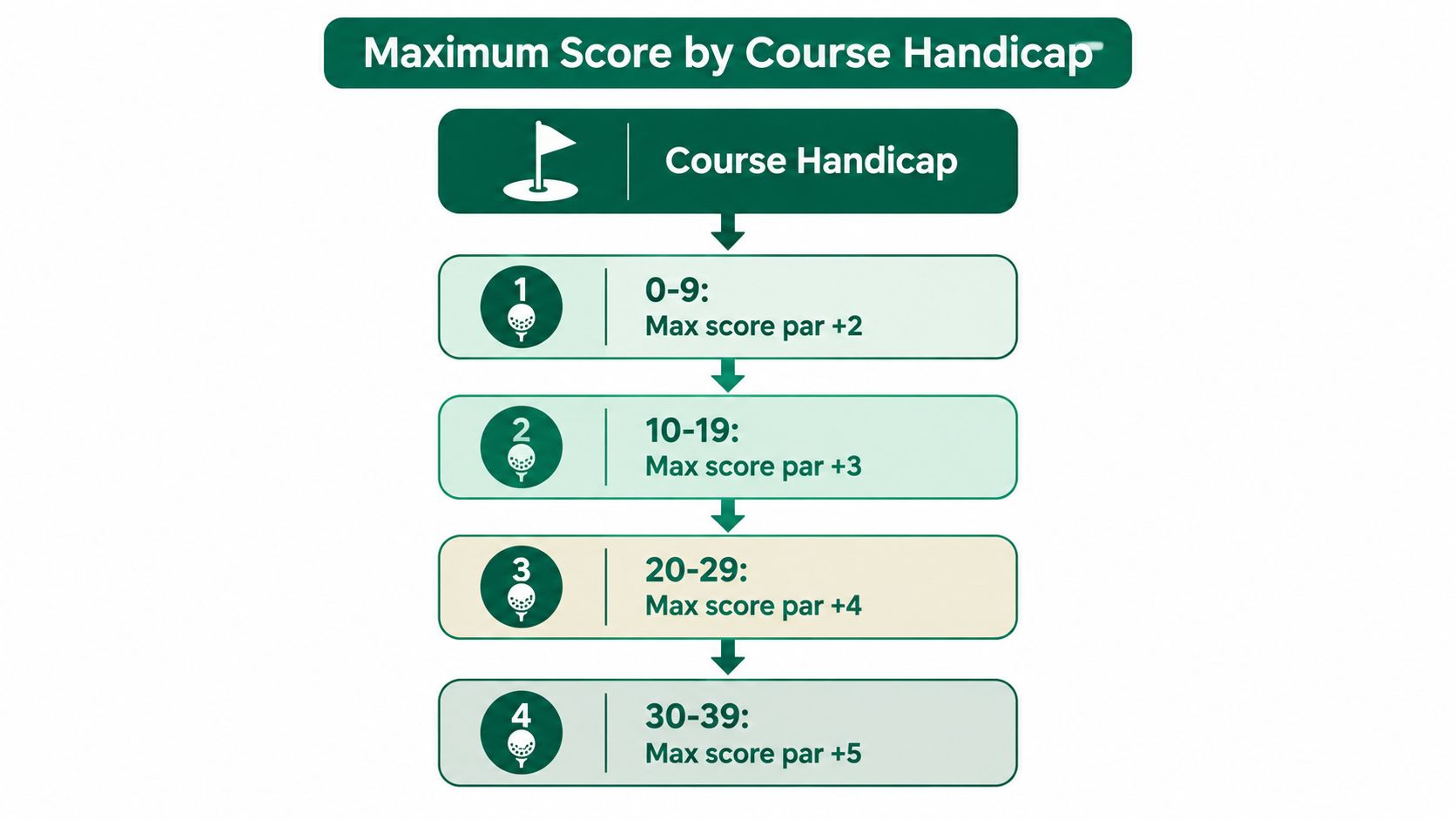
The USGA definition is very direct. ESC is a downward adjustment of individual hole scores for handicap purposes, and it applies only when the actual or most likely score is above the player's maximum from the ESC table, as explained in the USGA handicap manual definition of equitable stroke control.
It works hole by hole
This point gets missed all the time.
ESC is not a round-level discount. You don't total the card and then shave strokes off the end. You look at each hole separately. If a hole is above the player's maximum, that hole gets reduced for posting. If another hole is within the limit, it stays exactly as played.
That keeps the rule narrow and predictable.
It depends on Course Handicap
Another place people trip up is the handicap number itself. ESC uses Course Handicap, not Handicap Index. That matters because the player's allowance for score adjustment is tied to the course they're playing that day, not just the index listed in a profile.
If a player has one number in the handicap roster and another after course conversion, use the Course Handicap for ESC purposes.
Practical rule: Don't let a player adjust scores from memory. Check the Course Handicap first, then apply the limit.
It is mandatory for handicap posting
ESC isn't optional and it isn't just for casual play. It is a handicap-posting rule that caps the score you can record on any single hole based on Course Handicap, and USGA materials describe it as a mandatory downward adjustment that applies to all handicap-eligible scores, including tournament rounds, as summarized in the equitable stroke control overview.
That means the player's tournament round still counts. It just may be adjusted before posting for handicap purposes.
A simple way to explain it to players is this:
Actual score: What the player took on the hole
Adjusted score: What gets posted if that hole exceeded the maximum
No change to normal holes: Scores under the cap stay untouched
Once players hear it that way, the rule usually stops sounding mysterious.
How the Maximum Score Is Determined by Course Handicap
This is the practical part staff need at the scoring table. A player's maximum hole score under equitable score control comes from their Course Handicap range. Higher Course Handicaps get higher maximums, because the system recognizes that tougher holes affect players differently.
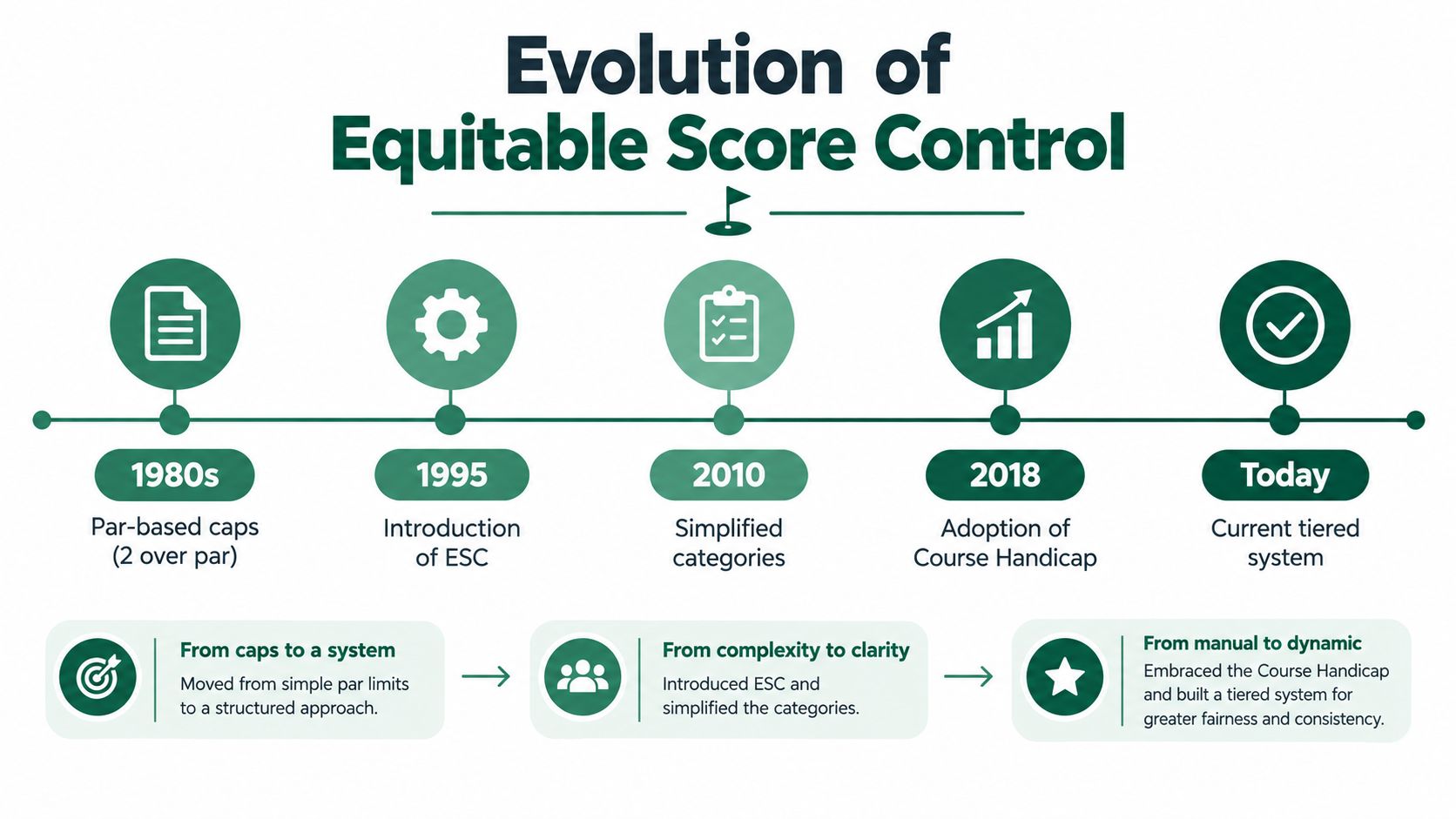
Historical USGA materials show the pre-World Handicap System ESC table this way in the USGA handicap article archived by Michigan State:
Course Handicap | Maximum hole score |
|---|---|
9 or less | 2 over par |
10 to 19 | 7 |
20 to 29 | 8 |
30 to 39 | 9 |
40 and above | 10 |
Start with the right handicap number
Before anyone adjusts a single hole, make sure the Course Handicap is correct for that player on that course. If the conversion step is wrong, every cap after that can be wrong too. A Course Handicap calculator guide can help staff verify that number before the round or during score review.
Once the Course Handicap is confirmed, the cap is straightforward. You don't negotiate it. You don't estimate it. You match the player to the proper range and use that maximum.
Three everyday examples
The rule gets easier when you see it on real scorecards.
Low Course Handicap player: If a player is in the 9-or-less group under the older par-based table, the maximum is 2 over par on a hole. On a par 4, that means the adjusted maximum is 6.
Mid-range Course Handicap player: A player in the 10 to 19 range can post no higher than 7 on any hole. If they make a 9 on a par 5, the posted hole score becomes 7.
Higher Course Handicap player: A player in the 30 to 39 range has a maximum of 9. If they make an 11, the posting score for that hole becomes 9.
Two golfers can play the same hole, make different raw numbers, and face different ESC limits because their Course Handicaps are different. That's not favoritism. That's the rule trying to keep handicaps representative across skill levels.
There is no limit on how many holes can be adjusted
A lot of golfers assume ESC can only hit one bad hole. That's not how it works. A USGA handicap guide states that all scores, including tournament scores, are adjusted for ESC, that there is no limit to how many holes can be adjusted in a round, and that the golfer must adjust hole scores after the round before returning the score for handicap purposes, according to the USGA Handicap System reference guide.
If a player has three holes above the cap, all three get adjusted. If none are above it, nothing changes.
That's why hole-by-hole scoring matters. A round total alone won't show you where the adjustments belong.
How Equitable Score Control Has Evolved Over Time
A volunteer is entering scores after a member-guest. One player says, "I thought my max was 6." Another says, "I learned it as double bogey." Both may be remembering a real rule. They are just remembering different versions of the rule.
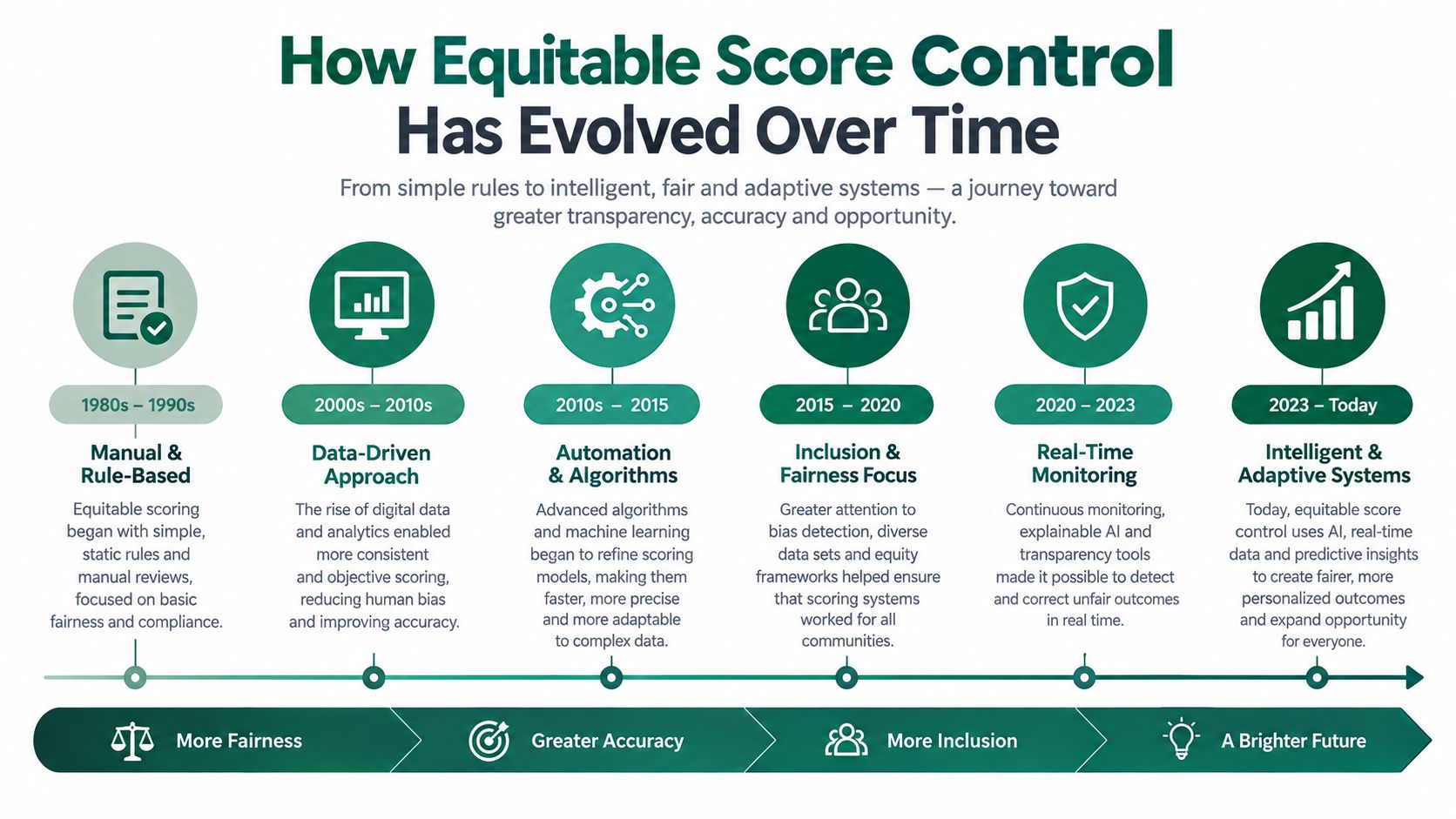
That history matters because score control has changed more than once. The basic goal stayed the same. Keep one very high hole from stretching a handicap beyond what a player usually shoots. What changed was the method clubs used to get there.
ESC entered the USGA Handicap System in 1973. Later revisions tried to make the adjustment more consistent and easier to apply. One major shift came in 1993, when the USGA moved away from an older par-based method and toward fixed maximum hole scores tied to handicap ranges, as described in the USGA Handicap System manual.
What changed from the older approach
The older approach asked players and staff to do more rule translation at the hole level. The later table was simpler. A player in a given Course Handicap range had a clear maximum for any hole.
That sounds like a small administrative change. At the club level, it is more than that.
A simpler cap is easier to explain in the golf shop, easier to check after a round, and easier to apply when scores come in from paper cards, a scoring table, or a live event console. If three different people handle the same card, they are more likely to reach the same adjusted score.
The 1999 revision for low-handicap players
Another revision arrived in 1999 after a test period in regional associations and an optional phase the year before. The biggest change affected lower-handicap players. Golfers with Course Handicaps of 9 or less could post a maximum of double bogey on a hole, instead of using the older fixed-number cap, according to the 1999 USGA handicap rules update.
That adjustment made the rule fit the hole better. A par 3 and a par 5 do not create the same scoring pattern, so one flat number could be too blunt for a stronger player. Double bogey gave those players a limit that still controlled outliers but matched the hole they were playing.
Why the history matters in real scoring work
Staff do not need a museum tour of handicap rules. They need to know why two players may describe ESC differently, and why an old club sheet in a drawer may not match the current procedure.
That comes up fast on tournament day.
A player may stop on a hole, pick up after net double bogey in match play, or hand in a card with an incomplete hole that still needs a posting decision later. In a live scoring workflow, including app-free entry in Live Tourney, the safest habit is to record what happened in the competition first and apply the current handicap-posting rule afterward. Knowing the rule changed over time helps staff explain that process without sounding like they are rewriting a player's score.
Small changes in score-control rules can change a posted handicap enough to matter. Clear history helps clubs use one current method, answer old-rule questions calmly, and keep players and volunteers on the same page.
Applying Equitable Score Control in Live Tourney Scoring
Tournament day is where good handicap rules can turn messy. The player enters a score on the phone, a volunteer writes it on paper, and the golf shop wants a live leaderboard running without a debate at every table. The easiest way to keep order is to separate competition scoring from handicap posting from the start.
Keep live competition scores as actual strokes
For the event itself, use the player's actual strokes. If a player made 10, the competition record should show 10. Gross and net competition results depend on what happened on the course, not on a later handicap-posting cap.
That protects trust. Players can see the leaderboard and know their round hasn't been rewritten.
Apply ESC after the round for posting
USGA-adjacent guidance notes a gap that many clubs still struggle with. Public explanations often show the table, but they rarely spell out how to handle live scoring, incomplete holes, conceded putts, or device-based score entry in a consistent workflow, even though ESC applies to all scores for handicap purposes and uses the actual or most-likely score when that score exceeds the applicable maximum, as discussed in the USGA handicap manual guidance on equitable stroke control.
That's the key operational lesson. Let play finish. Record the score first. Then apply the adjustment when preparing the score for handicap posting.
A simple workflow for staff and volunteers
This is the process I'd teach in a shop meeting.
Before play, confirm Course Handicap
Use the event's course setup and player handicap information so the proper ESC maximum is available when the round is over.During play, collect hole scores
Whether players enter scores digitally or a volunteer uses a printed card, record what the player made on the hole.If a hole isn't finished, determine the most likely score
ESC is triggered when the actual or most likely score is above the player's maximum. For incomplete holes or conceded putts, settle the most likely score consistently before posting.After the round, review hole by hole
Compare each hole to the player's maximum. Adjust only the holes that exceed the cap.Post the adjusted handicap score separately
Don't overwrite the event score. Store or submit the handicap-posting version as its own record.
Handling common tournament situations
A few situations create most of the confusion:
Incomplete hole: If the player picked up, the committee needs a consistent most-likely score process before any ESC adjustment is considered.
Conceded putt in match-style play: Treat handicap posting separately from the competition concession. The event result may be decided, but the handicap record still needs a most-likely score.
Paper cards and app-free entry: If staff enter scores after the round, they should enter the gross hole scores first, then apply any posting adjustments in review.
One practical option for events that want app-free score entry and live leaderboard updates is Live Tourney's live scoring workflow, which is built around web-based hole-by-hole scoring on any device. In this kind of setup, the important principle remains the same no matter what tool you use. Preserve the gross score record and handle handicap adjustments as a separate posting step.
What players need to hear
Keep the explanation short.
Your tournament score is your tournament score. Your handicap-posting score may be adjusted hole by hole if any hole exceeded the limit for your Course Handicap.
If you say that before the first tee time, you'll avoid most of the end-of-round arguments.
Common Misconceptions That Confuse Players and Volunteers
Most ESC disputes come from a handful of repeated misunderstandings. They're easy to fix once you use plain language.
Misconception one says ESC changes the competition result
It doesn't. ESC adjusts scores for handicap purposes. It does not erase the strokes a player took in the event.
The leaderboard answers one question. The handicap record answers a different one.
If a player made 8 on a hole, the event score remains 8. If the posting cap reduces it for handicap purposes, that adjustment belongs in the handicap workflow, not in the competition result.
Misconception two says ESC is only for casual rounds
That's wrong. Equitable score control is widely described as a mandatory handicap-posting rule, and USGA materials note that all handicap-eligible scores, including tournament rounds, are subject to it, as summarized in the ESC reference overview.
Tournament rounds count. They just may require adjustment before posting.
Misconception three says only one hole can be adjusted
Players often assume there's a one-hole limit because they've only ever heard people talk about “that one blow-up hole.” In practice, the rule can apply on several holes in the same round if several holes exceed the player's maximum.
That's why score review has to be hole by hole.
Misconception four says everyone should understand the cap immediately
They usually don't, especially newer golfers.
Higher-handicap players often feel the system is opaque because they see a final adjusted total but not the reasoning behind it. Volunteers get uneasy too when they know a number changed but can't explain why. The fix is to show the sequence, not just the answer:
First: actual hole score
Then: player's Course Handicap category
Finally: posted maximum on that hole
Misconception five says old ESC language always matches current club practice
It often doesn't. Clubs may still use old terms in printed policies or staff conversations long after procedures have shifted. That's why committees should write one plain scoring note for all events.
“Enter the strokes you actually took. The golf shop will handle any handicap-posting adjustment after the round.”
That sentence clears up more confusion than a long rules speech.
Putting Fair Scoring Into Practice at Your Next Event
Equitable score control is one of those rules that protects fairness. When it's handled well, players trust the handicap system more because they know one awful hole won't distort their record. Committees trust the event results more because they know the competition score remains the actual score.
For staff, the goal is simple. Keep the process clean and repeatable.
A short checklist that works
Verify Course Handicaps early so the right maximum is available when scores come in.
Collect actual hole-by-hole scores during the round, whether by phone, paper, or shop entry.
Separate event scoring from handicap posting so no one thinks the committee changed the competition result.
Review incomplete holes consistently using actual or most-likely score before any posting adjustment.
Train volunteers with one plain explanation they can repeat to every player.
The best scoring operations aren't the ones with the fanciest language. They're the ones where the player, the volunteer, and the golf shop all understand what number belongs where.
If you run mixed fields, member events, leagues, or outings, equitable score control helps you keep handicaps representative and competition records honest. That's exactly what players want, even if they don't phrase it that way. They want to know the round was scored fairly, posted correctly, and explained clearly.
If you want a cleaner way to handle hole-by-hole scoring, live leaderboards, and the separation between competition scores and handicap-posting workflows, Live Tourney gives clubs a web-based system that works on any device without app downloads. It's a practical fit for events where staff need actual scores captured during play and a simpler review process after the round.