
Jul 21, 2026
ponca city country club, oklahoma golf courses, perry maxwell golf, golf tournament hosting, live tourney
Your complete guide to the Ponca City Country Club. Get course details, membership info, event hosting tips, and learn how to run a modern tournament.

You're probably in one of two spots right now. You're either trying to figure out whether Ponca City Country Club is worth the call for a round, or you're planning an outing and need more than a thin directory listing with a phone number and no real guidance.
That's a common problem with established private clubs. The venue may be strong, the course may be historic, and the staff may know exactly how to run a day. But if you're a prospective member, guest, or tournament organizer, the public information often stops before the practical questions start. That's where a little operator-level context helps.
Welcome to Ponca City Country Club
Ponca City Country Club has the kind of identity golfers tend to respect immediately. It's a long-running private club with real architectural pedigree, and it still serves both local players and organized events in a way that feels rooted in traditional club golf rather than mass-market tee sheet traffic.
For practical purposes, the first thing to know is simple. Ponca City Country Club is located at 1101 N Pecan Rd, Ponca City, Oklahoma 74604-4115, a site in Kay County that serves as a regional golf facility with a primary contact phone number of (580) 762-4413 for tee times and tournament inquiries.
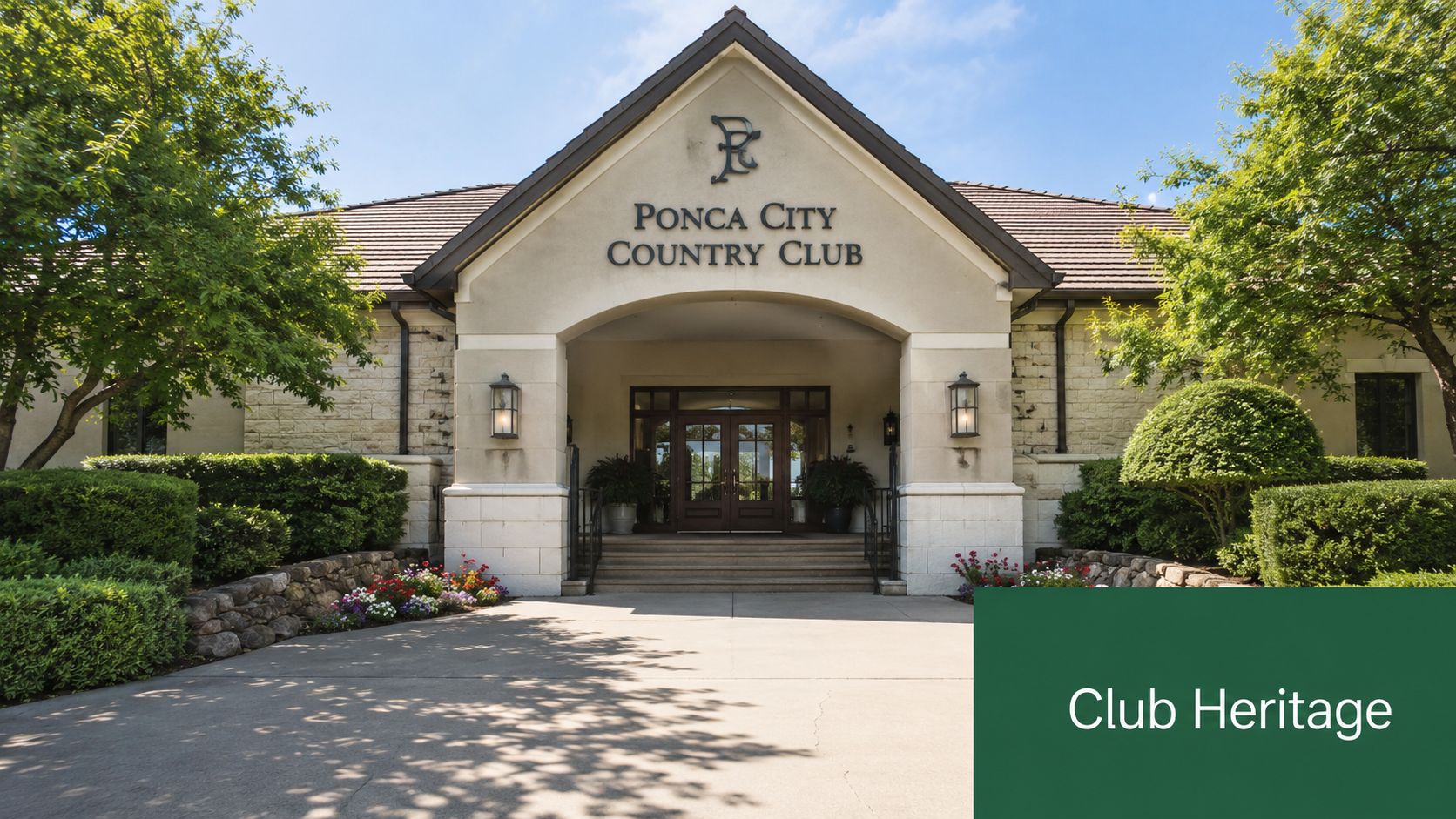
That matters because clubs like this reward direct contact. If you're looking at membership, guest access, or an event date, you'll save time by treating the club as a relationship-driven venue instead of expecting a fully self-serve booking flow.
Why the club appeals to two very different audiences
Golfers tend to come to Ponca City Country Club for the same reason they seek out other classic private courses. They want a course with history, strategy, and a setting that doesn't feel generic.
Organizers look at it differently. They want a venue that feels established enough for a charity event, member-guest style competition, or corporate golf day, but they also need operations that won't create confusion on event morning.
Practical rule: A traditional club can be an excellent event venue if you clarify contacts, scoring workflow, and player communication before invitations go out.
That balance between tradition and execution is what usually determines whether a golf event feels polished or improvised. The same principle shows up in broader service businesses too, which is why this comprehensive guide for hospitality is useful reading for anyone thinking about guest experience, staffing flow, and venue presentation.
What to keep in mind before you call
If you're approaching Ponca City Country Club cold, start with a narrow objective:
For golfers: Ask about the path to membership or guest access.
For organizers: Ask about event date availability, golf-only needs, and who handles tournament logistics.
For both: Keep your first conversation specific. Clubs respond better when the inquiry is concrete.
Exploring the Perry Maxwell Course Layout
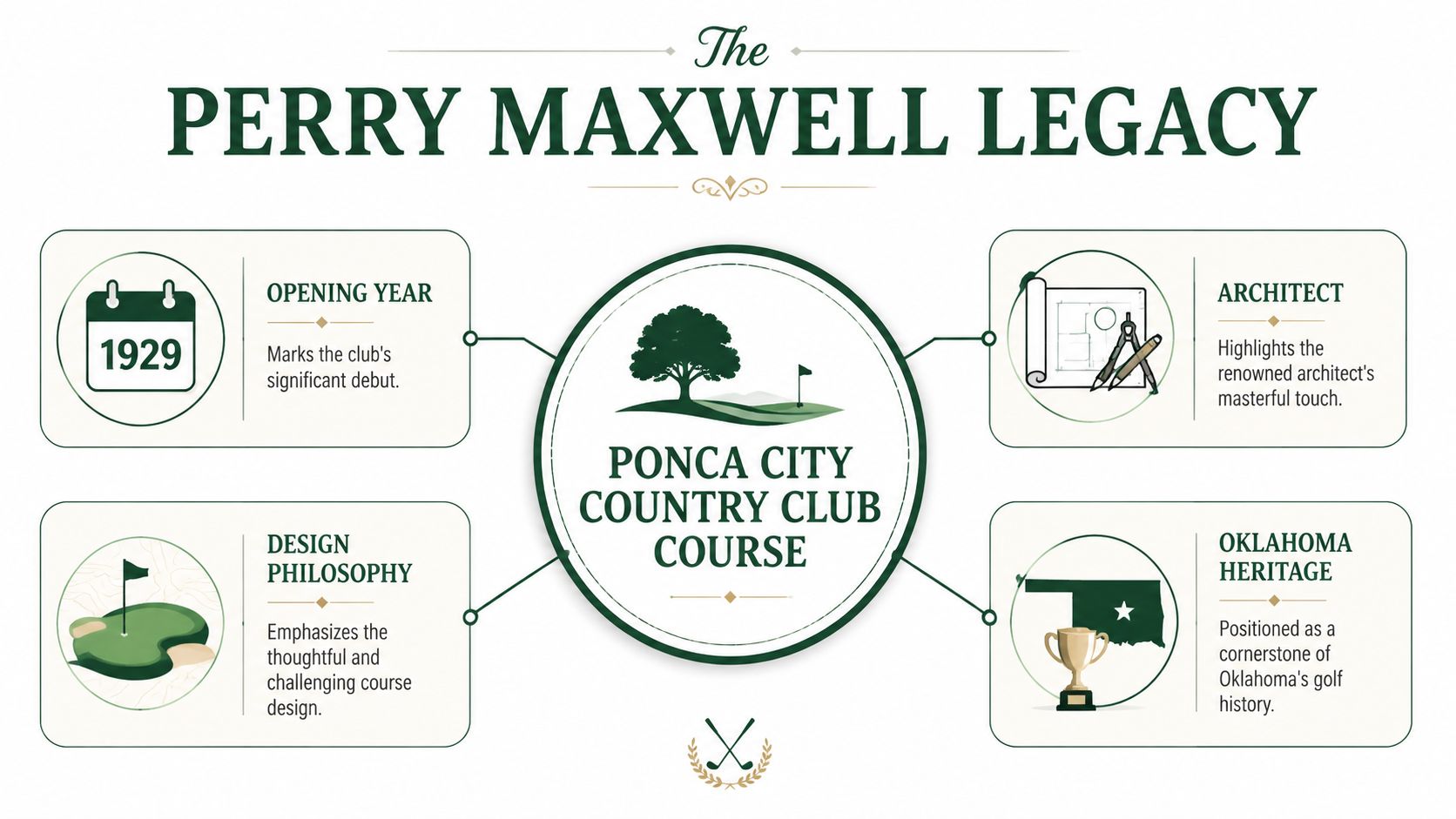
The biggest reason Ponca City Country Club stands out isn't just that it's private. It's that the course carries a legitimate architectural name. The club was designed by Perry Maxwell and opened in 1929. The 18-hole course measures over 6495 yards from the back tees and has a slope rating of 130, which tells you it isn't a casual push-over from the championship markers.
What that means for players
A Maxwell course usually asks for better decision-making than the scorecard alone suggests. Yardage matters, but on a classic design the sharper question is where the course wants your ball to finish. Strong players tend to appreciate that because it separates execution from brute force.
For an experienced golfer, a 130 slope is a useful warning sign. You can still enjoy the round, but you shouldn't expect a flat, straightforward setup where every hole asks the same question.
A few practical implications follow:
Tee selection matters: Longer hitters may enjoy the full test from the back, but mixed groups usually play better when everyone chooses tees that keep approach shots realistic.
Approach play matters more than vanity distance: On older private-club layouts, the angle into the green often decides whether par is simple or stressful.
Event setup should fit the field: If you're running a tournament, resist the urge to make the course “championship hard” for a field that came for networking or fundraising.
Why the history still matters now
Opening in 1929 puts the course in a period when private clubs were being shaped around strategic architecture rather than modern housing-driven routing. That gives Ponca City Country Club a different feel than a newer event venue built mainly for traffic and pace.
A historic course doesn't automatically create a better round. But it often creates better decisions, and that's what good golfers remember.
That history also helps with positioning. If you're inviting members, guests, sponsors, or clients, the club already has a story built into the venue. You don't have to manufacture prestige when the course design already carries it.
A smart way to prepare for the layout
If I were advising a tournament chair or head professional on presentation, I'd make the course easier to understand before the first shot. A clear visual map helps guests, especially if they haven't played the property before. A strong reference point is this look at a custom golf course map, which shows how course visuals can reduce confusion and improve pace.
Here's the practical takeaway:
Player type | Best approach at the club |
|---|---|
New guest | Ask for local guidance on misses and green complexes |
Competitive player | Focus on placement, not just length |
Event field | Set tees and hole contests around enjoyment and flow |
Membership and Playing at the Club
The most important access rule is straightforward. Ponca City Country Club is a members-only private facility, so access requires membership to play, participate in leagues, or host events. The club's contact email is cwalker@pccclub.com, and the same source notes that clubs in this category typically serve 200–500 member households.

That tells you two things. First, this isn't a public course where you browse a rate grid and book anonymously. Second, the scale is consistent with a regional private club where relationships, referrals, and direct communication usually matter more than automated front-end systems.
Best way to inquire
If you're interested in joining, don't overcomplicate it. Reach out with a short, direct message that says who you are, whether you live locally, and whether you're asking about membership, guest play through a member, or event access.
Keep the inquiry grounded in real intent:
Membership interest: Ask about the process, categories, and next steps.
Guest play: Ask whether the club permits it and under what conditions.
League or event participation: Clarify whether your access depends on sponsor, member, or organizer invitation.
What to expect from the private-club experience
Private access changes the tone of the day. You'll usually see a more controlled tee environment, a stronger sense of club culture, and a setup geared toward members first. That's a benefit if you value consistency. It can also be a friction point if you're used to open public access and instant online booking.
Member perspective: The private model works best when expectations are clear before arrival. Uncertainty about guest access creates more friction than the access policy itself.
For non-members, that means one thing above all else. Confirm your status before you invite players, clients, or friends. A private club can be a strong host, but only when the organizer lines up eligibility and communication early.
Hosting Tournaments and Outings
From an event consultant's view, Ponca City Country Club looks like a venue that can work well for outings if you respect how the operation is structured. The public signals are there. The club lists two email contacts, zakkpccc@gmail.com and cwalker@pccclub.com, along with two phone lines, which points to a segmented setup that helps staff separate tournament logistics from membership questions.
That's useful because many organizers lose time by asking the wrong person the right question. A private club often runs efficiently behind the scenes, but only if inquiries land in the correct lane.
How to start the planning process
For a corporate or charity outing, I'd approach the club with a short planning brief rather than a general “what do you offer?” message. Include:
Your event type: corporate, charity, association, or private group
Expected field shape: all members, mixed guests, or mostly outside players
Your scoring needs: simple gross/net results or a more structured competition
Your date flexibility: one fixed date or a range of acceptable windows
That gives staff something operational to react to.
Where organizers usually get stuck
Traditional clubs often do a solid job delivering the golf day itself. The weak point is usually pre-event clarity. Organizers need to know who handles pairings, who answers player questions, and how tournament-day communication will work.
A simple working model looks like this:
Need | Best first move |
|---|---|
Date inquiry | Call the general line and ask for event logistics |
Membership-related access question | Route it to the membership side |
Tournament planning details | Email the event contact with your field and format needs |
If you need a planning template before reaching out, this golf tournament planning guide is a useful framework for getting your field, timeline, and event operations organized before the first club conversation.
What works at clubs like this
The strongest outings at a private venue usually share the same traits:
Tight field definition: everyone knows whether they're a member, guest, sponsor, or invitee.
Simple morning check-in: no mystery about pairings or cart assignments.
Clean scoring process: players don't wonder where scores go after the round.
Clear awards flow: if there are contests or prizes, the organizer has already decided the rules.
What doesn't work is importing public-course expectations into a private-club environment. Last-minute player swaps, vague guest lists, and ad hoc scoring methods create unnecessary stress for both staff and organizers.
Modernizing Your Event with Live Scoring
A common tournament-day scene at a traditional club looks like this. Players finish on 18, two carts pull up at once, someone is missing a scorecard, and the organizer is trying to sort net and gross results while guests wait for awards. The course can be excellent and the staff can be organized, but the scoring process still becomes the bottleneck.
That is the modernization question at Ponca City Country Club. The club's character is not the issue. The issue is whether your event operations match what players and sponsors now expect.
Why live scoring improves the event
Live scoring fixes the part of the day that usually slows down first. It gives players a clear place to enter scores, gives organizers visibility before the last group finishes, and cuts down on the stack of paper that has to be interpreted after the round.
At a club like Ponca City Country Club, that matters because many outings want to preserve a classic private-club feel while still running on time. A browser-based scoring system fits that balance well. Guests do not need an app download, staff do not need to train every foursome from scratch, and leaders can monitor the board as the field moves through the back nine.
The benefit is practical, not cosmetic.
What a better scoring setup changes
A modern scoring workflow usually improves four parts of the event:
Check-in runs cleaner because players know how scores will be handled before they tee off.
On-course communication gets simpler because teams can confirm scores in one place.
Results post faster because the organizer is not waiting on every paper card to come in.
Awards feel more polished because standings are already taking shape near the end of play.
For organizers comparing options, this guide to golf score tracking for tournaments and outings is a useful reference for how real-time entry changes both administration and the player experience.
Where organizers still need to make decisions
Technology helps, but it does not fix a loose event plan. You still need to decide who enters scores, whether the format is best ball or scramble, how ties are handled, and when results become official.
I usually recommend a simple operating model at a club like this:
Send the scoring link before arrival
Assign one scorer per group
Confirm format rules at check-in
Monitor the leaderboard during the round
Audit the top finishers before awards
That approach respects the club's traditional atmosphere while meeting current expectations for speed and clarity. The best version of a Ponca City Country Club outing is not flashy. It is well run, easy for guests to follow, and efficient enough that the awards portion does not drag.
Planning Your Visit or Event A Summary
A strong day at Ponca City Country Club usually starts weeks before the first tee time. The course and clubhouse reward organizers who show up with a clear plan, clear player communication, and realistic expectations about how a private club operates.
For a golfer visiting on guest access or considering membership, the practical move is simple. Ask direct questions about availability, guest policies, and who your host needs to contact. Broad inquiries slow things down. Specific ones get answers.
For an event organizer, the standard is higher because small gaps show up quickly on tournament day. Start with the basics:
Confirm access and scheduling early
Work with the right club contact from the start
Set the field size before sending invitations
Choose scoring, rules, and tie procedures in advance
Decide how prizes, side games, and payouts will be handled
That last point causes more trouble than many organizers expect. Public club information does not always spell out every event variation, side game option, or payout detail. As noted earlier, if you are planning an outing here, do not assume those decisions can wait until check-in. They need to be settled in advance, written clearly, and shared with players before they arrive.
That is the primary opportunity at Ponca City Country Club.
The club already gives you the traditional setting many groups want. What organizers still need to add is modern event execution. Clean registration, clear rules, live scoring, and faster results make the day feel current without changing the club's character. In practice, the best outings here keep the atmosphere classic and make the operations tighter.
If you're organizing a tournament, league, or outing and want a smoother scoring and admin workflow, Live Tourney is worth a look. It gives courses and organizers an app-free way to handle live scoring, leaderboards, and event management without adding complexity for players or staff.





