Apr 7, 2026
Choosing software for golf leagues? Our 2026 guide covers features, benefits, and a buyer's checklist to help head pros save time and elevate player experience.

League night usually falls apart in the same twenty-minute window.
The phone starts ringing. Two players cancel. One sub shows up without warning. Someone wants to know if last week’s points were posted correctly. You have a line at the counter, a tee sheet that no longer works, and a spreadsheet that looked organized at noon but now feels like a trap.
That is why more pros stop running leagues with paper, side notes, and Excel tabs taped together by habit. The issue is not just convenience. It is control. When your process depends on manual edits, you spend league night fixing preventable problems instead of running the event.
Beyond Spreadsheets The Modern Approach to League Management
A lot of courses still manage leagues the old way because the old way is familiar. A roster lives in one file. Handicaps sit in another. Pairings get rebuilt when somebody calls off. Scores come back on paper. Then somebody in the shop stays late to sort out standings, skins, and who thinks they got shorted.
That system works until it does not.
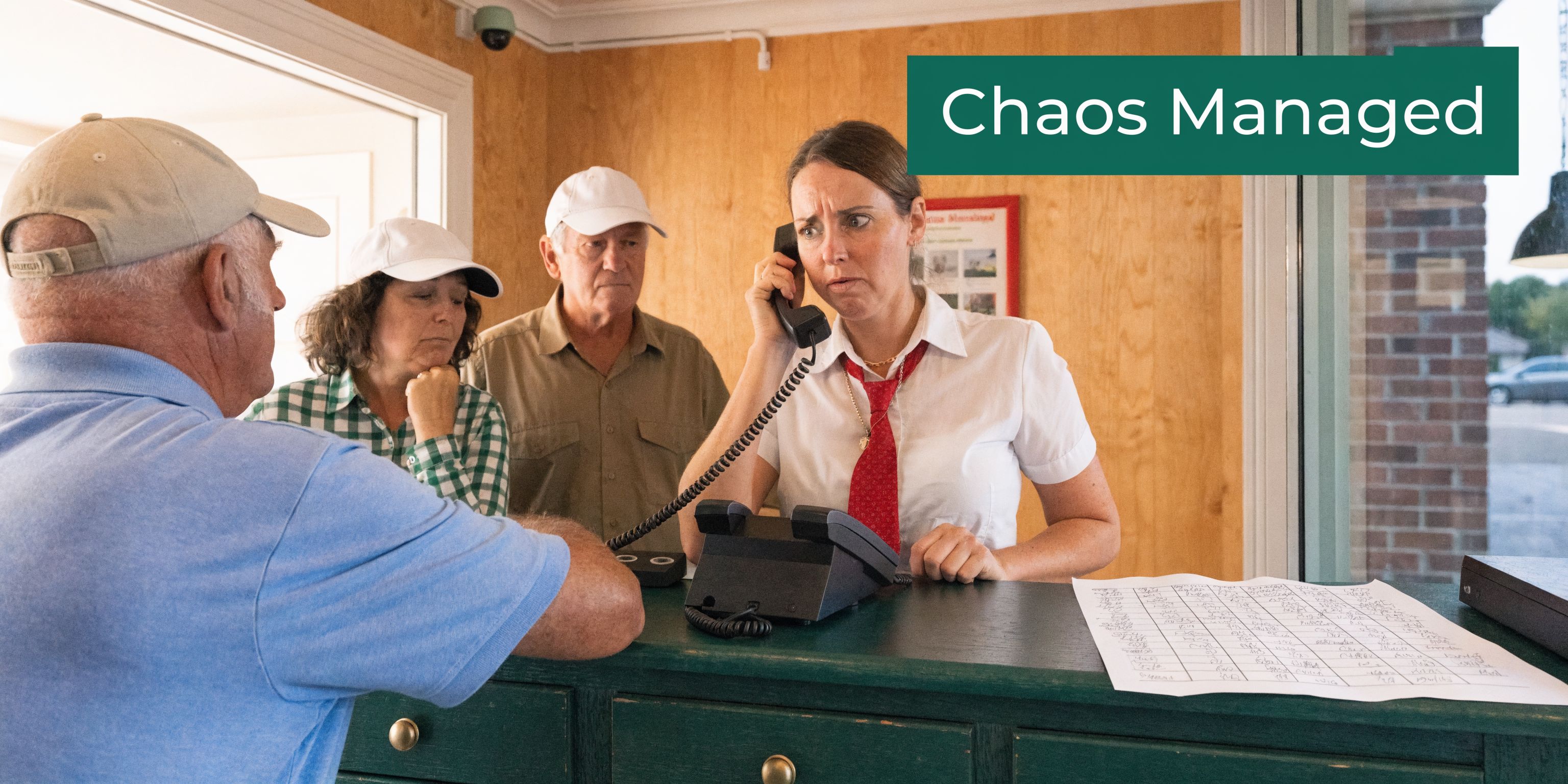
Manual league management creates avoidable pressure
The hardest part is not any single task. It is the pileup.
You are managing all of this at once:
Late changes: A few no-shows can force a full pairing reset.
Score disputes: One typo or a bad handicap entry creates an argument you now own.
Payment chasing: Somebody always says they will pay next week.
Communication gaps: Players text, email, call, and ask at the counter. None of it lives in one place.
The result is a league that feels heavier to run than it should.
Good software for golf leagues removes that load by putting registration, pairings, scoring, standings, and communication in one operating system. Instead of rebuilding the event each week, you manage exceptions and let the platform handle the routine work.
This is a real industry shift
This is not a niche software category anymore. The global market for sports league management software is projected to reach USD 2.65 billion by 2032, and the golf-specific segment is forecasted to hit USD 1.2 billion by 2033. That growth is tied to the move from manual systems to digital tools across a US golf market with 25 million+ golfers (Live Tourney’s golf league software market overview).
That matters because it tells you where operators are going. They are not buying software to look modern. They are buying it because manual league administration eats staff time and makes the player experience feel dated.
If your league night still depends on one staff member knowing where every spreadsheet lives, your process is more fragile than you think.
The practical upside is simple. You get your staff back. You get cleaner events. Players get faster answers, clearer standings, and less confusion. That alone changes how your league feels from week one.
What Exactly Is Golf League Software
The simplest way to think about software for golf leagues is this. It is the air traffic controller for your league.
Players are arriving, formats vary, pairings shift, scores come in, standings change, and side games need to be settled. Without a system directing those moving parts, collisions happen. The wrong player gets the wrong handicap. The wrong score goes on the board. The wrong group goes to the wrong tee.
Golf league software gives you one place to run the whole operation.
It replaces scattered tasks with one command center
Most spreadsheet-based leagues are really a collection of mini systems:
one file for names
one for payments
one for pairings
one for season points
one printed sheet that gets marked up by hand
one staff member trying to remember how it all connects
League software replaces that patchwork with a central database and a rules engine. You load your roster once. You define the format once. Then the platform applies those rules consistently every week.
That is the difference between storing information and managing an event.
The four jobs it should handle
Registration and payments
Players should be able to sign up, confirm participation, and pay without handing paper across the counter. When registration sits inside the platform, you stop re-entering names and chasing balances manually.
This also gives you a cleaner member record. You can see who is active, who has paid, and who is expected for the next date without checking three different places.
Scheduling and pairings
Weak systems usually show themselves here.
A useful platform should let you build recurring events, assign tee times or groups, handle substitutes, and adjust pairings when real life gets in the way. If a player drops out an hour before the round, you should not need to rebuild the night from scratch.
For leagues with rotating matches or divisions, this matters even more. The software needs to support the way golf leagues run, not force you into a generic event template.
Scoring and handicapping
This is the engine room.
The platform should accept scores, apply your scoring format, adjust handicaps where appropriate, and update standings without manual math. If you run net games, points races, match play, Stableford, best ball, or weekly side games, the software needs to calculate those results correctly and consistently.
Pros usually save the most aggravation here. The fewer hand calculations involved, the fewer “Can you double-check this?” conversations you have after the round.
Results and communication
At the end of the night, players want quick answers. Who won. What did I shoot. Where do I stand for the season. What is next week’s pairing.
A decent league platform should publish results fast and push updates clearly. If players have to wait around while someone enters scorecards by hand, the event loses momentum.
The best software for golf leagues does not just store scores. It keeps players informed before, during, and after the round.
What it is not
It is not just a digital scorecard.
It is not just a tee sheet builder.
It is not just handicapping software.
Those are pieces of it. A full golf league system ties them together so the information entered at registration flows into pairings, scoring, standings, and payouts without being rebuilt each time.
When a head pro says software changed league operations, that is usually what they mean. Not one flashy feature. One connected process.
Essential Features and Critical Format Support
A lot of golf software demos look good for five minutes. Then you ask one real question.
Can it handle weekly net points with subs, skins, flights, and season standings without manual workarounds?
That is where the field narrows fast.
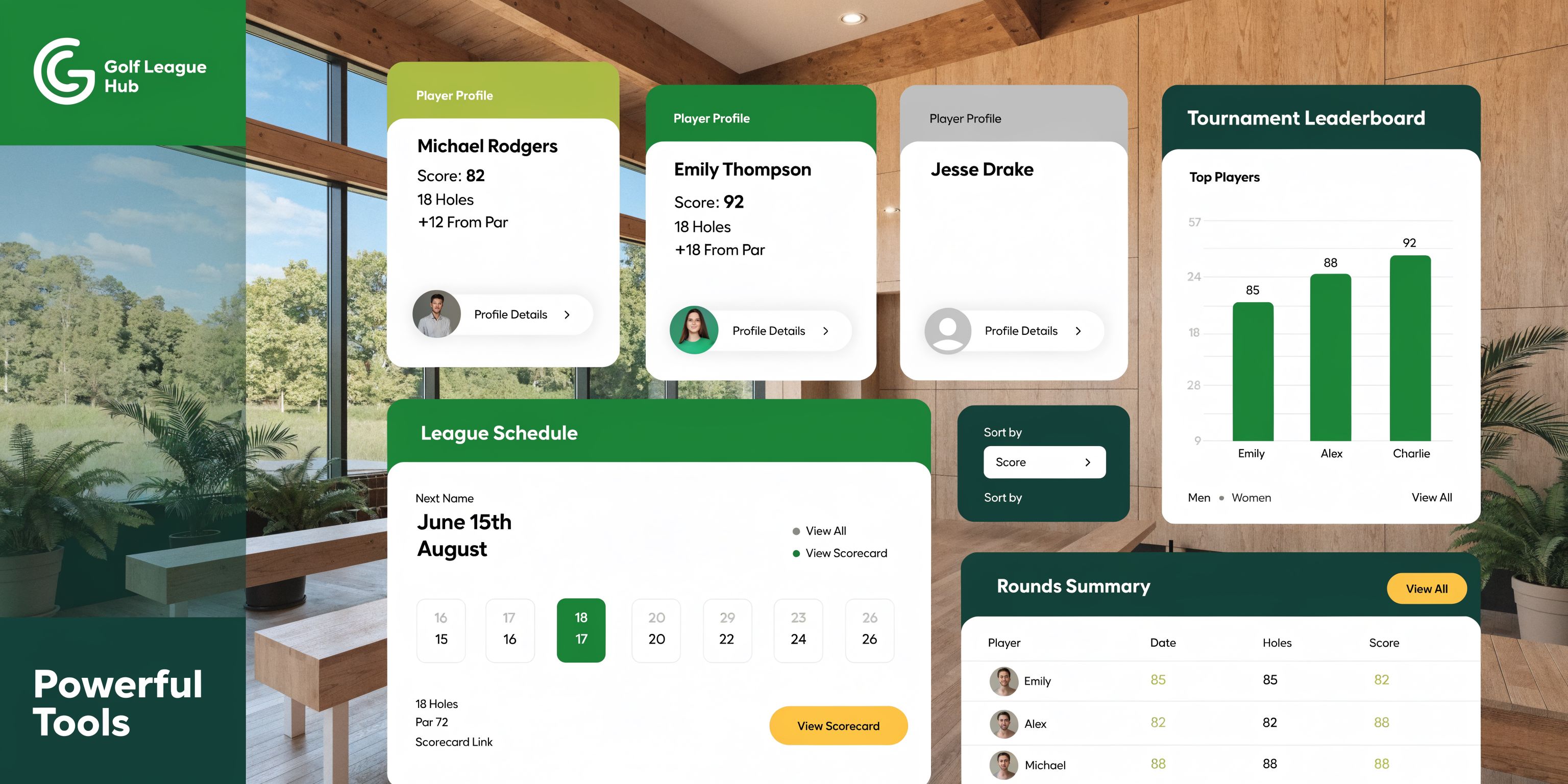
Automated handicaps are not optional
If you are still updating handicaps by hand, you are inviting errors into the one part of league play players watch most closely.
Modern systems use WHS-compliant algorithms to calculate handicaps automatically. According to EZ Golf League, that automation can reduce manual errors to zero and cut league setup time by 3x, while disputed standings can cause a 15-25% drop in player retention over a season (EZ Golf League handicap automation details).
That matters for two reasons.
First, fair play. Net events only hold together when players trust the numbers.
Second, time. If your staff is entering scores, checking course ratings, applying slope, and recalculating indexes manually, the system is doing nothing to help you.
A proper handicap engine should handle:
Daily score ingestion: Gross scores go in once and the system processes them.
Course and slope data: Pre-loaded course information prevents manual lookup work.
League-specific adjustments: Flights, points, and format rules should apply inside the event logic.
Sub and no-show changes: Pairings and competition structure should stay stable when attendance shifts.
Live scoring only matters if players will use it
A lot of platforms advertise live scoring. Fewer solve the adoption problem.
If scoring requires an app download, password reset, and account setup, many players will skip it. If scoring opens from a simple link in the browser, participation goes up because the barrier is lower.
The underlying architecture matters here. Real-time scoring systems in modern web platforms use WebSocket or Server-Sent Events to push leaderboard updates without page refreshes. In practice, that means players and staff see changes as scores are entered, not after a manual refresh cycle.
What you should care about is the result. The leaderboard feels alive. TV displays update quickly. Side games can be tracked while groups are still on the course. Staff can spot missing holes or scoring gaps before they become end-of-night cleanup.
Format support separates real league software from basic event tools
Many clubs do not run one format all season. They rotate.
One week is individual net. The next is a two-man game. Then match play. Then a season finale with points, skins, and payouts layered together. If your software only handles straightforward stroke events, your staff ends up building manual patches around it.
Look for support for formats such as:
Stroke play and net stroke
Stableford
Match play
Best ball
Team points
Ryder Cup style scoring
Round robin scheduling
If you run recurring matches, a round robin schedule guide is worth reviewing during setup because schedule logic gets messy fast when divisions and repeat opponents enter the picture.
Print materials still matter more than software vendors admit
Players use phones. Staff still need paper.
A useful league system should create clean scorecards, cart signs, rules sheets, standings reports, and tee sheets without exporting data into another design tool. This is one of those features buyers overlook because it sounds minor. It is not.
The more often your staff has to leave the platform to make event materials, the more errors creep in and the more setup time expands.
Side games and payout tools save the post-round scramble
Skins, net skins, ringers, closest-to-the-pin contests, and weekly pots are where many leagues get sticky.
The software should calculate these inside the event, not force a separate worksheet after the round. If the side game module is weak, your closing process is weak. You finish play, then start another admin shift.
Ask every vendor to show you the ugliest event you run, not the cleanest one. Weekly league chaos exposes weak software faster than a polished demo ever will.
The Tangible Benefits for Your Staff and Players
Features are easy to sell. Relief is what operators buy.
The right software for golf leagues changes the workday for your staff and the pace of the event for your players. It does not just make things digital. It removes the slow, repetitive work that drags on every league night.
Your staff stops spending the night on cleanup
The biggest win is not flashy. It is that your team gets out of reaction mode.
When pairings adjust quickly, scores flow into the system, and standings update automatically, the shop is not buried after the last group finishes. Staff can focus on check-in, member questions, pace issues, and the dozens of small things that make the evening run smoothly.
Real-time scoring architecture that avoids app downloads can boost player participation by up to 40% and lead to 3x faster event throughput from start to finish (GolfSoftware live scoring overview). That throughput matters operationally. Faster scoring and results means less bottleneck at the end of the round and fewer staff hours tied up in result processing.
Players stay engaged instead of waiting around
Players notice speed before they notice software.
They notice that standings update while they are still on the course. They notice that the payout conversation starts sooner because the numbers are already there. They notice that the event feels current rather than held together with paper scorecards and delayed math.
That changes the energy after the round. Instead of waiting for results, players follow them.
Many buyers undersell the impact here. A practical extension of this is communication. If you already use automated messaging for league reminders, rain updates, or payment nudges, tools built for automated appointment reminders are worth studying because the same reminder discipline reduces no-shows and cuts down on repetitive outreach.
Better process usually means better club experience
Common gains show up in three places:
Front counter pressure drops: Fewer manual questions because players can see pairings and results themselves.
Post-round flow improves: Results and side games move faster, so the event closes cleaner.
League loyalty gets stronger: Players come back to leagues that feel well run.
You do not need a complicated ROI model to justify that. If your current system burns staff time, creates disputes, and makes players wait, the cost is already there. It is just buried in payroll, frustration, and member perception.
How to Choose the Right Software for Your League
Do not buy golf league software based on the homepage. Buy it based on what happens when three players cancel, two subs arrive, one guy cannot log in, and the league officer wants standings printed in ten minutes.
That is the test.
The market still has a blind spot around accessibility. Many platforms rely on app downloads that create friction for casual players and older members. According to Unknown Golf’s app-focused market discussion, app mandates can exclude 30-40% of golfers over 50, while app-free systems using simple web links see much stronger adoption (Unknown Golf league app discussion).
Start with the player experience, not the admin dashboard
A polished back office is nice. If players will not use the scoring flow, the best admin panel in the world does not help much.
Ask the vendor to show you exactly what a golfer receives and what they tap first. If the answer includes “download the app,” “create an account,” or “verify your email,” stop there and think hard about your player base.
The software your staff likes and the software your players will use are not always the same product. Choose the one that works on both sides.
Evaluate the five areas that matter most
Here is a scorecard I would use on any demo call.
Evaluation Criterion | Why It Matters | Key Questions to Ask |
|---|---|---|
Setup time and ease of use | Staff adoption falls apart if routine setup is clunky | How long does it take to upload a roster, build pairings, and publish an event? |
Player live scoring experience | Participation depends on low friction | Do players score through a web link, or do they need an app and account? |
Pricing and hidden fees | Cheap software gets expensive fast when add-ons appear | Are onboarding, support, payment processing, or premium formats extra? |
Customer support quality | League problems happen during events, not after them | Can I reach a real person during live play? By phone, chat, or email? |
Integrations and handicap support | Manual re-entry kills efficiency and creates errors | Does it support GHIN or WHS workflows and season-long standings? |
Compare platforms based on ugly realities
When you sit through demos, ask vendors to show these specific situations:
A last-minute cancellation: What changes on the admin side and what players see.
A substitute entering the field: Can the system handle subs without breaking points or pairings.
A mixed format week: Can it run team scoring and individual side games together.
An older golfer using live scoring: How many taps before they enter a score.
A post-round payout: Does the platform calculate side games inside the event workflow.
If you want a broader view of platform capabilities before you compare vendors, this overview of golf event management software is useful for framing what should live in one system versus what often gets split across tools.
Pricing deserves blunt questions
Vendors often talk around pricing in demos. Do not let them.
Ask these directly:
What is included in the base price
What costs more as the league grows
Is support included during events
Are payment processing and payout features extra
Is there a contract or can we test it first
A tool that looks affordable but charges extra for support, setup, reporting, or live scoring usually creates friction later.
One option among the current tools
If you are comparing products, you will see desktop-style tools, app-first tools, and browser-based systems. GolfSoftware and EZ Golf League are commonly discussed for league operations. Live Tourney is another web-based option built around app-free scoring, roster uploads, registrations, payouts, and real-time leaderboards. The right fit depends less on brand and more on whether your players and staff can use it with minimal training.
That is the point buyers miss. Software for golf leagues is not won by the longest feature list. It is won by clean execution on a busy league night.
From Registration to Payouts A Typical Event Workflow
A modern league event should feel boring to run. That is a compliment.
No scrambling. No scorecard pileup. No after-the-fact spreadsheet surgery. Just a clean sequence from sign-up to final standings.
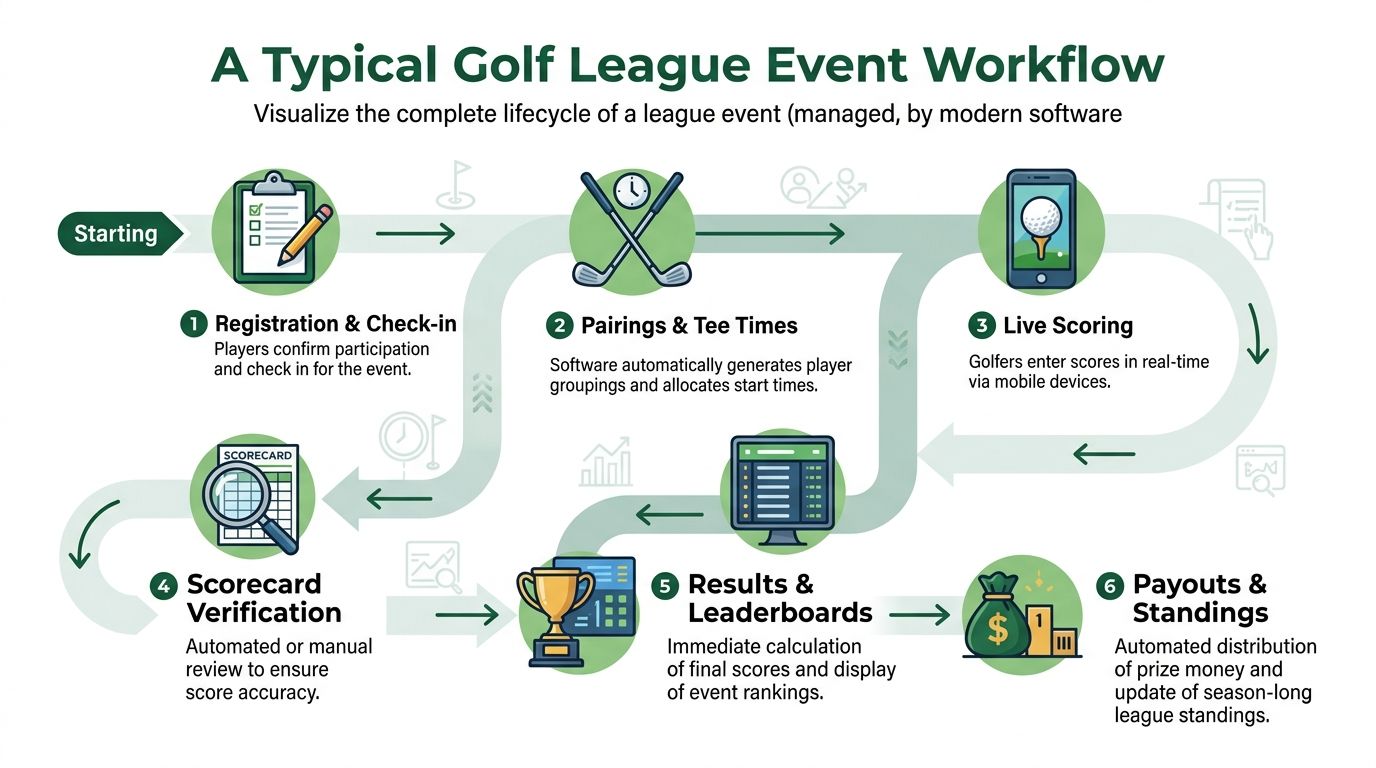
Before the round
Registration opens inside the platform. Players confirm they are in, and the field starts building itself without the shop retyping names. If your league collects dues in installments or runs season-long billing, it helps to understand the basics of efficient handling of recurring payments, because predictable payment flow keeps league administration cleaner over the full schedule.
A day or two before play, you review the roster. One player is out. Another sub is in. Instead of rebuilding a spreadsheet, you adjust the field inside the event and regenerate pairings.
Then you publish tee times or groupings.
Check-in and live play
Players arrive and check in. The staff is not hunting for paper waivers, old balances, or a handwritten roster because the event record already exists in one place.
At the first tee, players open a scoring link on their phones. No download. No store login. No “I forgot my password.”
As scores go in, the leaderboard updates. Groups can follow standings while they play, and the shop can see whether holes are missing before the round ends.
If you want to compare how scoring-specific systems structure this part of the process, this overview of golf tournament scoring software is a practical reference.
Closing the event
The best part comes after the last putt.
You verify any questionable entries, finalize the round, and let the system calculate the event outputs. Standings update. Side games settle. Season points roll forward. Results are ready while players are still talking through the round.
That workflow usually looks like this:
Registration: Players confirm participation and payment status.
Pairings: Staff build or adjust groups based on the final field.
Live scoring: Scores enter during play instead of after it.
Verification: Missing or odd scores get checked before finalization.
Results: Leaderboards and standings post immediately.
Payouts: Side games and prize distributions are calculated without separate worksheets.
If your current closeout process starts after golf ends, your software is only helping with half the job.
That is the biggest operational difference. Old systems treat scoring as the finish line. Good league software treats scoring as one step in a fully connected event.
Your Final Golf League Software Buyer's Checklist
If you are on demos this month, use a simple pass-fail checklist. Do not get distracted by features you will never use.
The short list of essential features
App-free scoring works on any phone: If players need to download something, adoption gets harder fast.
Setup is fast enough for weekly use: You should be able to create or repeat events without a long prep session.
Handicaps and results calculate automatically: Manual math is where disputes start.
The platform supports your actual formats: Weekly net games, match play, Stableford, team points, side games, and season standings all matter if you use them.
Pairings are easy to fix on the fly: Last-minute cancellations should not break the night.
Registration and payments live in the same system: Separate tools create duplicate work.
Printouts are built in: Tee sheets, scorecards, and reports should not require outside templates.
Support is reachable during live events: You need a person, not a ticket queue.
Pricing is transparent: Ask what is extra before you commit.
Older and less tech-savvy players can use it: If they cannot score easily, your live leaderboard will never be complete.
Questions worth asking on every demo
Ask for a real workflow
Do not ask for a tour. Ask the rep to build a league night from scratch, then show a cancellation, a sub, a live score entry, and a payout.
Ask what happens when something goes wrong
Every platform looks smooth when the data is clean. Ask how it handles bad score entries, missing players, and lineup changes on the day of play.
Ask who on your staff can learn it quickly
If only one person at the club can run the software well, you still have a process risk.
The right software for golf leagues should reduce dependence on one organized staff member holding the whole thing together. It should make league operations calmer, cleaner, and easier to repeat.
If a platform cannot do that, keep looking.
If you want an app-free system built specifically for tournaments, outings, and software for golf leagues, Live Tourney is worth a look. It is web-based, supports real-time scoring without app downloads, and gives courses one place to manage registrations, pairings, leaderboards, side games, and payouts without the usual spreadsheet cleanup.