Aug 14, 2026
sd golf association, south dakota golf, SDGA membership, golf tournaments, live scoring
Explore everything the SD Golf Association offers: membership benefits, event calendars, junior programs, and resources for organizers. Join today!

You can usually tell when a golfer or a club is dealing with the South Dakota Golf Association for the first time. It starts as a simple handicap question, then turns into tournament registration, course rating, junior play, or a rules issue that needs a real answer before the weekend field goes out. That's where the association's value becomes obvious, because it's not just a score-posting layer, it's the backbone for competition, access, and event consistency across the state.
What the SD Golf Association Actually Does
A lot of golfers first meet the sd golf association through a handicap lookup or a tournament flyer, then discover it reaches much farther than that. A club pro needs a course rating. A junior coordinator needs a tour schedule. A player wants to know whether a championship field is open, how the event will be scored, and what rules apply if equipment comes under scrutiny. The SDGA sits in the middle of all of that.
The practical part matters. The South Dakota Golf Association says it conducts 30 championships, administers the statewide SDGA Junior Tour for golfers ages 6 to 18, oversees USGA qualifiers in South Dakota, and is authorized to administer the World Handicap System and conduct course ratings for member clubs (SDGA official site). That combination tells you what kind of organization it is. It's not a passive directory, it's an operating body that touches competition, access, and the standards behind both.
A state association has to do more than collect scores. It has to make sure a player in one part of the state is being measured under the same system as a player somewhere else, and it has to do that while supporting events that feel local and manageable. That's why the SDGA's scope matters for both golfers and operators. If you're used to thinking of associations as a backend service, the truth is broader, as seen in this state golf association operations example.
A good state association should feel invisible when everything is running well, then immediately available when a format, rating, or eligibility question comes up.
For course operators, that means the SDGA isn't only about membership. It's a partner in how your course fits into a competition calendar, how players move through sanctioned events, and how the administrative side stays aligned with the rules side.
Mission, Governance, and Statewide Reach
A player books a tee time, enters a state event, and expects the same handicap logic to hold up at every stop. A course operator wants the event to run on time, with ratings, eligibility, and scoring handled the same way every time. The SDGA exists to make that possible.
The SDGA was founded in 1921, and its mission is to support, preserve, and advance golf in South Dakota. That founding date matters because it points to continuity. Associations that last this long usually stay useful by doing the unglamorous work well, keeping rules coherent, maintaining trust with clubs, and making competition feel legitimate to the people who pay attention to the details.
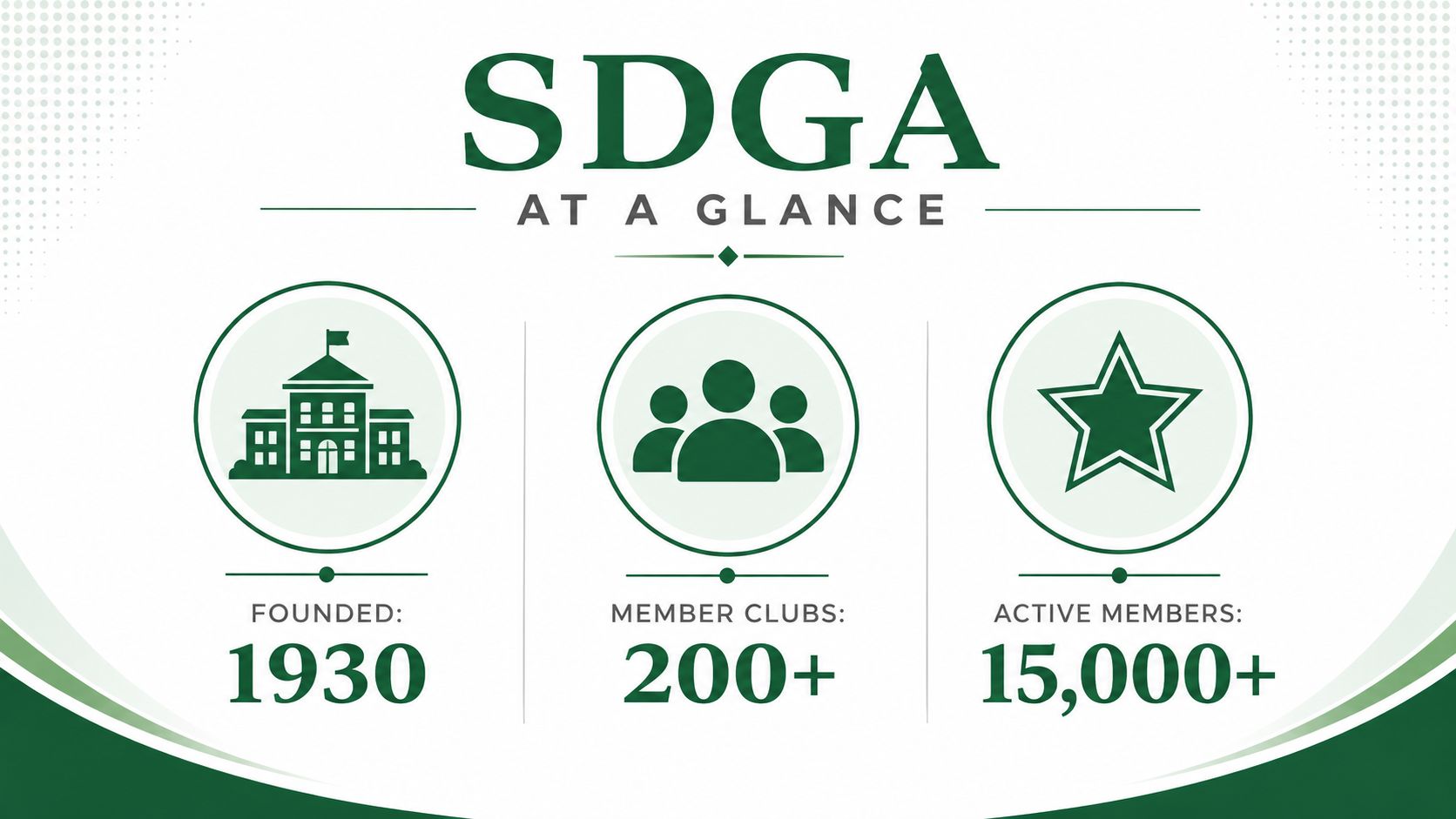
There is real scale behind that mission. The association reports more than 90 clubs and over 15,000 individual members. That kind of reach means it has to serve different golf communities, public and private, small-town and metro, adult and junior, competitive and recreational. It also has to keep those groups tied to one rules and handicap framework so a score posted in one part of the state means the same thing elsewhere.
Why governance matters to operators
For course operators, the practical point is that the SDGA is authorized to administer the World Handicap System and conduct course ratings for member clubs. That creates a direct operational link between the association and what happens at the golf shop, on scorecards, and in tournament setup. When a club is affiliated properly, it has a clearer path to standardized competition, player credibility, and event alignment.
The association also oversees USGA qualifiers in South Dakota. That is a good test of how a state body works under pressure. Qualifiers demand clear communication, consistent procedures, and enough administrative discipline that players trust the results. Course staffs notice quickly when that side of the operation is handled well, because it reduces confusion before the first tee time and after the final scorecard is signed.
The best test of a state association is whether it can support both a Saturday morning member event and a qualifier with the same level of procedural confidence.
The SDGA is based in Sioux Falls, and that central base helps explain how it keeps the statewide operation organized. Golf administration runs on details, and associations that handle them well earn long-term trust from both players and clubs.
Membership Benefits and Fee Structure
Joining a state association should be clear from the start. With the SDGA, the first question is usually what you want out of it. Some golfers want a handicap and event access. Others need club-level affiliation. Junior players and parents usually want a path into competition that feels structured and manageable.
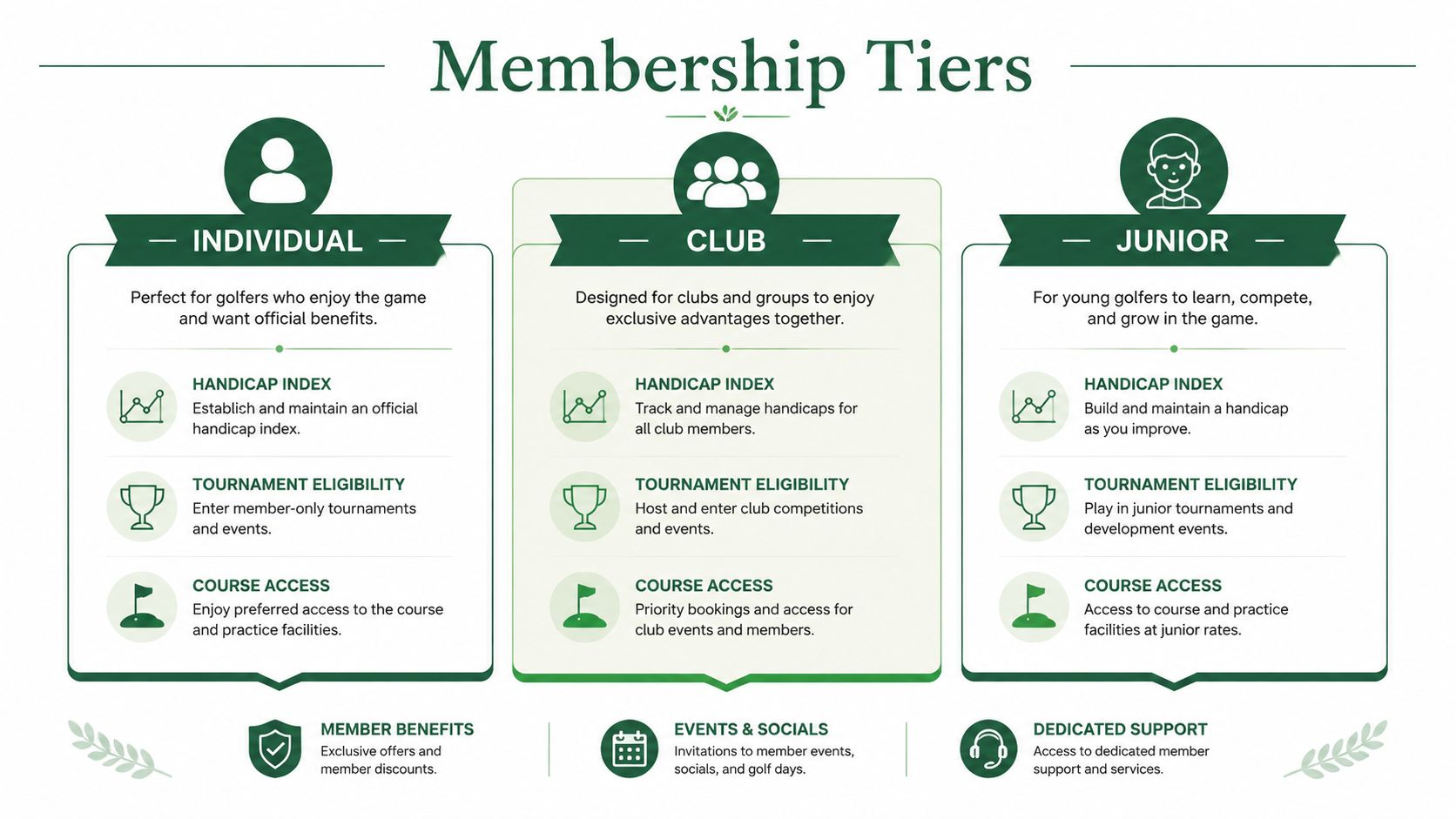
The cleanest way to approach it is by role.
Individual membership
An individual golfer usually wants two things, a recognized handicap pathway and access to association competition. If you play regularly, travel for rounds, or care about staying in the same scoring ecosystem as other South Dakota golfers, individual membership is the practical choice. It also fits players who want a direct relationship with the association instead of working through a club layer.
The trade-off is simple. You are buying access and structure, not just a label. For players who post scores often and want those scores to sit in the same system as other competitors, that consistency matters.
Club membership
Club affiliation makes sense when a facility wants to participate more fully in the state golf structure. That includes tournament hosting, ratings, and a more formal connection to the handicap system. For operators, the administrative work starts to matter here. A club connected to the association can support player development and event consistency better than a club that treats tournaments as one-off promotions.
That matters on the ground. The staff has to manage entries, communicate formats, and keep results clean enough that players trust them. A club that handles those details well makes sanctioned events easier to run and easier for golfers to take seriously.
Junior membership
Junior golfers need a setup that is development-oriented, not just competitive. The SDGA Junior Tour gives that structure, and junior membership supports the pathway into sanctioned play. For families, the value is clarity. For programs, the value is consistency.
It also gives coaches and parents a common framework. When the competition path is straightforward, juniors can focus on learning how to compete, post scores properly, and handle event routines without extra confusion.
If a golfer cannot tell what membership gives them in the first five minutes, the membership structure is too complicated.
Fee details must be straightforward and transparent, and the SDGA's current membership information is the place to check before choosing a category. The right option depends on whether you are a player, a club, or a family building toward junior competition. The decision is not just cost, it is whether you need handicap services, eligibility, and the competition path that fits your role.
Tournament Calendar and How Results Work
The SDGA's tournament side is where a lot of golfers start to see the association as more than administration. Its calendar is built around repeatable competitive structure rather than isolated showcase events. For players, that creates a season they can plan around. For clubs, it creates a dependable framework for hosting association-sanctioned events without guessing at the process.
A championship calendar can take a few different forms in practice. Some events are straightforward stroke play, where scoring and pacing need to stay tight from the first tee time to the final card. Others require more format awareness, especially when junior fields, qualifiers, or flights are involved. The point is not only to crown a winner, it is to keep the event moving cleanly from registration through final posting.
What players should expect
Players usually benefit from association events because the format and eligibility rules are clearer than in a casual club outing. That reduces confusion at check-in and cuts down on the last-minute arguments that slow down a field. Results also carry more weight when the event is tied to a state body that handles handicaps, ratings, and qualifiers.
For competitive golfers, that structure can be the difference between a fun day and a legitimate result. If the scoring process is loose, the standings lose credibility. If the tournament is run well, the leaderboard becomes something players trust.
What host facilities should expect
Host clubs need to plan for communication, pace, scoring flow, and the rules questions that come up when a field is serious about results. Association-sanctioned events usually work best when the site has a clear tee sheet, disciplined marshaling, and a scoring process that does not depend on one person manually fixing every issue. That is where tournament software and staff preparation become operational, not cosmetic. An effective platform streamlines roster setup, keeps pairings organized, and helps the staff move the event forward without constant course-side corrections.
The simplest comparison is this. A casual outing can survive on flexibility. An SDGA-caliber event needs repeatability, because repeatability is what protects the result.
The smoother the scoring process, the less energy your staff spends explaining the event and the more energy it spends running it.
Junior Programs and Community Development
Junior golf is where the association's long game becomes visible. The SDGA runs the SDGA Junior Tour for golfers ages 6 to 18, and the SDGA Junior Golf Foundation expands that work by awarding college scholarships, supporting Team SD in the U.S. National Development Program, and reaching 30,000 young people through First Tee, South Dakota (SDGA official site). Those are different tools serving the same goal, getting younger players into a structured golf pathway that doesn't rely on luck or private access alone.
The important insight is that junior golf development isn't just about getting more kids to the course. It's about building the habits that keep them in the game. The players who understand pace, rules, basic etiquette, and competition flow early usually adapt more easily later, whether they move toward school teams, club golf, or higher-level events. That's why association programs matter. They create an organized bridge between first exposure and serious play.
There's also a broader industry shift here. Association and public-sector materials from California show golf divisions and associations working on women-in-turf and underserved-community pipelines, while industry groups are actively discussing water conservation incentives (San Diego public-sector update). That points to the direction golf is moving in, more attention to inclusion, staffing resilience, and environmental stewardship. The SDGA-facing question becomes practical, not theoretical. What programs exist, how are they measured, and how do they support both players and course operations?
For clubs, junior development is not charity work. It's a pipeline. Junior programs create future members, future team players, and future tournament volunteers. They also give facilities a reason to build programming that reaches beyond a Saturday scorecard.
If you want a useful comparison on building youth participation, this junior golf league guide is a helpful operational reference. The strongest junior programs usually combine instruction, competition, and family-friendly scheduling, then keep the structure simple enough that new players stick with it.
Modern Tournament Tools for SDGA Events
Association-sanctioned events expose weak tournament software fast. If a system is clumsy, staff see it during registration, players feel it during live scoring, and the host club feels it when a rules issue delays posting. That makes tournament management an operating issue, not just a convenience.
For SDGA-style play, the software has to handle common golf formats cleanly, especially stroke play, match play, and multi-round events. It also has to cut down the work your staff handles at the desk. A useful platform should speed up roster setup, support live scoring without forcing players through a complicated download path, and present results in a way competitors trust. One option in that category is Live Tourney, which is built for web-based scoring, event setup, and leaderboard management across golf events.

What works in the field
The tools that hold up best reduce friction for staff and players at the same time. Players want to post scores quickly and see where they stand. Staff want fewer manual corrections, fewer paper handoffs, and fewer questions about where the leaderboard is.
That matters even more for clubs hosting association events, because a tournament cannot feel improvised once the first group tees off. A simple scoring flow, clear tee assignments, and real-time leaderboard visibility make the event feel organized without adding pressure to the pro shop. For operators looking at tournament workflow more broadly, this guide to golf tournament management software is a practical place to compare setup, scoring, and results handling.
What does not work
Legacy tournament systems tend to create extra steps. Extra steps sound small on paper, but in a tournament they show up as check-in delays, score entry confusion, and too much dependence on one administrator who knows the platform inside out. That risk falls on every club that hosts sanctioned events, and it can be avoided.
The trade-off is straightforward. Older systems may be familiar, but familiar is not the same as efficient. Modern tools help clubs host sanctioned events with less friction, which is what players notice first.
How to Join and Get Involved
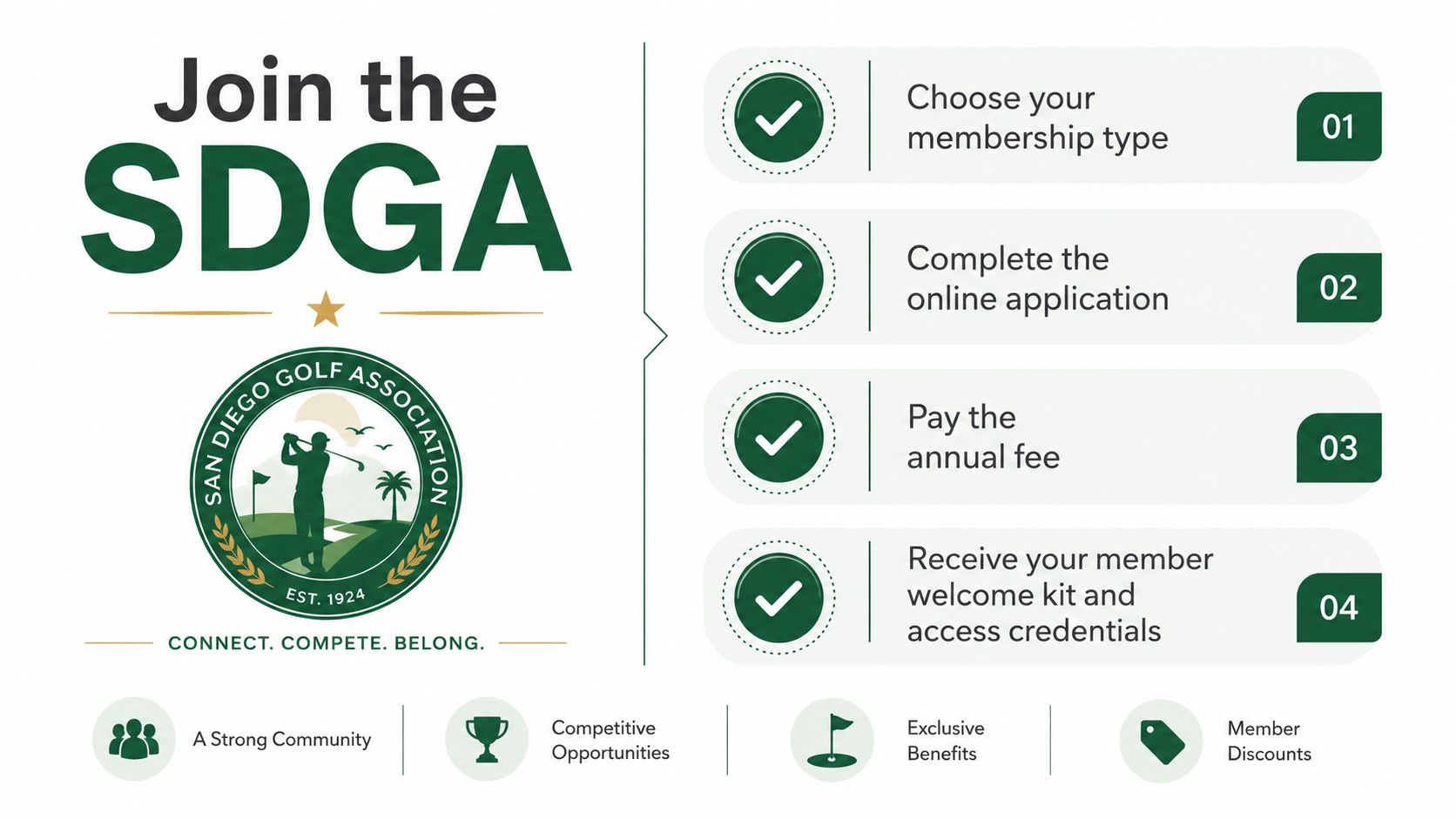
The easiest way to get involved is to start from your role. If you're a player, check the membership path that fits your goals. If you're a club operator, look at how affiliation, ratings, and tournament hosting connect to your calendar. If you're running junior programming, follow the SDGA's youth pathways and build around them instead of inventing your own structure from scratch.
Start with the right page
The SDGA's official site is the place to confirm membership, tournament, course, and handicap details, and the club directory uses the central Sioux Falls office address at 2600 W Russell Street, Sioux Falls, SD 57104 (SDGA golf courses page). If you need the association directly, that's the location to use.
For operators, keep your setup clean
Affiliated clubs should keep tournament workflows tight, because association events leave little room for improvisation. Build your scoring process before the field arrives, not after. If you're also trying to create a player-facing media plan for a championship or junior event, the practical ideas in 2026 B2B video production can help you think about what to capture and how to present it without turning the event into a production burden.
The best way to get involved is to make one decision at a time, membership, event entry, or club affiliation, then finish that step cleanly before moving to the next.
If you're ready to run SDGA-style events with less manual work and cleaner live scoring, Live Tourney gives golf staff a simple way to manage registration, scoring, and leaderboards from one web-based platform. It fits the same practical needs association events create, and it's worth a look if your club wants tournament days to run more smoothly from check-in to final results.