
Oct 23, 2025
Discover how golf tournament management software streamlines operations, boosts revenue, and creates unforgettable player experiences. Your ultimate guide.

Picture this: you're running a tournament without the usual chaos of manual data entry, frantic phone calls, and last-minute scoring corrections. That’s not a fantasy—it’s what modern golf tournament management software makes possible. It pulls everything together into one central command center, automating all the tedious work from registration to the final payouts.
From Tee Times to Trophies Without the Headaches
Think of this software as your digital co-pilot for any golf event. It handles the logistical heavy lifting so you and your team can focus on what matters most: giving your players a top-notch experience.
Instead of juggling spreadsheets, paper forms, and a messy web of email chains, this tech centralizes everything into a single, seamless platform. It’s like the difference between navigating with an old paper map versus using a real-time GPS. One is stressful and full of potential wrong turns; the other gives you a clear, efficient path straight to your destination.
This shift isn't just a passing trend; it's quickly becoming the standard for how successful golf events are run. The demand for these tools is growing fast, signaling a major change in the industry.
The Power of a Central Hub
At its core, this kind of software gets rid of information silos. Every detail, from player handicaps to sponsorship info, lives in one easy-to-access place. This simple change creates a ripple effect of benefits that you'll feel immediately.
Effortless Registration: Players can sign up and pay online, which automatically builds your rosters and cuts out all the manual data entry for your staff.
Simplified Communication: Need to send an update about tee times, a weather delay, or a change in the schedule? You can message all your participants with just a few clicks.
Automated Pairings: Those complex pairings that used to take hours of work can now be generated in minutes, even with special requests and last-minute player changes.
Elevating the Player Experience
Beyond just making your life easier, this technology directly improves the tournament atmosphere for your players. For example, live, app-free scoring brings a professional, tour-level feel to any event, whether it's a charity scramble or a competitive league day.
This move toward digital event management is backed by some serious numbers. The golf tournament software market, currently valued at around USD 1.2 billion, is projected to more than double to USD 2.4 billion by 2033. You can explore more data on these market trends and their drivers.
A real-time leaderboard is a perfect example of how technology can make the day more engaging and fun for everyone.
As you can see, a clean, simple interface that players can use right from their phones makes entering scores quick and easy. When you bring player information, pairings, and live scoring into one place, you turn a logistical headache into a smooth, professional, and more profitable event.
The Essential Features of Top-Tier Tournament Software
Not all golf tournament software is created equal. While a lot of platforms can check the basic boxes, the really powerful ones fundamentally change how you run your events. Think of it less like a digital scorecard and more like a complete command center for your entire tournament.
The best systems are built around one core idea: making your life easier through smart automation and keeping everything in one place. They handle the repetitive, time-consuming grunt work so you and your staff can focus on what really matters—giving every player an unforgettable experience.
So, let's break down the must-have features that separate the good from the truly great.
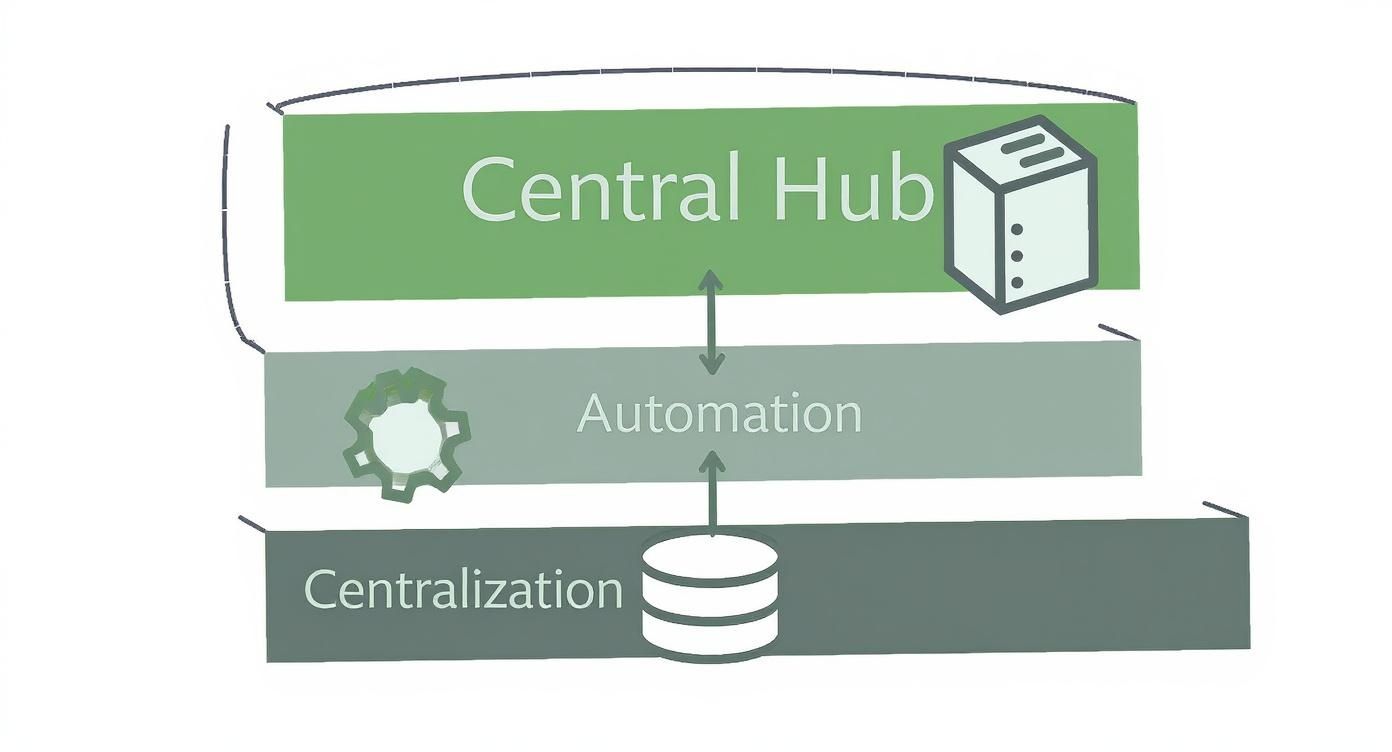
As you can see, every piece of the puzzle, from registration to the final leaderboard, should connect back to a single, unified system. This is what eliminates the chaos and makes everything run smoothly.
Seamless Online Registration and Payments
Registration is the first impression a player has of your event. If it’s a clunky, paper-based mess, you’re starting things off on the wrong foot and creating a mountain of work for your team. Modern software turns this into a simple, self-service experience.
Players should be able to sign up, pick their partners, and pay their entry fees in minutes, right from their phone. This isn’t just a nice-to-have; it’s a massive time-saver. For you, it means no more manual data entry, no more chasing down checks, and absolutely no more trying to read messy handwriting.
This approach also shores up your cash flow. With integrated payment processing, the money is in your account upfront, getting rid of the headache of collecting payments on the day of the event. Many platforms even incorporate slick features like QR code event registration to make check-in a breeze.
Automated Pairings and Tee Sheet Management
Let’s be honest: building pairings and tee sheets is one of the most stressful parts of tournament prep. It's a complex puzzle of balancing handicaps, player requests, and cart assignments. A solid software solution takes this entire workflow off your plate.
With just a few clicks, you should be able to generate balanced pairings for any format, whether it's a simple shotgun start or a complex multi-day championship. The best systems have drag-and-drop interfaces that make last-minute changes painless. A player drops out? Just drag their name off the list, and the software instantly updates the tee sheets and cart signs. No sweat.
A powerful pairing engine does more than save time; it ensures fairness and a smooth pace of play. By automating this task, staff can save countless hours that were previously lost to manual adjustments and complex spreadsheets.
Tour-Level Live Scoring and Leaderboards
Live scoring is the one feature that instantly elevates the player experience. It brings the buzz and excitement of a professional tour to your local club event. The key here is making it easy—the best platforms offer a simple web link that works on any smartphone, no app download required.
This creates a dynamic, competitive vibe that lasts all day. Players can check out the live leaderboards, see how their buddies are doing, and keep an eye on side games like skins or closest-to-the-pin. For you, the benefits are huge:
Faster Results: Final scores are tallied automatically. Your awards ceremony can kick off the moment the last putt drops.
More Engagement: When players can follow the action live, they’re way more invested. This leads to happier golfers and more memorable events.
Real Sponsorship Value: Digital leaderboards are prime real estate for sponsors, opening up new and valuable revenue streams.
These core features are just the beginning, but they form the foundation of any great tournament software. To see how these tools come together to solve common event headaches, check out the full list of Live Tourney features. The right software shouldn't feel like just another tool—it should feel like the most valuable member of your team.
Calculating the ROI of Your Software Investment
Bringing new tech to your course isn't just about having the latest gadgets—it's a financial move that needs to pay for itself. Golf tournament management software is no different. The return on your investment goes way beyond the price tag, touching everything from how efficiently your staff works to the experience your players have.
To really get it, you have to look at the value from three different angles: the time you get back, the experience you create, and the new money you bring in. Each one builds on the other to create a healthier, more profitable tournament operation.
It’s a strategic shift that’s catching on. The global market for this kind of software is projected to hit around USD 776.6 million by 2033, growing at a steady clip of 9.3% a year. That trend is being pushed by courses that are figuring out the real-world financial upside of automation and better player engagement. You can find more on this growing market and its key drivers here.
The First Pillar: Operational Efficiency
The quickest and most obvious return is getting your staff's time back. Just think about all the hours your team sinks into manual, repetitive tasks for every single tournament. Those hours add up, and they represent a huge hidden cost.
Registration and Payments: Forget the hours spent typing in data from paper forms, chasing down checks, and making follow-up calls. Automation just handles it.
Pairings and Tee Sheets: What used to take a head pro hours of juggling can now be done in minutes, even with last-minute dropouts or additions.
Scoring and Payouts: Tallying scores by hand is slow and full of potential mistakes. With instant, automated scoring, the results are ready the second the last putt drops.
This newfound time lets your skilled people focus on things that actually make a difference—like talking to players, locking in sponsors, and making the event better—instead of getting bogged down in busywork.
By automating routine tournament tasks, a golf facility can realistically save between 10 to 20 staff hours per event. For a club running 30 events a year, this can equate to freeing up hundreds of hours of valuable staff time.
The Second Pillar: Enhanced Player Experience
A great player experience is your best marketing tool. It drives repeat business and gets people talking. When golfers have a good time, they come back, they bring friends, and they’re more likely to spend money on-site. This is where player satisfaction directly turns into revenue.
Modern software helps create that professional, "tour-like" vibe. Features like live mobile scoring and real-time leaderboards inject a ton of energy and friendly competition into the day. Plus, clear, automated communication keeps everyone in the loop, cutting down on confusion and frustration. That professional polish builds loyalty and makes your events stand out.
The Third Pillar: New Revenue Growth
Finally, good tournament software opens up new ways to make money that are just plain difficult to manage manually. The digital backbone it provides becomes a powerful sales and marketing tool for every event you run.
You can unlock new income streams through:
Digital Sponsorship Packages: Sell high-value ad space on the event website, registration pages, and live leaderboards.
Online Upsells: Easily tack on mulligans, merchandise, or lunch specials during registration, bumping up the average spend per player before they even arrive.
Increased Participation: A simple, clean online registration process gets more people to sign up. You’ll fill your fields faster and maximize your entry fees.
When you put these three pillars together, the financial argument is a slam dunk. The software pays for itself not just by cutting labor costs, but by helping you create a better product that attracts more players and opens up modern revenue channels. To see how these returns stack up, you can explore various golf tournament software pricing models and find a plan that makes sense for your course.
A Practical Checklist for Choosing the Right Platform
Choosing the right golf tournament management software can feel like a chore. There are dozens of options out there, and they all promise to make your life easier. So how do you cut through the noise and find the one that actually delivers?
The secret is to stop focusing on flashy sales pitches and start thinking about what your course, your staff, and your players really need.
It's a lot like picking out a new set of clubs. You wouldn't just grab the most expensive driver off the rack. You’d find one that fits your swing, feels right, and gives you confidence. Your software choice deserves that same level of care to make sure it’s a perfect fit for how you operate.
This checklist will help guide you through that process. Think through each point, and you'll be able to find a platform that becomes a real asset, not just another monthly bill.
Start with Your Core Needs
Before you even glance at a feature list, get a clear picture of the problems you're trying to solve. Every club is different. A small course running a weekly men's league has totally different needs than a big resort hosting major corporate outings.
Kick things off by asking a few simple questions:
Event Volume and Size: How many tournaments are you running a year? And how many players are we talking about?
Format Complexity: Are you mostly running simple scrambles, or do you need to handle complicated formats like multi-day match play or Ryder Cup-style events?
Staff Tech Savviness: How comfortable is your team with new software? An intuitive system is key if you want everyone to actually use it.
Budgetary Constraints: What’s a realistic budget? Don't forget to account for potential setup fees or other long-term costs.
Answering these questions first acts as a filter. It immediately weeds out the bad fits and saves you from wasting time on demos for software that was never going to work anyway.
Evaluate Key Functional Criteria
Once you know what you need, you can start digging into the software itself. This is where you compare features, but always tie them back to a real-world benefit for your course.
The goal isn't to find the software with the most features, but the one with the right features. An overly complicated system can be just as frustrating as a manual spreadsheet if your staff can't figure it out.
Here’s what to look for:
Intuitive User Interface (UI): Could a new staff member figure out the basics in under 30 minutes? The platform should be clean and make sense, not feel cluttered and confusing.
Seamless Mobile Experience: Check it out from a player’s point of view. Is the live scoring simple and app-free? A clunky mobile setup is a surefire way to kill player engagement.
Robust Format Support: Make sure it can handle your go-to tournament formats without needing some awkward workaround.
Integration Capabilities: Does it play nice with the systems you already use? Look for connections with GHIN for handicaps or your point-of-sale (POS) system.
Don't Skip the Due Diligence
The final step is all about making sure the software actually does what the website claims. You need to verify the promises and confirm the company behind it is a solid partner.
First, always request a live demo. A pre-recorded video can easily hide the clunky parts. A live walkthrough lets you ask specific questions and see the software handle real scenarios. Second, ask for references from courses that are similar to yours. Nothing beats hearing about another pro's actual experience.
Finally, get crystal clear on the total cost. Ask directly about hidden fees for setup, training, payment processing, or "premium" support. A transparent price means no nasty surprises down the road. For more help getting ready, our ultimate golf tournament checklist covers all the moving parts for a successful event.
Taming the Tournament Beast with Live Tourney
If you've ever organized a golf tournament, you know the feeling. It’s that jolt of panic when a team bails at the last minute, the chaos of deciphering a smudged scorecard, or the flurry of calls to announce a simple schedule change. These headaches are so universal they almost feel like part of the job description.
But they don't have to be.
This is where purpose-built golf tournament management software comes in. A modern tool like Live Tourney is designed to be the antidote to these frustrations, turning stressful, time-sucking tasks into simple, automated steps. It’s built to solve the real-world problems that can derail an otherwise great event.
The whole idea is to swap out manual workarounds and frantic problem-solving for calm, controlled digital processes. It's a shift that not only saves your sanity but also delivers a far more professional, polished experience for every player and sponsor.
From Manual Mayhem to Automated Ease
Let’s walk through a couple of classic tournament headaches and see how the right tech provides an instant fix. These are the moments where a dedicated platform proves its worth tenfold.
Problem: A team drops out the night before the event. In the old days, this meant digging out the eraser, redrawing pairings, reprinting tee sheets, and scrambling to update cart signs. It was a domino effect of pure chaos.
Solution with Live Tourney: With a simple drag-and-drop interface, you can remove the team and re-balance the pairings in seconds. Every change instantly syncs to the digital tee sheets and live leaderboards. No manual rework, no confusion.
Problem: A scorecard is turned in with handwriting that looks more like a doctor's prescription. This grinds the awards ceremony to a halt while you hunt down the players to confirm their scores.
Solution with Live Tourney: Players enter their scores hole-by-hole right on their phones using app-free live scoring. The system does all the math automatically and accurately, so the final results are ready the moment the last putt drops.
This is the kind of control Live Tourney gives organizers—a single, clean dashboard to manage everything.
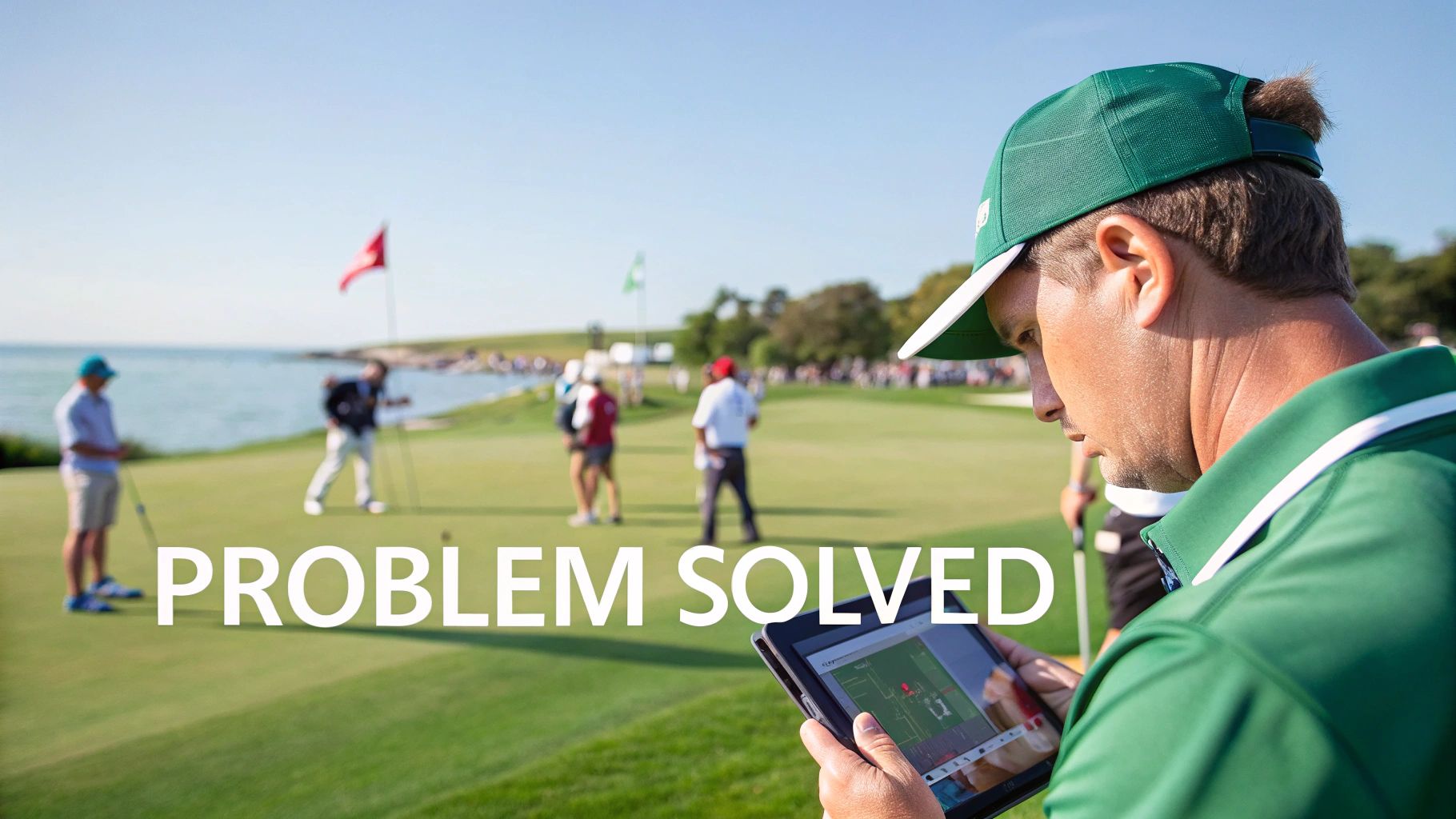
This centralized hub replaces messy spreadsheets with organized, accessible event data, putting everything you need right at your fingertips.
Handling Tricky Formats and On-Course Flow
Today’s tournaments are often more than just basic stroke play. Organizers are juggling complex Scramble or Best Ball formats, verifying handicap accuracy, and trying to create a smooth experience on the course. To really nail on-course logistics and tackle things like pace of play, tools like golf cart GPS tracking can work hand-in-hand with your management software.
The right software doesn’t just record scores; it actively manages the competitive integrity and flow of the event. It handles complex handicap calculations, flights players automatically, and manages side games like skins without any manual input from your team.
That level of automation is huge for maintaining a fair and fun vibe. It eliminates the risk of human error when calculating payouts and ensures even the most complicated formats run smoothly from the first drive to the final trophy.
And then there's sponsor management—another massive headache. Too often, organizers struggle to show sponsors real value beyond a lonely sign on a tee box.
Live Tourney changes the game by creating high-value digital real estate. Sponsors can be featured on the registration page, the live leaderboards, and in event communications, giving them measurable exposure to a captive audience. This turns a simple sponsorship into a real marketing opportunity, making it much easier to attract and keep financial support for your events year after year.
Getting Your Team On Board with New Software
Buying powerful golf tournament software is a great first step, but the real win comes from a smooth rollout. The tech is just a tool; its true value is unlocked when your staff and members actually use it and love it. That requires a smart plan that’s as much about people as it is about the platform.
Think of it like teaching a new pre-shot routine. You can't just hand someone a checklist and expect a better swing. You have to walk them through it, let them practice, and show them how it connects to better results on the course. Getting your team comfortable with new software works the same way—it’s all about guiding them from old habits to new, more efficient ones.
And let's be clear, this is the direction the entire industry is heading. The global golf software market is already worth around USD 468 million and growing fast. Why? Because clubs are realizing they need digital tools to run their operations and meet the modern golfer's expectations for mobile and online access. You can dig into more of the numbers and trends driving this market growth here.
Find Your Internal Champion
First things first: pick one person on your team to be the software "champion." This is your go-to expert who will lead the charge, learn the system inside and out, and act as the bridge between the software company and the rest of your staff.
Your champion doesn’t need to be a tech genius. They just need to be organized, enthusiastic, and ready to become the in-house pro. Their main job is to keep the momentum going and make sure everyone feels supported during the switch.
Appointing a dedicated champion gives you a single point of contact and an internal resource for the whole team. It’s a simple move that makes a huge difference in getting everyone on board and avoiding that all-too-common "but we've always done it this way" roadblock.
Roll Out Training in Phases
Don't overwhelm your staff by trying to teach them everything all at once. A phased training plan is way more effective and a lot less intimidating. Break it down into simple, role-based chunks.
The Core Setup: Your champion and head pro should tackle this first. They’ll learn how to configure the system, create basic event templates, and manage the essential settings.
Tournament Operations: Next up is the pro shop staff and event coordinators. Train them on the day-to-day stuff like handling registrations, building pairings, and printing cart signs and scorecards.
The Player Experience: Finally, show the whole team the player-facing features like live scoring. This way, they can confidently answer questions from members and guests when it’s tournament day.
A structured plan like this makes sure everyone learns what’s most relevant to their job, so the software feels like a helping hand, not another headache. When you invest a little time in a thoughtful rollout, you guarantee your club gets the full value of its new software right from day one.
Frequently Asked Questions
Jumping into the world of golf tournament management software can definitely bring up a few questions. Whether you're thinking about switching platforms or just want to get more out of the one you have, getting straight answers is the first step.
We've gathered some of the most common questions we hear from course operators and event organizers to help you cut through the noise.
How Much Does This Software Typically Cost?
There's no single price tag, as the cost can swing pretty widely. It really depends on what you need—how many features you'll use, the number of events you run, and how many players you expect.
Most companies use one of these models:
Per-Event Fees: You pay a flat rate for each tournament. Simple and predictable.
Subscription Plans: A recurring monthly or annual fee for unlimited access. Great for busy clubs.
Per-Player Charges: A small fee for each person who registers for an event.
You can find basic plans that are super affordable (or even free), but they’ll have their limits. For a busy club running complex events, you might see costs ranging from a few hundred to a couple of thousand dollars a year. The key is to ask about the total cost—don’t forget to check for hidden fees for things like payment processing or setup.
Can This Software Handle Complex Tournament Formats?
Absolutely. In fact, this is where modern software really shines. The best platforms are built to handle way more than just simple stroke play. They automate the messy stuff that would be a complete headache to figure out with a spreadsheet.
A solid system should have no problem with formats like:
Scrambles (and all their variations, like Brambles or Step-Asides)
Best Ball for teams of two, three, or four
Stableford and other points-based games
Ryder Cup-style team competitions
Events that span multiple days or rounds
The best platforms go even further, automatically flighting players by handicap and managing all the popular side games—skins, closest-to-the-pin, you name it. Before you decide, just make a quick list of your go-to formats and double-check that the software can run them without any clunky workarounds.
Is The Software Difficult For Staff and Players To Use?
It shouldn't be. The whole point of this software is to make life easier, not add another frustrating tool to the mix. Top platforms are designed to be intuitive, even for people who aren't super tech-savvy.
For your staff, that means a clean dashboard where setting up an event, managing sign-ups, and pulling reports feels natural. For your players, the experience has to be even simpler. The best systems use a clean, mobile-friendly interface for registration and live scoring that works with a simple link—no app download required. That one detail removes a huge barrier for players.
Of course, "easy to use" is subjective. Always ask for a live demo to click around for yourself and see if it feels like a good fit for your team.
Ready to see how simple and powerful tournament management can be? Live Tourney replaces frustrating, clunky software with a modern, intuitive platform that saves you time and elevates every event. Start your free 10-day trial and run your first tournament in minutes.





