Apr 6, 2026
Discover how to create, manage, and grow successful golf league programs. This guide covers formats, software, and player engagement strategies for 2026.

Golf leagues are the lifeblood of any healthy golf facility. They’re what keep players coming back week after week, building a community around friendly competition. A good league turns a casual round into something more—a season-long battle for bragging rights, prizes, and a spot at the top of the leaderboard.
Why Modern Golf League Programs Are Essential
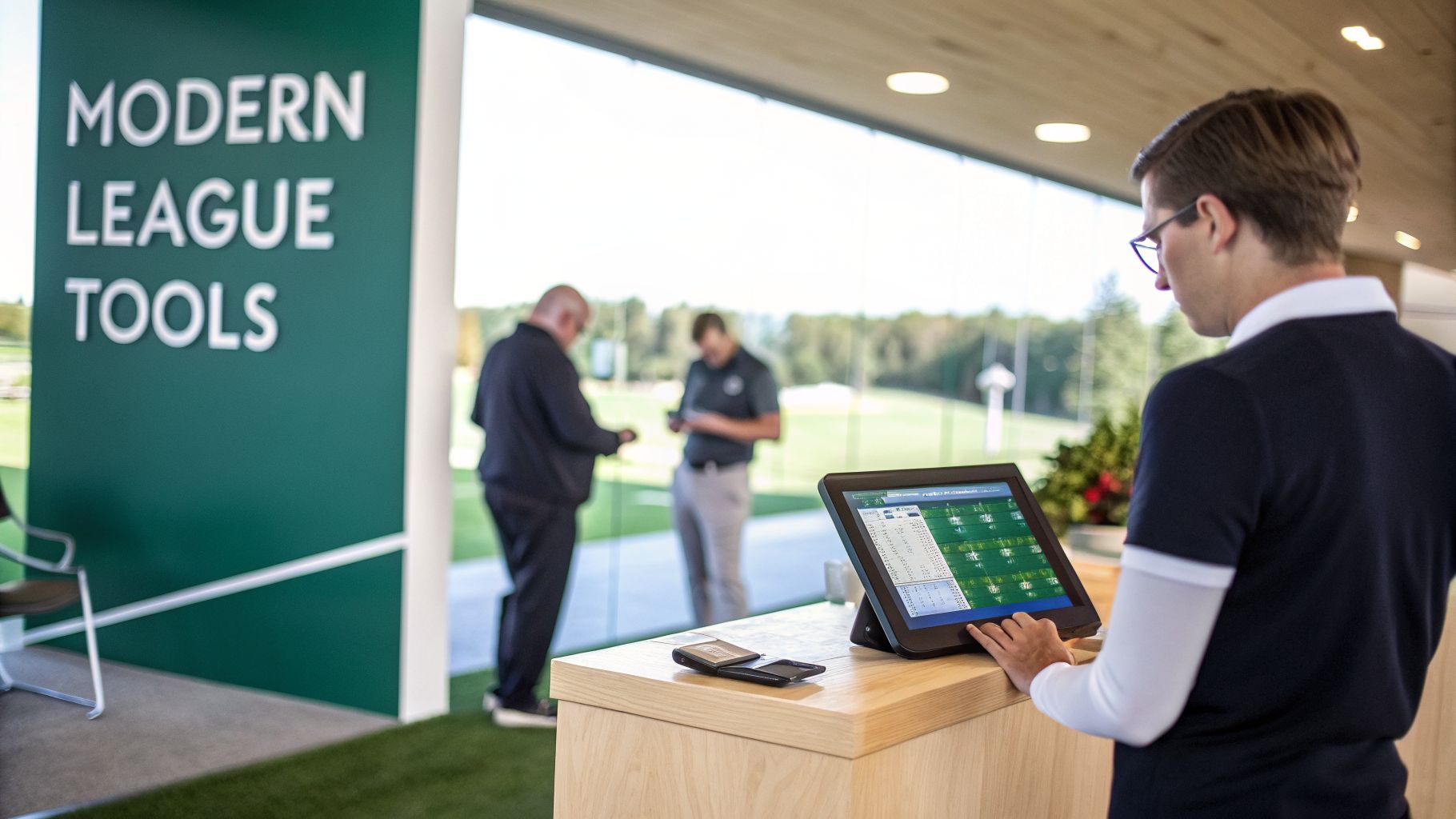
Let's be honest, the days of running a golf league from a three-ring binder and a stack of spreadsheets are over. Golf’s recent boom has been great for business, but it's also created a massive headache for operators. The administrative work has piled up, and today's golfers simply expect a more polished, tech-forward experience.
Switching to modern tools for your golf league programs isn’t just a nice-to-have anymore; it's a must for keeping up. What used to take hours of tedious, manual work can now be done in minutes.
The Problem With Old-School Methods
Clinging to outdated methods just creates friction for everyone. Think about the all-too-common pain points: manually crunching handicaps for every single player, chasing down league fees, and spending half your day trying to piece together pairings. It's a formula for burnout and a clunky experience for your players.
When golfers have to call the pro shop for every minor question or wait days for the results to get posted, you lose momentum. That administrative drag doesn't just eat up your staff's time; it makes your league feel disorganized and amateur. Before you know it, your players are looking at other courses that run a tighter ship.
The real issue with manual league management is that it forces you to focus on paperwork, not people. Every minute spent fighting with a spreadsheet is a minute you could have spent making the event more fun for your golfers.
Modernizing your league flips that script. It turns those operational headaches into opportunities to really shine.
How Technology Redefines League Management
Today’s web-based tools are built to automate the most frustrating parts of running a league. We're not talking about clunky, expensive software that takes a week to learn. This is about intuitive, simple platforms that work on any phone or computer.
Just think about the difference this makes:
Registration and Payments: Players can sign up and pay their dues through a simple online portal. No more chasing checks or deciphering messy sign-up sheets. You secure revenue upfront and get a perfect headcount instantly.
Scoring and Leaderboards: Live, app-free scoring lets players punch in their scores right on their phones. The leaderboard updates in real-time, creating a pro-tour vibe that fuels competition on the course and buzz in the clubhouse.
Communication: Automated emails and texts do the heavy lifting. Tee times, weekly results, and rules sheets go out to everyone automatically—no more managing messy email lists by hand.
This isn't just about saving time. It’s about elevating the entire feel of your league. A well-run, tech-savvy league feels more professional and more legitimate. Players are more engaged, the competition is more exciting, and the post-round hangout is electric when everyone can gather around a live TV leaderboard.
Ultimately, you create a better, more profitable experience that gets players excited to come back week after week, and season after season.
Designing a League Players Love

The core of a great golf league isn't just about showing up—it's about creating an experience that keeps players excited to compete week after week. If you're just running basic stroke play every time, you're missing a huge opportunity. A smart mix of formats, straightforward rules, and a well-built schedule is what turns a good league into a can't-miss event.
The best league programs are built for their specific audience. Are your players mostly scratch golfers battling for bragging rights, or is it a social crew just looking for a fun evening? Answering that question first will shape every other decision you make.
Choosing the Right League Format
One of the biggest mistakes I see is running the same format all season long. That's the fastest way to kill engagement. The key is variety—shaking things up with a mix of individual, two-person, and even larger team games.
For a casual, after-work league, a 2-Person Scramble is perfect. It’s low-pressure, fast, and lets golfers of all abilities contribute. For a more competitive group, a season-long Stableford competition rewards consistency and a bit of risk-taking.
The goal is to design a league where every player, regardless of their handicap, feels they have a chance to win any given week. A smart rotation of formats is the easiest way to achieve this and prevent the same low-handicap players from dominating.
Don't be afraid to get creative. Throw in a Ryder Cup-style event, a Best Ball tournament, or a simple Shamble to inject some energy into the middle of the season. These formats are fantastic for building camaraderie and giving players a taste of different competitive pressures.
To help you decide, here’s a quick breakdown of popular formats and where they fit best.
Choosing the Right Golf League Format
This table compares some of the most popular league formats to help you match them to your players' expectations and skill levels.
Format | Best For | Pros | Cons |
|---|---|---|---|
2-Person Scramble | Social & Corporate Leagues | Fast-paced, low pressure, great for all skill levels. | Doesn't accurately reflect individual player skill. |
Best Ball (Fourball) | Competitive & Social Leagues | Blends team strategy with individual play. | Can be slow if players aren't ready to play. |
Stableford | Individual Competitive Leagues | Rewards risk-taking, avoids "blow-up" holes. | Can be complex for newcomers to understand. |
Stroke Play | Highly Competitive Leagues | Purest form of golf; identifies the best player. | Can be discouraging for high-handicap players. |
Ultimately, the best approach is to mix and match. A little bit of team play combined with individual challenges keeps things fresh for everyone.
Building a Balanced Schedule and Clear Rules
Once you’ve picked your formats, lay them out on a calendar. A great schedule does more than list dates; it tells a story. You can build anticipation by scheduling fun formats around holidays or tying bigger events into your club's championship season.
Logistics matter, too. For a large league, a round-robin schedule can ensure everyone plays with different people throughout the season, which is great for networking. If you need help with that, check out our guide on how to create a round robin schedule for your league.
Before the first ball is hit, publish a clear set of rules. This one document can prevent a season's worth of arguments. Make sure it covers:
Pace of play policies and consequences for falling behind.
How substitutes are handled and if they're eligible for prizes.
Tie-breaker rules for both weekly and season-long competitions.
Your plan for bad weather and cancellations.
This isn’t about being rigid; it’s about being fair. The USGA was formed back in 1894 to standardize rules for this very reason, and the principle holds true for any organized competition today.
Creating Season-Long Excitement
Weekly prizes are nice, but a season-long points race is what keeps players truly hooked. This kind of structure rewards both consistency and participation, not just one lucky round. A great way to do this is by implementing a points-based loyalty program that keeps people coming back.
It can be simple. For example, award points to the top 10 finishers each week, and give a few bonus points to everyone who plays. This gives players who aren't in the hunt for the weekly win a reason to show up and grind for position in the overall standings.
Suddenly, a series of individual events becomes a compelling story that unfolds over the entire season.
Taming the Admin Beast

Imagine a league where registration is a breeze, all the money is collected on time without a single chase-down call, and tee sheets practically build themselves. This isn't some far-off dream. It's what happens when courses finally ditch the endless manual work that bogs them down.
Good administration is the invisible engine that drives successful golf league programs. When you swap out spreadsheets and paper forms for a central, web-based system, you stop drowning in busywork. Suddenly, you have time to focus on what actually matters: creating a killer experience for your players.
Nail Down Registration and Payments
Let's be honest, that paper sign-up sheet at the pro shop counter is a recipe for chaos. Moving registration online turns a messy process into a clean, simple one. Players can sign up from home, on their lunch break, or anywhere with an internet connection. It’s easier for them, and a whole lot easier for you.
Think about a junior golf league, for instance. You can set up a custom registration page with the schedule, rules, and what's included. Parents can sign up their kids and securely pay the $395 fee right then and there. Your roster is instantly populated, you have accurate contact info, and—most importantly—all the money is in.
By getting this first step right, you kick off the season with a complete, paid-up roster. No more headaches.
One of the biggest pains for any league manager is chasing down payments. A system that ties registration directly to payment solves this from day one. It makes your league look more professional and saves you from hounding players for dues halfway through the season.
Get Your Roster and Tee Sheets in Order
Once everyone is registered, managing the roster is no longer a chore. With a centralized database, you can stop digging through different files for player info. A few clicks get you handicaps, contact details, and history.
This clean roster is the secret to building pairings and tee sheets without losing your mind. Instead of spending hours piecing together foursomes by hand, a good system can generate balanced pairings in minutes. You can even set rules to avoid repeat matchups or ensure players are grouped with new people each week—all handled for you.
Building the tee sheet itself becomes a simple drag-and-drop affair. Just look at the difference:
Speed: Create a full tee sheet for a 100-player league in under five minutes.
Flexibility: Easily adjust tee times, swap players, and handle last-minute cancellations without starting over.
Integration: Tee sheets can automatically pull player handicaps right into the scorecard.
This is a complete game-changer. It gives you back hours of your day. To dive deeper into the tools that make this possible, check out our guide on golf league management software.
Keep Your Players in the Loop (The Easy Way)
Clear, consistent communication is the glue that holds a league together. Players need to know their tee times, see the weekly results, and get updates on any changes. Relying on manual email lists or clunky group texts is just asking for trouble.
A modern platform builds communication tools right into your player roster, letting you send targeted, professional-looking emails without the hassle.
For example, you can create a template for weekly results that automatically pulls in the leaderboard and prize winners. Schedule it to go out every Tuesday night, and everyone stays informed without you lifting a finger. You can also send automated tee time reminders 24 hours before each event, which drastically cuts down on no-shows and late arrivals.
This kind of consistent contact keeps players engaged and feeling like they're part of something well-run. That’s a huge factor in making sure they come back year after year.
Creating a Tour-Level Player Experience
Once your admin work is dialed in, it's time for the fun part: creating that "wow" factor that gets players talking. A truly great golf league feels less like a casual weekly game and more like a professional event. The secret is injecting the thrill of a tour stop into your league, turning a standard round into something players can't wait to be a part of.
It all boils down to live scoring. When players can punch in scores on their phones and see a real-time leaderboard, the whole vibe changes. It's no longer just four people playing a quiet round—it’s an active, engaging competition where every single shot matters.
The Power of App-Free Live Scoring
In the past, the biggest headache with live scoring was the tech. Forcing every player in your league, especially the less tech-savvy ones, to download a clunky app is a recipe for disaster. It creates friction right when you want things to feel effortless.
Thankfully, modern web-based systems have completely solved this. Players just get a link via email or text, click it, and a simple scoring page opens in their phone's browser. No downloads, no passwords, no hassle. This is exactly why the adoption rates are so high—it just works.
When scoring is this easy, the competitive energy skyrockets. Players aren't just playing against their group; they're competing against the entire field in real time. They can see a rival making a birdie two holes ahead or watch their own name climb the leaderboard as they play the back nine.
This creates a buzz that spreads across the entire course. The drama unfolds live, making every moment more meaningful instead of waiting until everyone is back at the clubhouse. You might also find some good ideas in our breakdown of what makes the best golf scorecard for modern events.
Making the Leaderboard the Centerpiece
The live leaderboard is more than just a list of scores; it’s the heart of the entire player experience. It can completely transform the post-round atmosphere.
Project the live leaderboard onto a TV in the clubhouse or grill room. As groups finish, they won’t just drop their bags and head home. They’ll grab a drink, find a seat, and watch the final scores roll in. This one simple move builds community, keeps people around longer, and gives your food and beverage sales a nice boost.
The growth in golf has been explosive, with the National Golf Foundation recently reporting 48.1 million participants in the U.S. These players are looking for regular, structured competition, and a professional, tech-forward experience is how you capture and keep them coming back. You can explore more about the golf industry's growth and its impact on leagues.
Effortlessly Managing Side Games and Payouts
The "wow" factor also comes from running the side games without a hitch. Competitions like skins, closest-to-the-pin (CTP), and long drives are staples of any good league, but managing them can be a nightmare of collecting cash and crunching numbers by hand.
A modern platform handles all of this for you.
Skins: The system automatically tracks every score and identifies the gross and net skins winners based on your rules. No more manual cross-checking.
Closest-to-the-Pin: Just designate the CTP holes. Players can enter the winner’s name and distance right in the scoring portal themselves.
Instant Payouts: As soon as the last score is entered, the software calculates all the payouts for every single game. Instantly.
Instead of fumbling with a calculator and a pile of cash for 30 minutes, you can project the final results—including all side game winners—on the TV in seconds. It’s professional, transparent, and puts an end to arguments over who won what. This is the kind of polish that elevates a good league into one that players can't stop talking about.
Managing Your League from Start to Finish
The real work of running a great golf league doesn't stop when the last putt drops. In fact, what you do after the round is just as important for keeping players bought in for the entire season. Get this part right, and you'll turn a simple weekly event into a can't-miss experience.
This all comes down to having a solid process for finalizing the results, handling payouts, and making everything feel professional and buttoned-up. When you nail the post-round experience, players notice.
Finalizing Results and Automating Payouts
We’ve all seen it happen. The final group walks off 18, the energy is high, and everyone crowds around wondering who won. But then, the wait begins. The league manager pulls out a calculator and a messy stack of scorecards, and the buzz slowly dies.
Modern management tools completely eliminate this bottleneck. The second the last score is entered, the software should do the heavy lifting for you.
Calculates gross and net winners for the main competition.
Figures out who won the skins, both gross and net.
Finalizes the results for closest-to-the-pin, long drive, and any other side games.
Instantly generates a full prize payout report.
Instead of a 30-minute delay while you manually crunch the numbers, you can have the final, verified results on a TV screen in seconds. It’s professional, transparent, and keeps the post-round excitement going.
Building a Better Player Experience
This flow chart breaks down how all the pieces—live scoring, real-time leaderboards, and automated side games—work together to create a far more engaging journey for your players.
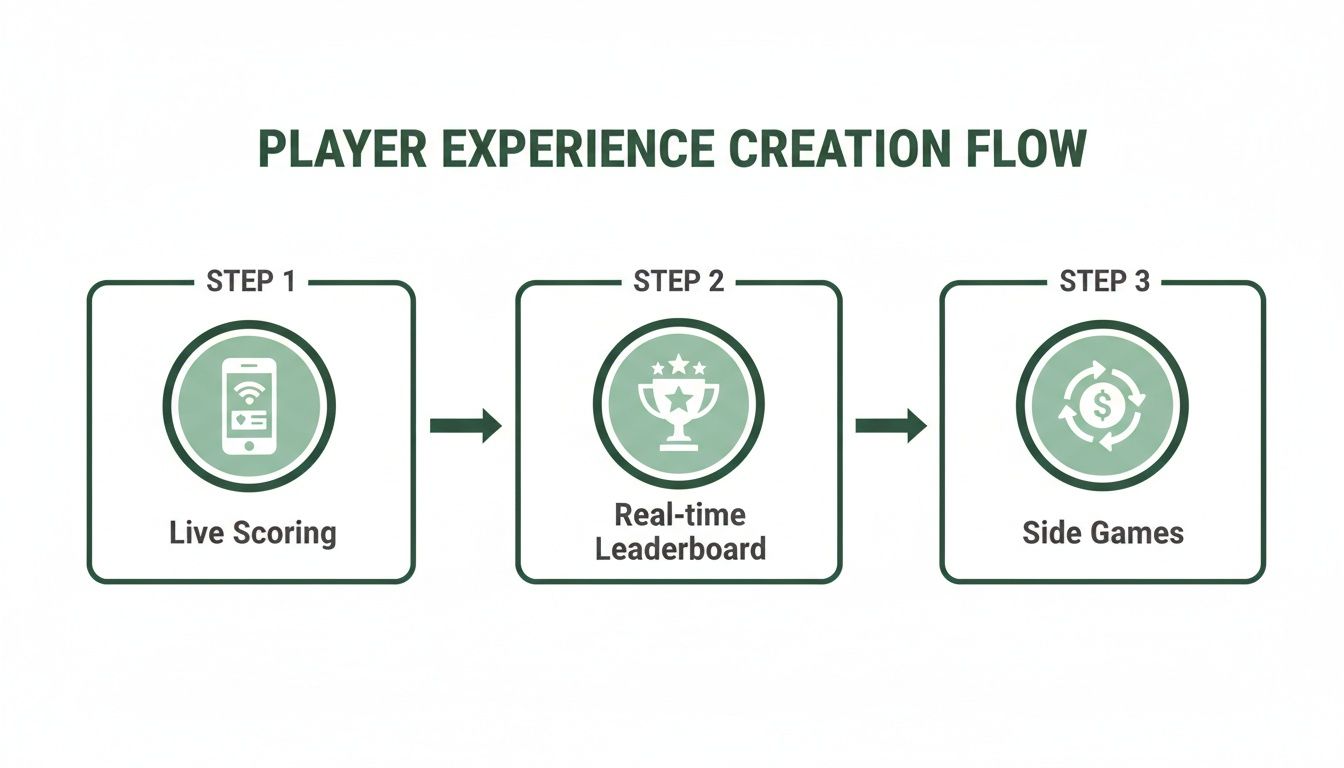
It’s all about creating a dynamic loop where the competition feels alive from the first tee to the final awards presentation.
Tracking Season-Long Points and Stats
Weekly bragging rights are great, but a season-long points race is the secret to keeping players showing up week after week. It gives everyone something to play for, even if they had a bad round and are out of the running for that day's prize money.
Your league software should handle this automatically. A common setup is awarding points to the top 10 finishers each week, maybe with a few bonus points just for participation. When the system updates the standings for you after each event, you're saved from the headache of managing another complicated spreadsheet.
A well-structured points race keeps the entire league competitive down to the final weeks. Players will grind for every point to improve their standing, making the regular season just as exciting as the playoffs.
This idea of organized, season-long play isn't new. It has roots that go all the way back to the first formal golf clubs. When the Gentlemen Golfers of Leith formed their club in 1744, they wrote down rules to standardize play and create organized competitions. This tradition eventually led to the founding of the PGA of America in 1916, professionalizing the sport in a way that continues to inspire how we run amateur leagues today.
Generating Professional Reports and Materials
It's the little things that make a league feel big-time. Being able to quickly generate custom, branded materials shows your players you’re serious about providing a premier experience. Look for a system that lets you easily create and print things like:
Custom Scorecards: Pre-filled with player names, handicaps, and tee times.
Cart Signs: With player names and the club or sponsor logo.
Bag Tags: A nice, personalized touch for league members.
Locker Signs: Great for making bigger events feel special.
Tee Sheets and Pairing Reports: To keep everyone organized on game day.
These details might seem small, but they add up. They show you care about the player experience, which makes your members proud to be a part of the league.
Your Top Golf League Questions, Answered
Even with the best plan, running a golf league always brings up a few tricky questions. No matter how many leagues you’ve managed, the same challenges tend to pop up.
We get it. We’ve seen it all. Here are the most common questions we hear from course operators and league managers, along with some practical answers to help you sidestep the usual headaches.
How Do I Handle League Handicaps Without a Revolt?
Nothing kills a league faster than squabbles over handicaps. When you have a mix of skill levels, keeping the competition fair is everything. The last thing you want are accusations of "sandbagging" or endless debates about strokes.
The fix is to get it out of your hands. The best way to do this is with a modern management platform that either syncs directly with the World Handicap System (WHS) or gives you flexible, custom handicap settings. It should pull every player's latest index automatically. Or, if you have your own league rules, you should be able to apply a custom formula—like 80% of the course handicap—with a single click. This keeps things fair, transparent, and saves you from a mountain of manual calculations.
My Leagues Are Stale. How Can I Get More Players?
Getting more players to sign up boils down to two things: make it easy and make it fun. If your sign-up process involves a paper form and a check, you're losing people before they even start.
First, give players a clean, online portal where they can register and pay in just a few clicks. Removing that initial friction is half the battle.
Second, you have to inject some energy into the event itself. Move beyond the basic stroke play and introduce formats like 2-Person Scrambles or Best Ball. But the real game-changer? Live scoring. When players can pull out their phones and see a real-time leaderboard, the competitive buzz is undeniable. Promote these features, and you'll not only attract new golfers but give your regulars a reason to get excited again.
What's the Best Way to Communicate With Everyone?
Stop the madness of chaotic group texts and messy email chains. The most professional and, frankly, sane way to communicate is through a central tool built right into your league software.
This lets you create dynamic email groups straight from your player roster.
A good communication tool is your secret weapon. You can fire off customized messages—tee time reminders, weather delays, or weekly results—in seconds. It guarantees every player gets the right info, makes your league feel incredibly well-run, and saves you a massive amount of time.
Can I Actually Run Multiple Leagues Without Losing My Mind?
Yes, but you absolutely need the right tools. Trying to juggle a Men's League, a Women's League, and a Junior Program on spreadsheets is a recipe for burnout.
Look for a scalable, web-based platform that lets you create separate, unique portals for each league, all managed under one account. This means each league can have its own branding, formats, registration, and scoring rules, but you can oversee everything from a single dashboard. It keeps your operations clean and gives you the confidence to grow your programs.
Ready to run your golf league programs more efficiently and create an unforgettable player experience? Live Tourney provides simple, web-based tools to automate everything from registration to live scoring. Start your free trial today and see how easy it can be.