Aug 8, 2026
father and son challenge, golf tournament planning, live scoring golf, golf event formats, tournament management
Plan a memorable father and son challenge golf event with proven formats, live scoring, and smooth operations. Step-by-step guidance for pros and organizers.

You're probably staring at a tee sheet, a stack of registrations, and at least three texts asking whether dads and sons can “just figure it out on the day.” That's exactly how a father and son challenge turns from a fun idea into a messy morning if the event isn't run like a real tournament.
The family format deserves more respect than it usually gets. The best events feel relaxed on the surface, but under the hood they've got clean pairings, clear rules, fast scoring, and a check-in desk that already knows who's playing with whom and when they're teeing off.
Why Father and Son Events Deserve a Professional Approach
The pro shop door opens, a grandfather is asking where to park, two fathers are holding paper confirmations, and one junior is asking whether his handicap even matters. That's the normal scramble when a family event is treated like an afterthought. The round itself may be casual, but the logistics are not.
I've seen the difference between a loosely organized family outing and one run with member-guest discipline. In the first version, check-in slows to a crawl because staff are confirming pairings one by one, scorecards don't match the field, and players spend half the back nine wondering who's leading. In the second version, the day feels calm because the work was done before anyone reached the first tee.
Why the event needs real structure
A father and son challenge has a unique mix of emotion and competition. Families want the day to feel welcoming, but they still care about the result, especially when the field includes competitive players. That's why the tournament's better known golf version, the PNC Championship, is such a useful benchmark, since it's a 36-hole team event with real prestige and strong fields, not just a ceremonial gathering (PNC Championship tournament background).
The records from the event also show what organized family competition looks like at the top end. Davis Love III and Dru Love won in 2018 with a 36-hole total of 118 (-26), and PGA TOUR Champions said that set a new tournament record. Their second-round 56 (-16) also became an 18-hole record, and the winning margin was 3 shots (PGA TOUR Champions recap).
Practical rule: If the event has prizes, pairings, and a published leaderboard, it's a tournament. Treat it that way from registration through trophy presentation.
That mindset matters because family events often attract different skill levels, different ages, and different expectations. The field can be competitive without feeling stiff. The trick is to handle the operations so cleanly that players only notice the golf, not the friction.
When the structure is right, participation gets easier to repeat year after year because families remember the day as organized, fair, and worth coming back to. When it's wrong, even a good course and a good meal won't save the experience.
Choosing the Right Format for Mixed-Skill Family Teams
The format drives everything else. If you choose the wrong one, you'll fight pace-of-play issues, uneven scoring, and frustrated players before the turn. If you choose the right one, the event feels balanced even when the skill gap between father and son is large.
Start with the player mix
A scramble usually works best when the field includes juniors, beginners, or big skill gaps between teammates. It gives the less experienced player room to contribute without putting the whole team on his shoulders. A best ball format works better when you want each player to post his own number and the field is more competitive, because it preserves individual accountability inside the team score.
Modified alternate shot sits in the middle, but it's the easiest format to overestimate. It sounds simple on paper, yet it can create stress when one player is significantly shorter off the tee or when a junior hasn't learned how to manage pressure over a full round. If a father is a scratch player and the son is 12 years old, a scramble usually protects the experience better than any format that forces alternating responsibility hole after hole.
A different situation calls for a different choice. If a college player is paired with his weekend-warrior dad, a best ball or a relaxed scramble can both work. The question is whether the event is trying to crown the strongest team or create a family day where everyone stays involved.
Practical rule: Choose the format that protects the least experienced player without making the better player feel like he's carrying dead weight.
Communicate the rules before anyone arrives
The biggest mistake isn't format selection. It's assuming everyone interprets the format the same way. Spell out which shots count, how many drives each player must use if you're adding restrictions, how ties will be broken, and whether mulligans or gimmies exist. Put that language in the registration confirmation and repeat it at check-in.
For organizers, a simple rule sheet beats a long explanation on the first tee. The less players have to improvise, the smoother the round goes. If you need a baseline rule set for a two-man scramble, this guide is useful: two-man scramble rules.
Match the format to the field, not the name of the event
The phrase “father and son” can tempt organizers to force a sentimental format. That's a mistake. A family field can include junior golfers, competitive adult sons, and teams with grandfathers or daughters, and the tournament should fit the people entered, not the label on the flyer. The broader history of the event format shows that clearly, since team entries have included grandfathers, daughters, and grandsons in addition to father-son pairs (classic event examples).
The cleanest decision process is straightforward. Look at the age spread, the handicap spread, and the pace-of-play risk, then pick the format that reduces friction. That's how you keep the event fun without letting it become chaotic.
Streamlining Registration and Payment Collection
The administrative trap in family events is phone tag. One parent texts a handicap. Another asks whether payment can wait. Someone else signs up the son but forgets to enter the father's email. By the time the field gets close to full, the pro shop is managing a pile of partial information.
Put registration and payment in one pass
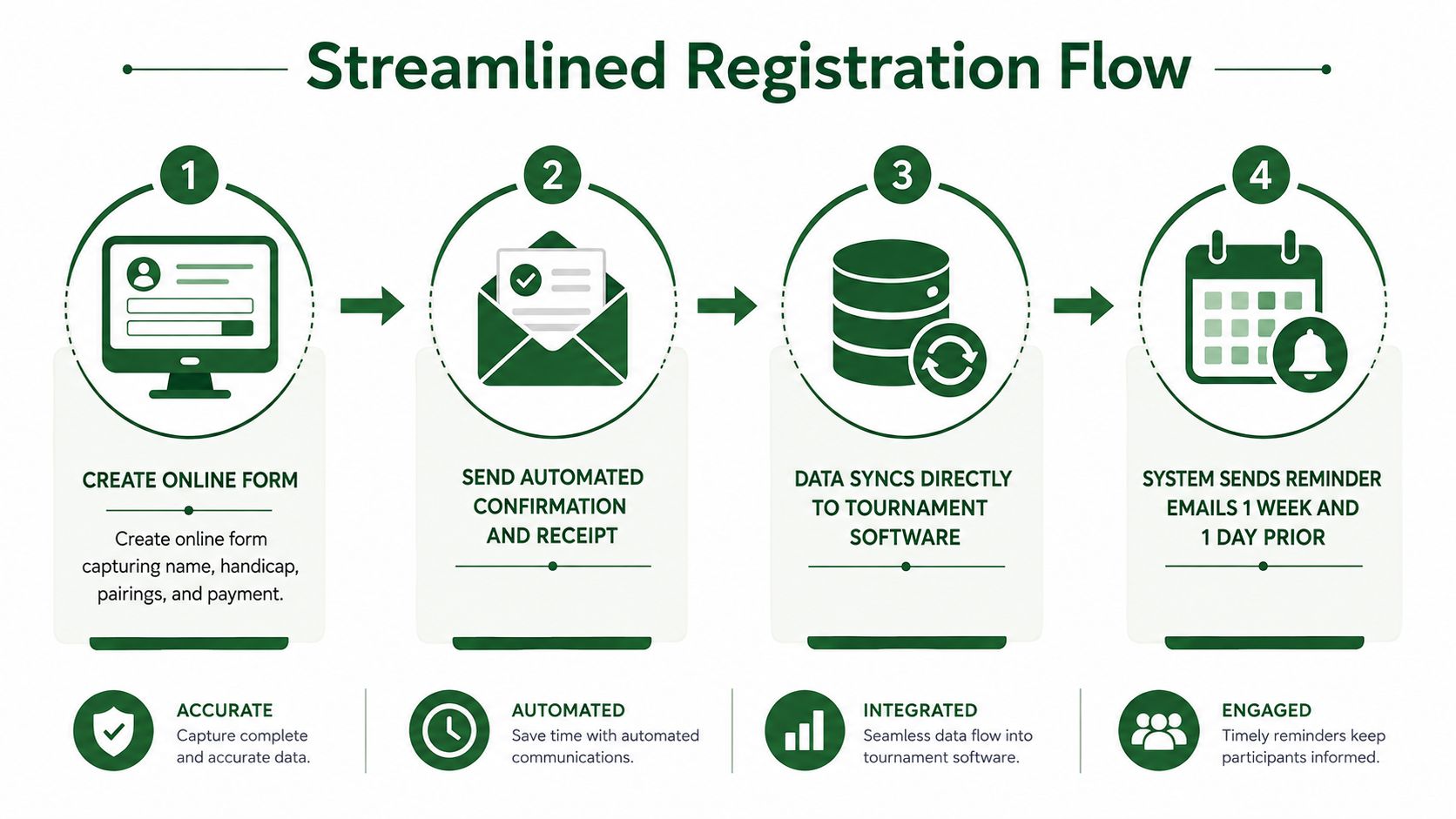
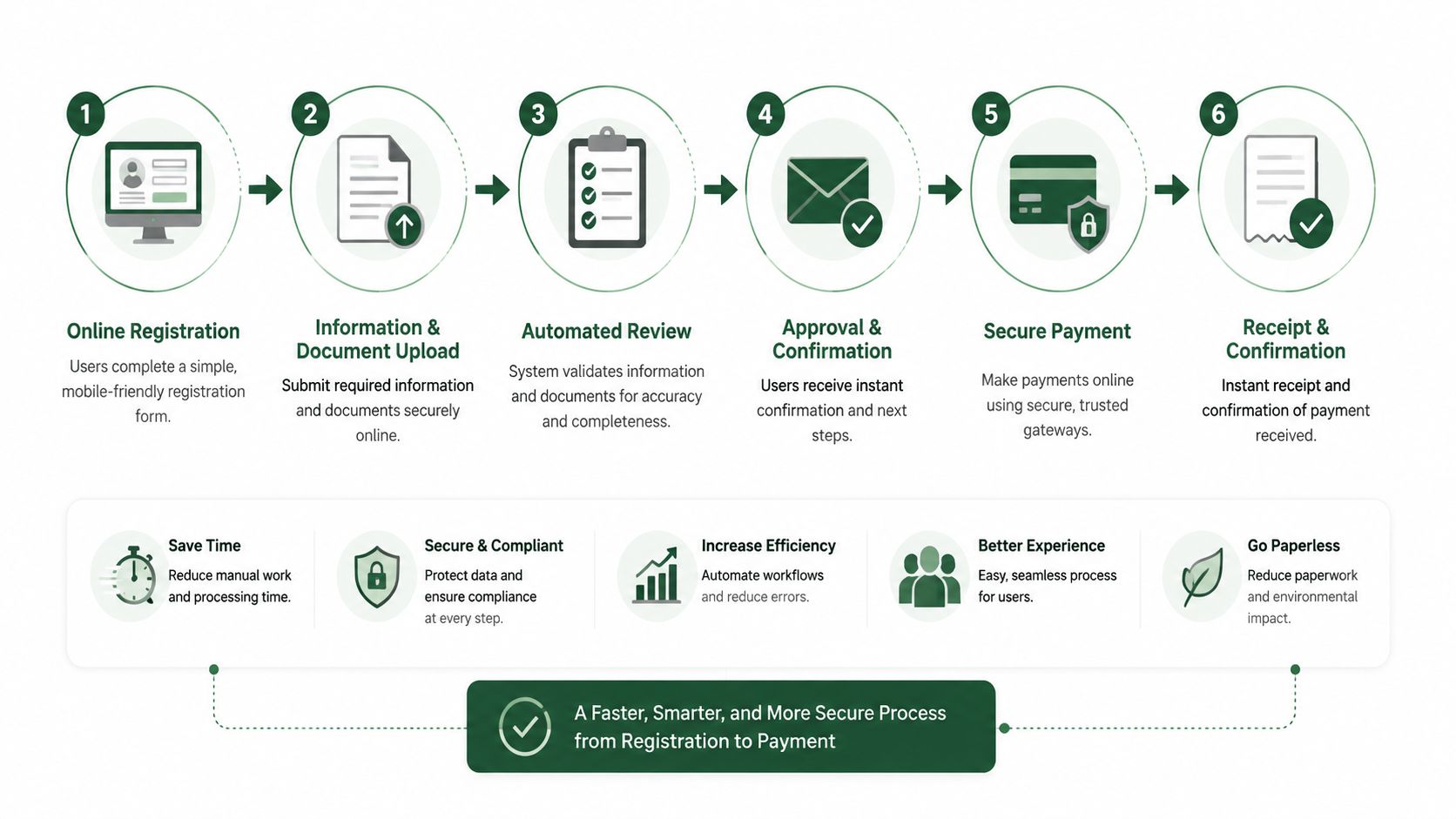
The cleanest setup is an online form that captures name, handicap, pairings, and payment in a single flow. That removes the paper forms, the voice mails, and the awkward follow-up calls that eat staff time. A strong form also reduces the chance that a family pays before the roster is complete, which is where many headaches start.
Once the form is submitted, send an automated confirmation and receipt right away. Families want to know they're in, and staff shouldn't have to retype the same details into another system later. The event gets more professional the moment registration becomes self-contained instead of dependent on memory.
You also need deadline discipline. Set a clear closing date, explain what happens when the field fills up, and decide in advance whether a waitlist is first-come or reviewed manually. Refund policy matters too, because family events often involve schedule changes from school, travel, or weather.
Use automation to reduce back-and-forth
The strongest registration workflows do more than collect money. They send reminders, keep the field informed, and reduce surprise on event day. For a practical template approach to the form itself, this resource is worth keeping handy: golf tournament registration form template word.
Operational rule: If staff has to chase basic participant data after registration opens, the form isn't doing its job.
A family event also benefits from a reminder sequence that hits at the right time. One notice a week out and another a day out is usually enough to reduce no-shows without annoying people. Those reminders should include tee time, check-in instructions, and the scorekeeping method so nobody shows up guessing.
The goal isn't just convenience. It's to compress the admin work into a setup process and then let the staff focus on course prep, cart staging, and the guest experience. That's where the time savings show up, because the front desk stops acting like a data-entry station.
Building Pairings and Tee Sheets That Work
Pairings in a family event are never just about handicap math. They're about pace, personality, and how much room you want to leave for conversation without letting the field back up. A good tee sheet makes the day feel effortless because the right people are in the right groups at the right time.
Group by scoring reality, not by who asked first
The first step is to cluster teams by combined ability so the competition feels meaningful. If you mix a group of high-handicap juniors behind scratch players, you create a bottleneck before the round has even settled in. If you group all the strongest teams together, you get cleaner competition and a pace pattern that's easier to manage.
Special requests are where organizers can get themselves in trouble. Fathers want to play with their son's friends, cousins want to ride together, and families traveling from out of town usually want morning times. Some of those requests are harmless. Others create a gridlock if you ignore ability balance and tee spacing.
A useful rule is to protect the competition first, then fit in the social preferences that don't break the flow. If two teams have to be separated so the field moves well, separate them. A family event feels better when the round finishes on time than when every request is honored and the back nine stalls.
Choose shotgun or interval starts with purpose
Shotgun starts work well when the field is large enough and the course layout supports it. They help everyone finish around the same time, which is useful for lunch, awards, and family photos. Interval tee times make more sense when the field is smaller or the routing makes some holes too congested for a shotgun launch.
I've seen organizers choose a shotgun just because it feels more “event-like.” That's the wrong reason. The right question is whether the course can absorb the traffic without turning the turn into a traffic jam.
Practical rule: A tee sheet should solve traffic before it creates entertainment.
When you build the sheet, think in layers. Put the strongest teams where they'll compete cleanly, group families with similar expectations, and use spacing that lets carts and walking groups settle into rhythm. That's how you avoid the scene where one group is waiting on every shot and another is already done with the front nine.
The best pairings also leave room for one or two inevitable adjustments. Someone will call late. Someone will show up with a substitute. Someone will ask for a tee time change after the sheet is posted. A smart organizer leaves enough flexibility to absorb those changes without rewriting the whole day.
Setting Up Live Scoring That Players Actually Use
A live scoring system only works if the field touches it. If staff likes the tool but players avoid it, the leaderboard becomes a decoration. The setup has to open quickly on any phone, avoid downloads, and feel simple enough that a teenager and a grandparent can enter scores without a walkthrough.
Build the scoring flow before tournament day
Create the event, select the scoring format, and generate one shareable link for players and staff. Then test that path on the same phone types your field will use. If the entry screen is awkward at the check-in table, it will be worse once players are on the course, moving fast, and trying to keep up with their group.
The adoption problem shows up quickly in family events. Live Tourney says it has powered 10,000+ events and 1M+ holes scored, and reports a 40% increase in live scoring participation plus 3x faster setup compared with traditional tournament management methods (platform overview). Those figures match what organizers want most, which is less setup friction and more players entering scores without staff chasing them.
The behavior side matters just as much as the software. Put a QR code at check-in, have staff show the scoring screen once, and tell players exactly when scores should be entered. If the leaderboard is visible after the round, people will check it, and that makes the scoring feel like part of the event instead of an admin task.
Make adoption easy in the real world
Families do not want another app taking up space on a phone. They want a link that opens fast and gets out of the way. That matters even more in a father-son field, because comfort with technology varies widely, and one player often ends up handling the phone for both.
A practical event-day setup keeps the process plain:
Check-in prompt: Give each team the scoring link before they leave the table.
Staff demo: Show one score entry live, not a slide explanation.
Post-round use: Display the leaderboard where people naturally gather.
A clean setup also helps the physical side of the event. If a player has been through a golf movement screening, they may already be more aware of how small setup habits affect the round, and the same principle applies to scoring. Keep the process short, direct, and easy to repeat.
The point is not technology for its own sake. The point is to keep the event moving and give players a reason to stay engaged while the round is still in progress. When the scoring path is obvious, people use it without asking for help every few holes.
Practical rule: If a scoring system needs repeated explanations, adoption will drop the moment the first group hits the tee.
For an operator-focused look at score tracking and setup habits, this guide is a useful reference: golf score tracking. The lesson holds up in the field. The easier the entry path, the more likely people are to use it without being chased.
Running a Smooth Event Day and Building Momentum for Next Year
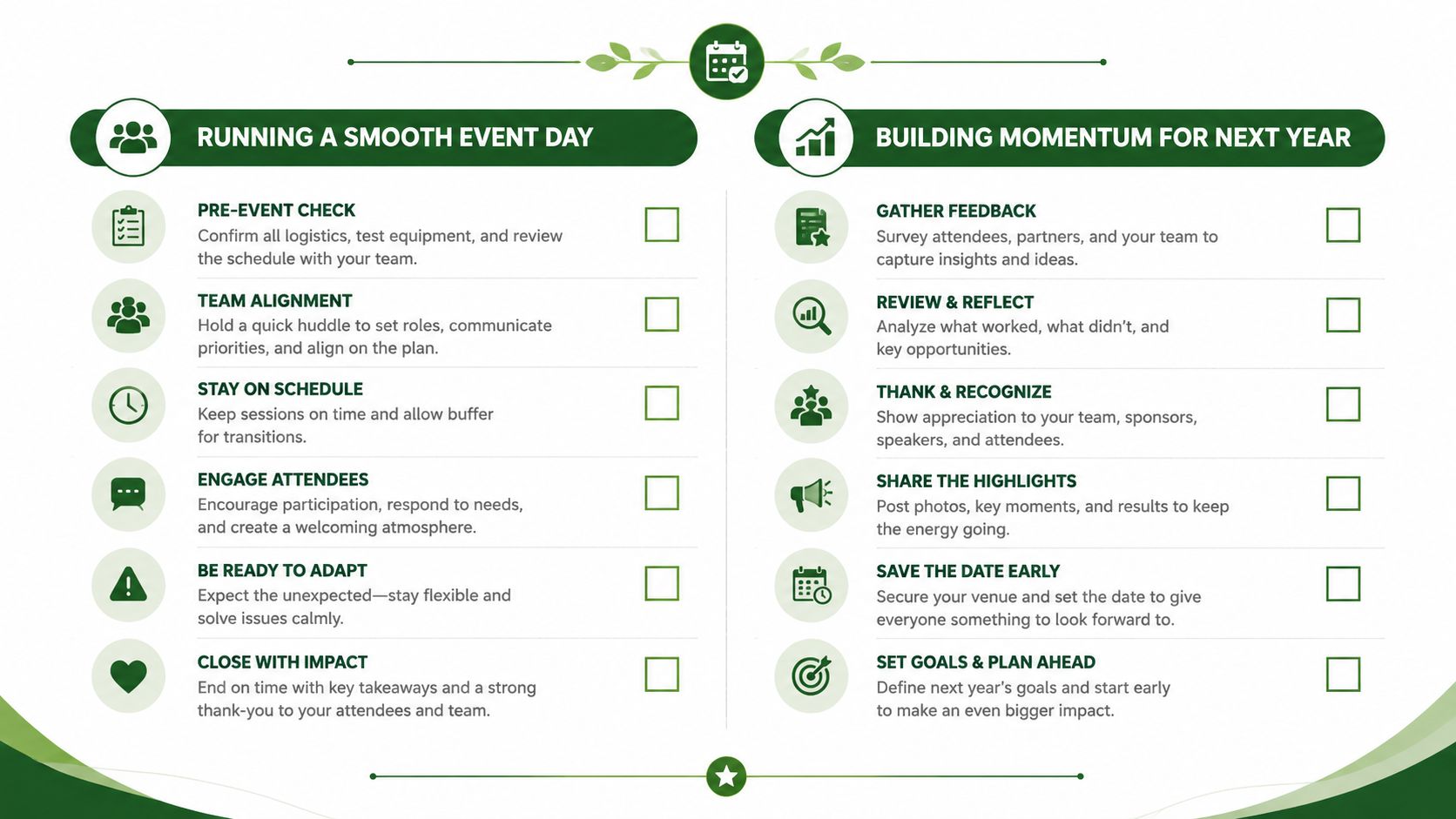
Event day is where all the prep either pays off or gets exposed. A clean check-in desk, carts lined up in order, and a short rules briefing can make a family event feel polished before the first drive even leaves the tee. If those pieces are sloppy, everything else feels harder than it should.
Keep the morning tight and predictable
Check-in should be fast, not conversational. Confirm names, hand out scorecards, point players toward carts, and give one clear reminder about pace, format, and where to turn in results. If there's a weather delay, make one person responsible for the update so conflicting messages don't spread across the parking lot.
No-shows and late substitutions happen in every family event. The answer is a prepared standby list and a simple decision rule for whether a replacement can slide into the field without upsetting the format. The more you improvise here, the more the tee sheet starts to unravel.
Prizes should reflect the spirit of the event. Family tournaments work best when the awards balance competitive recognition with a few fun categories that keep less-dominant teams engaged. That way, the day doesn't end with half the field feeling invisible.
Follow-up is part of the event, not an afterthought
The post-round window is where loyalty gets built. Send final results, share photos, thank the families, and make it easy for them to remember how the day felt. If a father and son had a good time, they'll talk about the experience long after the scorecard is tucked away.
The same long-term thinking applies to preparation away from the course. Families that care about playing together for years often pay attention to movement, comfort, and injury prevention, which is why a resource like golf movement screening can be useful when someone wants to move better and keep the game enjoyable.
For the event itself, the bigger lesson is simple. Treat the round, the awards, and the follow-up as one connected experience, not three separate tasks. That's what makes next year's registration easier, because people aren't just signing up for golf. They're signing up for a day that ran well.
If you want a cleaner way to run registration, pairings, live scoring, and event-day updates without the usual spreadsheet scramble, Live Tourney is built for that workflow. It gives golf staff a practical way to manage family events with less manual work and a better player experience. If you're planning a father and son challenge, take a look and see how much smoother the whole day can feel.